
Shopping Cart
 English
 Français
Taking a Road Trip in a Peugeot: The History of Family Cars
In 2019, Peugeot celebrated the 70th anniversary of a rather unique body style: the station wagon. This spacious and practical vehicle has been a favorite among many families and business owners, sometimes at the expense of comfort. What mattered was the size (of the trunk), and Peugeot has gradually succeeded in making station wagons more widely accepted in Europe and around the world. ALEPOC invites you to explore the history of these magnificent cars, each with its own unique story.
The Beginnings of Station Wagons
The History of Station Wagons Peugeot is a little older than today's marketing teams would have us believe. The name "break" was first used at Peugeot in a horse-drawn carriage called Peugeot Station Wagon, built in 1894 at the same time as the first automobile prototypes Peugeot. The automobile industry then expanded, and markets began to take shape. In the interwar period, like many manufacturers, Peugeot has developed numerous utility vehicles based on standard sedans. The Peugeot 202 was no exception to the rule, with a design process that took these unique body styles into account from the outset. It was in the summer of 1939 that the small Peugeot was introduced with a body style called the “Commerciale Familiale.” Available in 4- or 6-seat configurations, it had only a short run due to Europe’s entry into the war in September 1939. The solution lay in a raised roofline, an extended length, and an enlarged cargo area. At the end of World War II, industrial equipment had been looted and raw materials were in short supply. Peugeot began manufacturing wooden 202 station wagons, modeled after American “woodies,” called the “Limousine Commerciale” and nicknamed the “Canadienne,” starting in October 1946. Only 3,000 units were handcrafted before industrial production took over with the introduction in 1949 of the first mass-produced station wagon from Peugeot : the Peugeot 203 Station Wagon.

The First Station Wagon Peugeot
The sedan is 18 cm longer and 100 kg heavier, offering 4 seats in the Commercial version or 6–7 seats in the Family version. The Commercial model is a hit with business owners thanks to its 450 kg payload, while the Family model wins over middle-class families who have finally found a car capable of transporting their entire household. However, owners must choose between carrying passengers or luggage, which leads most to install a roof rack on their Peugeot 203 Family. The spacious interior was made possible by a change in the suspension system, which shifted from coil springs to a rigid axle with longitudinal semi-elliptical springs. The station wagon was still in its infancy, and its more down-to-earth image would not emerge until much later. In 1956, the Peugeot 203 station wagon was discontinued after 25,218 units were produced.
See our replacement parts for Peugeot 203
The Success of Station Wagons Peugeot
In 1956, the 403 got its own station wagon version, also available in Commercial and Family models. The wheelbase was extended by 24 cm, and the styling was refined with an elegant third side window. The payload increased to 500 kg, with a maximum volume of 1.6 m³ and an interior height of 90 cm—enough headroom to fit any type of hat. Practicality remains a priority, while other aspects are somewhat neglected—such as the powertrain, which remains unchanged from the sedan. The 1,468-cm³ inline-four engine, producing 58 ch, struggles to pull the additional 200 kg. The engineers therefore reduced the final drive ratios to improve responsiveness. This Peugeot 403 Family It followed in the footsteps of its older sibling, having sold 21,966 units by the time it rolled off the production line in 1962.
Our replacement parts for Peugeot 403

When there's more, there's still more. Peugeot has made it a tradition to introduce a station wagon with each new generation of sedans. The recent 404 is no exception and follows in the footsteps of the 403 with its own distinctive styling cues and an additional 19 cm in length. It is available in three versions to meet every need: The commercial version and its 5- or 6-seat configuration; the station wagon version, which is a more luxurious version of the commercial model; and the 7- or 8-seat family version at the top of the lineup. The 404 continues to improve and offers greater comfort. The Peugeot The 404 was the first station wagon to feature a tailgate practical features, a modern coil-spring suspension, and brake assist on certain models. In terms of powertrains, it offers more choices, although fuel injection is available only on the sedan and the coupes/convertibles. The brand is introducing a diesel engine in a station wagon for the first time, following a successful trial with Parisian taxis using the Peugeot 403. Depending on the model year, the lineup featured the famous Indénor engine in 1,816 cm³ or 1,948 cm³ versions. With fuel efficiency and remarkable reliability, it was the perfect engine for contractors. Improvements to the lineup and comfort were reflected in sales, with nearly 400,000 station wagon versions produced. This success led to Peugeot to adapt its recipe to lower-end segments with the Peugeot 1965 204 station wagon. This little lioness revolutionized the brand with its independent suspension, disc brakes, and front-wheel-drive layout, and featured a compact yet very spacious station wagon body, with 1.5 m³ of cargo volume for the van. The 204 station wagon was thus the first front-wheel-drive station wagon in the brand’s history, and in 1968 it even featured the smallest production diesel engine (the 1,255 cm³).
Explore our replacement parts for Peugeot 404
To complement the new, higher-end 304, the 204 station wagon was given a front end similar to that of the 304 in 1971. The Peugeot 304 station wagon is therefore essentially a 204 station wagon in disguise, since nothing else has changed. It’s actually the smallest of the 304 models, being 15 cm shorter than the sedan. Strangely enough, the 204 and 304 station wagons were produced side by side until 1976.
Browse our replacement parts for Peugeot 204 andPeugeot 304

The first 4x4 station wagon
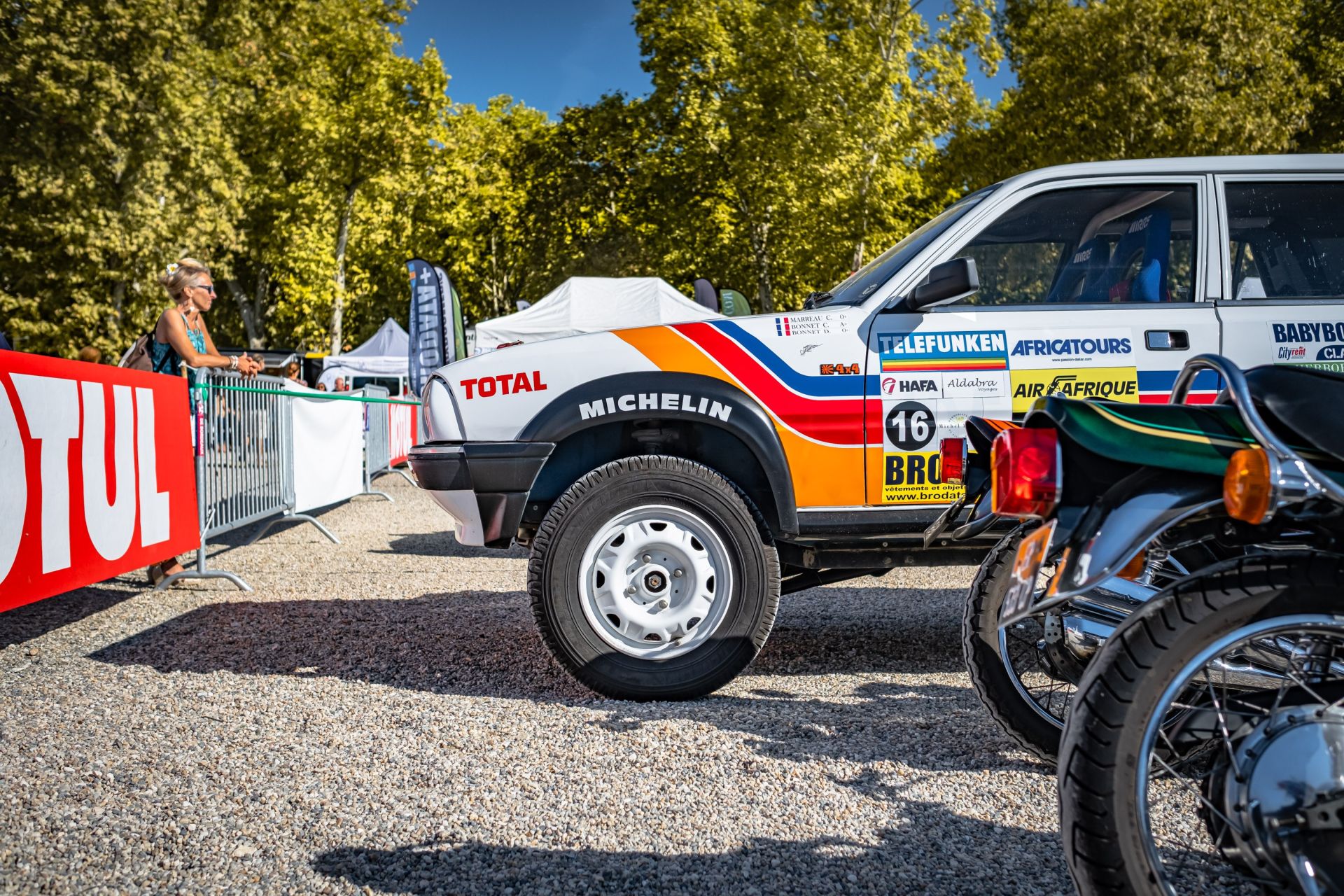
In 1971, the new large sedan Peugeot 504 It also comes in a station wagon version with a wheelbase extended by 16 cm, resulting in a total length that is 31 cm longer. The styling is slightly different, with a more noticeable transition between the rear section and the roof. The Peugeot The 504 is available in the following trim levels: Commerciale, Break, and Familiale. A sturdy car that, along with the sedan, will make its mark around the world and shape the image of Peugeot. In 1981, she completely broke new ground with the Conversion performed by Dangel in a GR 4x4 station wagon. This marks the first collaboration between the newly established Sentheim-based company and Peugeot. A story that continues to unfold even today. In 1983, the 504 was discontinued in France, but production continued in Kenya until 2005.
See our available replacement parts for your Peugeot 504

The Rise of Luxury Station Wagons
In the early 1980s, a time full of promise, it was the 5 that made a breakthrough. In 1980, the 305 was equipped with a backpack featuring undersides of Peugeot 204 modernized (Check out our replacement parts for Peugeot 305). It wasn’t quite as successful as the sedan, with only 250,723 units sold over its nine-year production run. At the other end of the lineup, the 505 introduced a station wagon variant in 1982, featuring a curb weight of 590 kg and a cargo capacity of 1.94 m³. This large station wagon had definitively moved beyond the rugged simplicity of early station wagons, offering greater luxury and comfort. The letters “GTI” even appeared on the tailgate of the station wagon versions equipped with the 2.2-liter, 130 ch four-cylinder engine. This was a very rare version, much like the Dangel conversion, which was continued for government agencies and adventure seekers. Like other station wagons Peugeot Following in the footsteps of its predecessors, the 505 set out to conquer the West and win over customers who favored this type of body style. The 505 would also be adopted as a taxi in major cities thanks to its reliable and fuel-efficient diesel engine, while the Peugeot 505 station wagon will become part of family life. Americans will be able to get a Turbo version called 505 Turbo SW8 for “8-seat station wagon.” A term that would appear much later in Europe. This version is perhaps the ultimate station wagon Peugeot traditional, as it was the last to be offered with rear-wheel drive.
Explore our selection of replacement parts for Peugeot 505

The Last Station Wagon Peugeot
This was followed by a whole series of station wagons, with each new car model almost always getting its own station wagon version. The Peugeot 405 station wagon continued the tradition in 1988, followed by the Peugeot 306 and the 406, which will be the last models to bear the “station wagon” designation. The Peugeot 206 pioneered the trend for compact station wagons, just as the 204 had done in its day, with the new designation SW for “Station Wagon.” At present, it would seem that Peugeot has already released its the last station wagon in history with the 308 III SW. A model that would never have been produced without demand from the German and Italian markets.
Station wagons Peugeot have therefore played a major role in shaping the manufacturer's image after World War II by contributing to the economic growth associated with postwar reconstruction, as well as to the baby boom, which increased the number of children in families. Many generations have fond memories of trips in these station wagons or of everyday life involving the companies that used these cars. It is a rich history that is, unfortunately, on the verge of fading away. These cars must be preserved as a matter of urgency.
Published on
17-05-2023