Shopping Cart
 Français
 English
For years, Citroën has been the king of small cars with his “Deuche.” The Renault, 4CV, and Dauphine were aimed at a higher-end market. But in the early 1960s, Renault set its sights on the established leader and created the R4—a car whose name would be deeply associated with one of its versions: the R4 L.

The diamond-logo manufacturer wasn’t about to move downmarket and venture into the 2-cv tax bracket. The idea was to stay within the 4-cv range with a practical car that was “less ugly” than the “Deuche.”
For practicality, they opted for a flat floor and a tailgate. For cost-effectiveness, they reused the Billancourt engine already powering the 4CV and Dauphine.
The lineup was launched in 1961. On the cost-saving front, Renault still wanted to move down into the 3-CV class with a special, smaller-displacement engine that would be fitted to the short-lived R3. The R4 features the 747 cm³ engine producing 24 ch and isn’t any better equipped. It was the “second” entry-level model. It proved so popular compared to the R3 that the latter was discontinued after just two model years due to poor sales. But above all, there was a third version—the one that would make history for the popular Renault.

From the very beginning, the R4 L topped the lineup. With its “L” standing for “Luxe,” it was also a limousine. This means that, unlike the R3 and R4—which were sedans with four side windows—the R4 L featured six by adding the rear quarter windows.
It’s also recognizable by its three-spoke wheel covers, its chrome bumper with rubber bump stops, aluminum side moldings, and a gold “4L” monogram.
Starting in March 1962, six months after the first cars were released, the R4 Super took the top-of-the-line spot from the R4 L. It featured dual bumpers and was equipped with a more powerful engine of the same displacement (even though the other models were upgraded to 26.5 ch). As a result, its tax rating was 5cv.

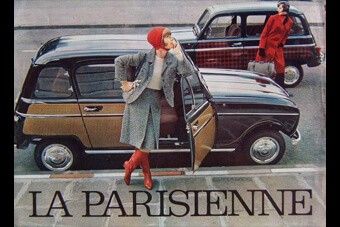
The R4 L became a marketing sensation—even though the term wasn’t yet in use—between March and July 1963. With the “Elle prend le volant” (“She Takes the Wheel”) campaign, Renault sought to attract female and urban customers to its popular model. 4,200 cars were painted black with straw-colored, green, or red trim. Female drivers could test-drive it for 48 hours, and the campaign was a success.
At the end of 1963, the bumpers were redesigned on all R4 models, replacing the tubular design—which was too fragile—with a flat bar. This design continued to distinguish the R4 from the R4L, with the latter featuring a chrome-plated bar.
There was also a reorganization of the lineup, as the R4 L “absorbed” the Super model. The R4 L Super thus offered the features of the export version, including separate front seats, a folding bench seat, and a specialized, fully synchronized transmission.
In December, the Renault 4L Super “Parisienne” was introduced, featuring the same livery as the cars from the “Elle prend le volant” campaign.
The 1965 model year saw another reorganization of the lineup. The R4 L Super became the R4 L Export with the 4cv engine and the R4 L Export Super with the 5cv engine.
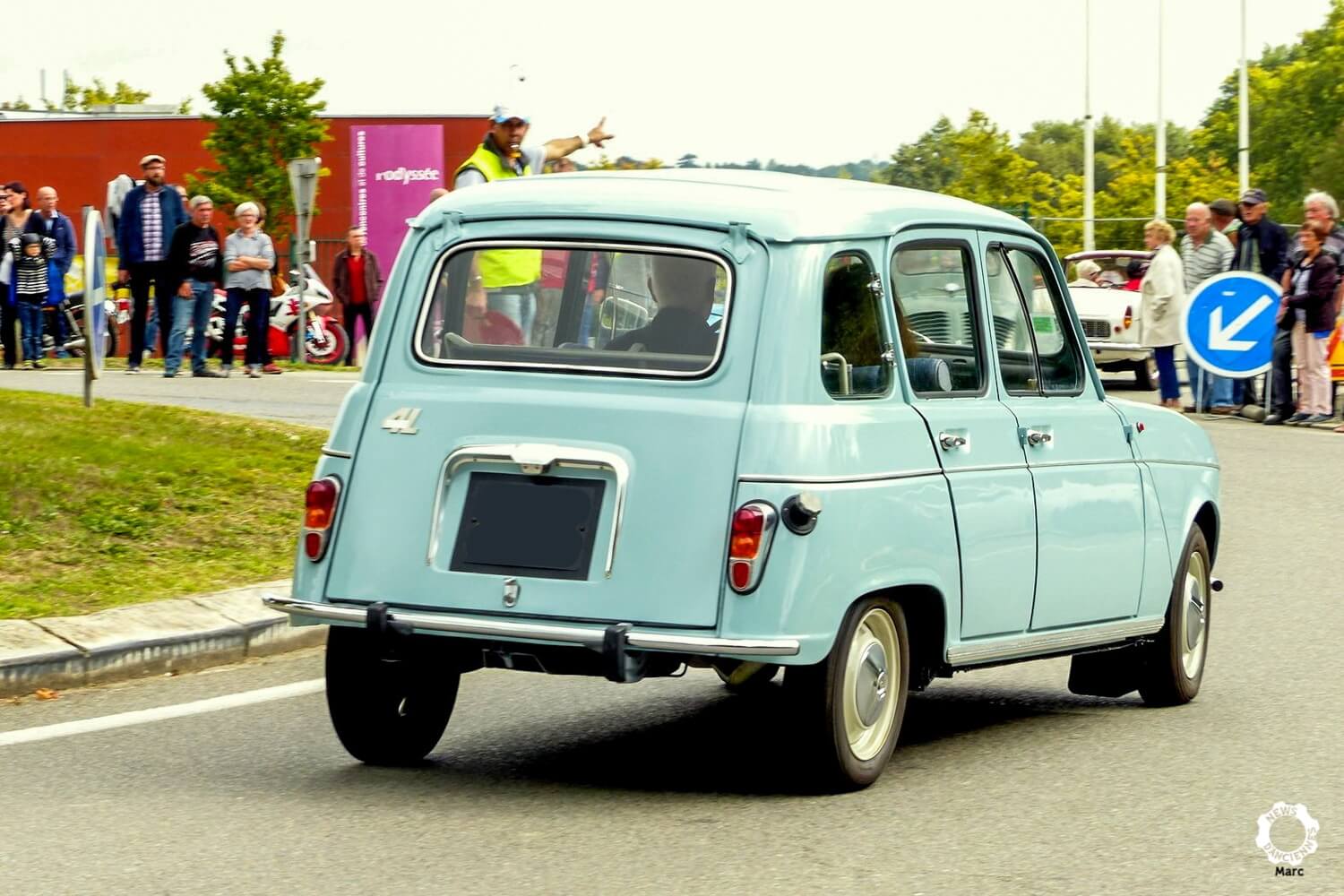
At the end of 1965, major changes were finally introduced to the model names. Thus, the R4s would henceforth be called Renault 4 (you may not have noticed the subtle difference). The “base” version gave way to the 4- Renault, a luxury sedan that featured rear quarter windows. The R4 L we’re focusing on became the 4- Renault, Export, while the Parisienne remained in the catalog.
There will no longer be an R4 L, or “4L,” in the catalog. Yet this model sold well, and its name has entered common parlance. It has since been commonly used, regardless of the car’s version!
If you’re thinking of buying an R4 L to restore it, know thatAlepoc will be there to help you with its extensive parts catalog (available here).