
Shopping Cart
 English
 Français
The Tour Auto in Popular French Cars
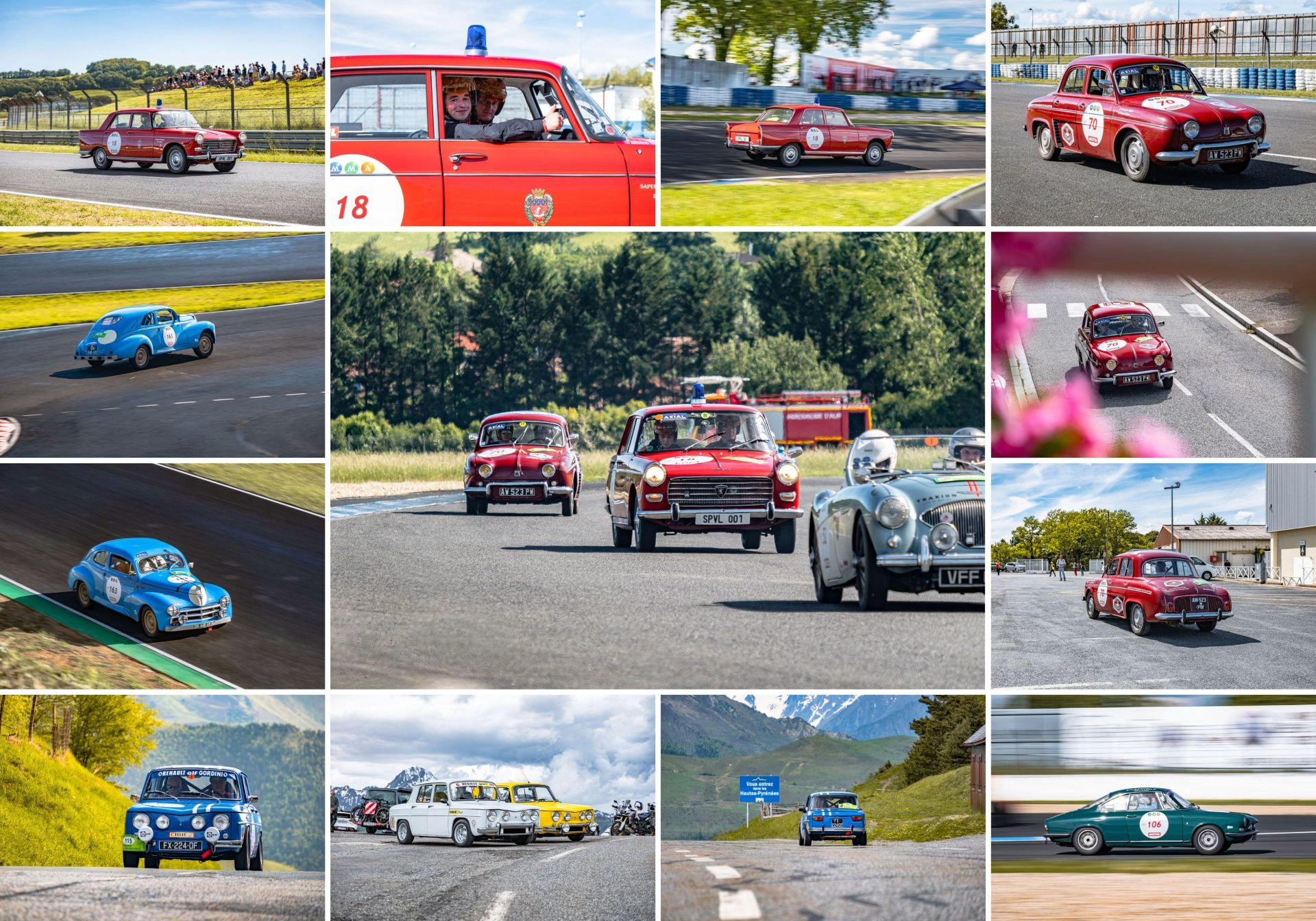
Every year since 1992, the Tour Auto has brought together numerous classic cars for a historic race that recalls the glory days of the Tour de France (Car Race). While exceptional cars make up the majority, a few die-hard Gauls are participating with Popular French cars. The 2026 edition is no exception, featuring several popular stages on a route that traversed a large part of our region.
The Tour Auto: What Is It ?
Automobile racing is as old as the automobile itself. France has been a pioneer in many disciplines. The idea of traveling the roads of France took root as early as 1899 with the first edition of the Tour de France Automobile.
From that point on, the competition took various forms and experienced various interruptions, particularly due to wars.
In 1951, the Tour de France Automobile was revived in a form that inspired today's race. Consistency and Competition Courses take to the most scenic roads and circuits in France, with timed stages and connecting legs.
In 1986, during its 50th edition, the Tour de France Auto was discontinued due to a lack of sponsors and the economic climate.
A new chapter begins, but the story continues. Patrick Peter, which already organizes automotive events, decided to relaunch it in 1992 in the form of a historic race. Eligible cars are those that competed at least once in the original Tour de France between 1951 and 1973, with a few exceptions.
In 1998, it was renamed the Tour Auto, following a dispute with the organizer of the Tour de France cycling race.
The Tour Auto has become a must-attend event that brings together many enthusiasts every year. For the 2026 edition, there are 240 cars which were deployed on a route spanning several thousand kilometers, between Paris and Biarritz, May 5–9.
Tour Auto: Stop in the Southwest
Each year, the Tour Auto route varies based on historic itineraries. This year, the finish line was set in Biarritz.
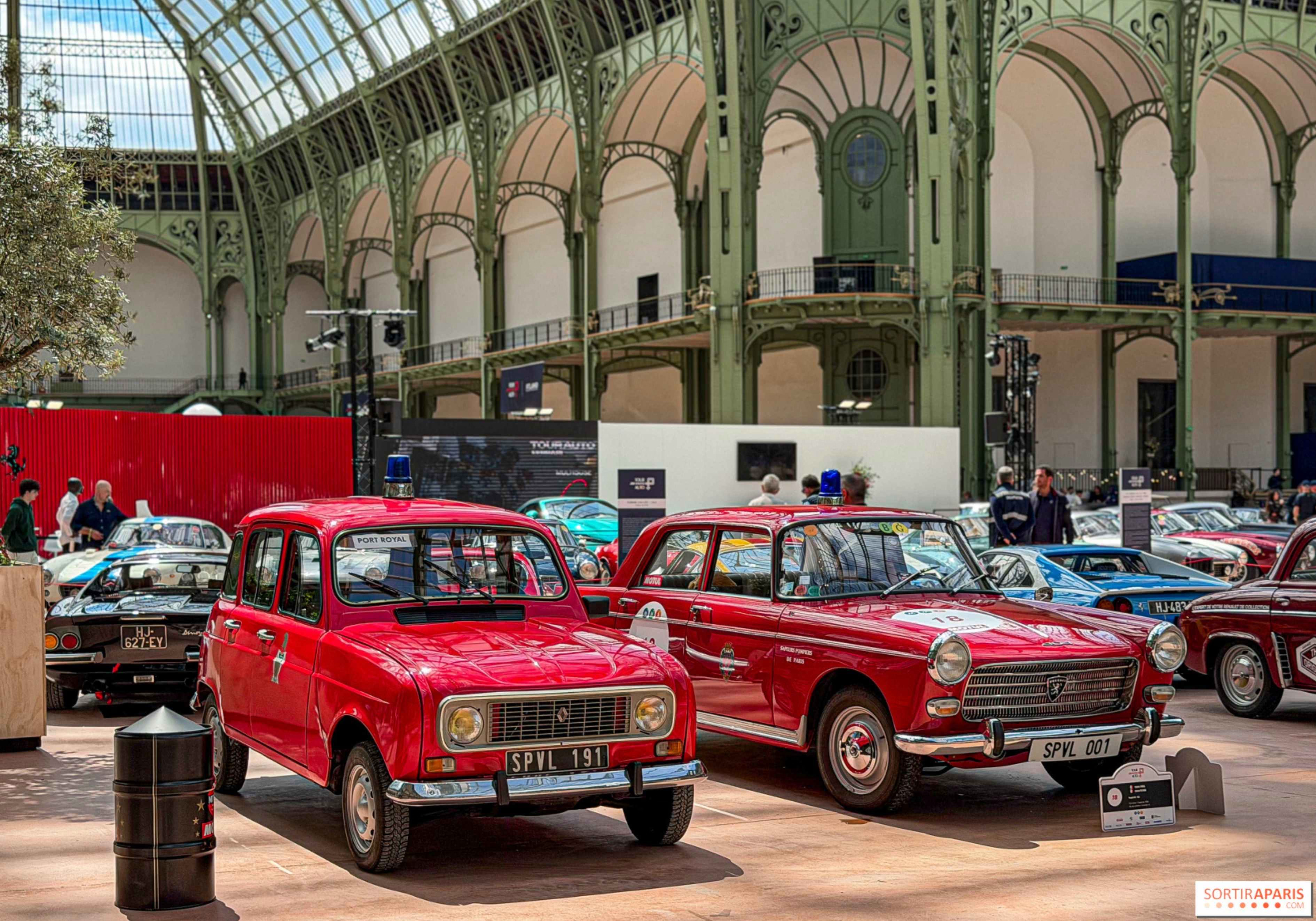
On Monday, May 4, spectators were able to watch the various participants under the nave of the Grand Palais, in Paris. An opportunity to See the most popular French ones in pristine condition, before the rigors of competition set in.
Early Tuesday morning, May 5, the racers set out to tackle the roads, with several stages taking place in a closed course:
- Clermont-Ferrand, May 5
- Pont du Gard on May 6
- Toulouse, May 7
- Pau, May 8
- Arrival in Biarritz on May 9
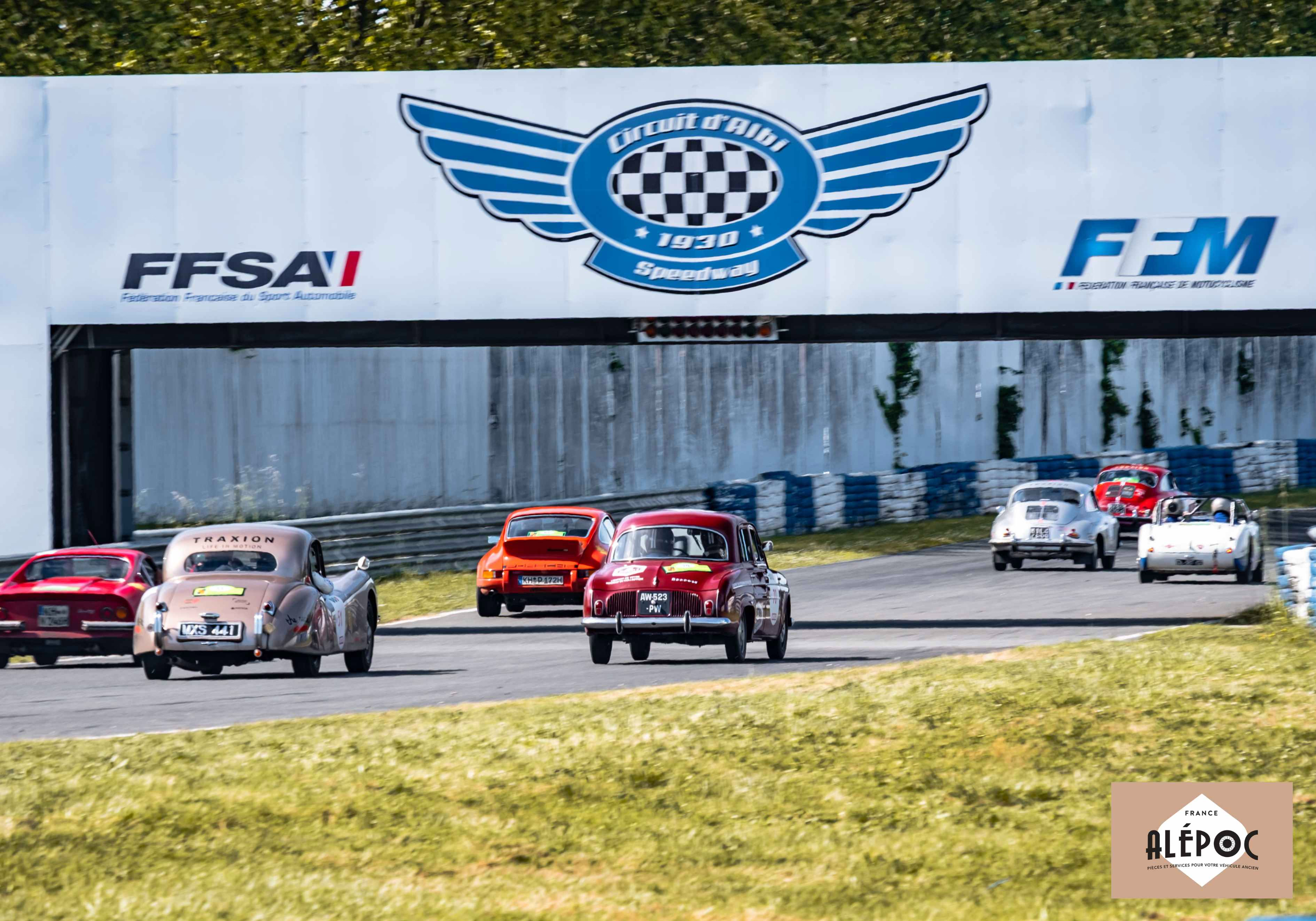
After a race on the Nevers Magny-Cours Circuit On the first day, the competitors returned to the asphalt of our region’s racetracks, including the renowned Albi Circuit May 7, and then that of Pau-Arnos, May 8 and, finally, our tour, the Paul Armagnac de Nogaro, May 8.
Our region and our department were buzzing with excitement over classic cars. We were in the Southwest to check out the few French classic cars that were participating.
The Tour Auto in Popular French Cars
The four brands sold at Alepoc were represented. Set out to discover the Peugeot, , Renault, , Citroën and Simca competing in the 2026 Tour Auto.
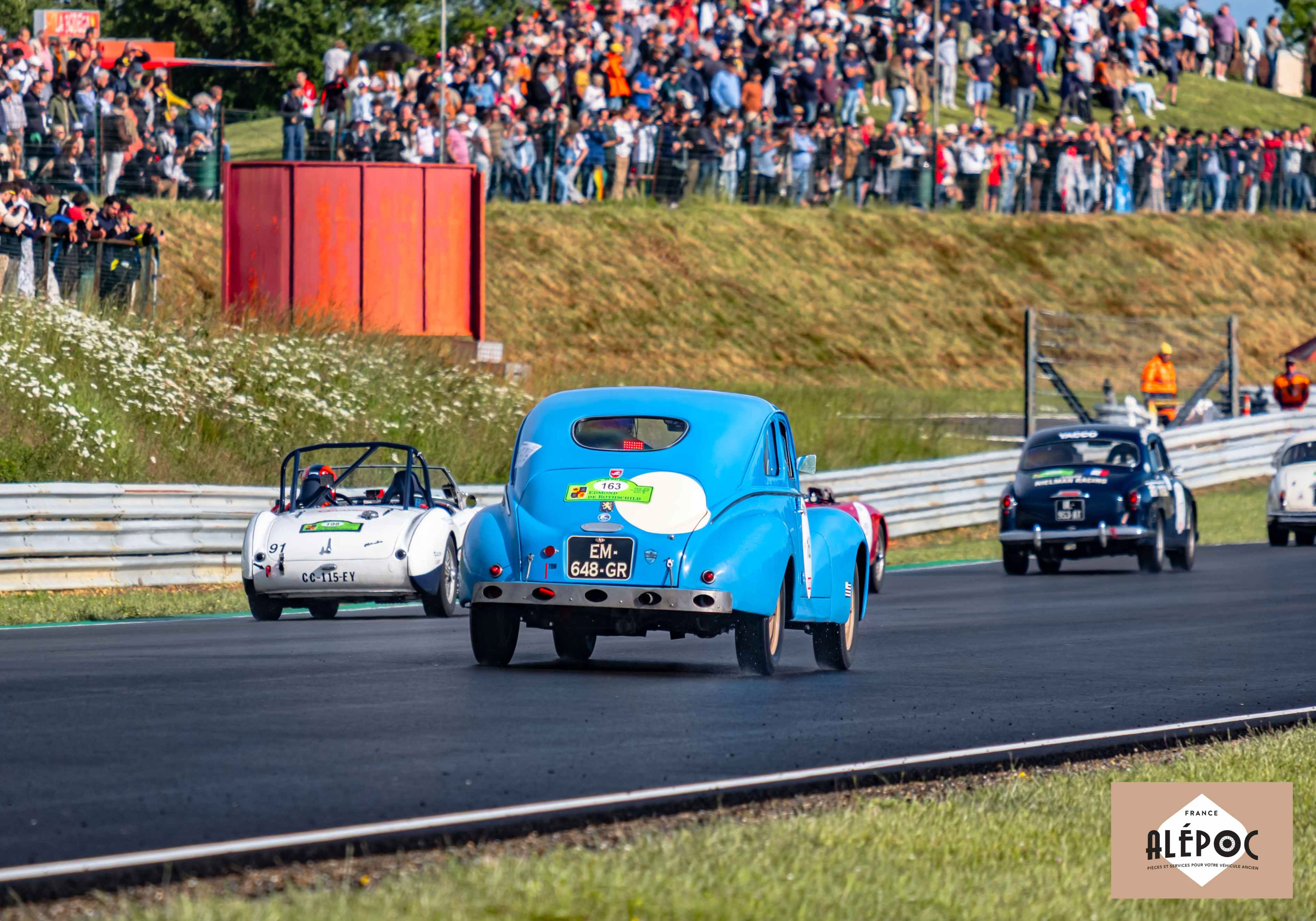
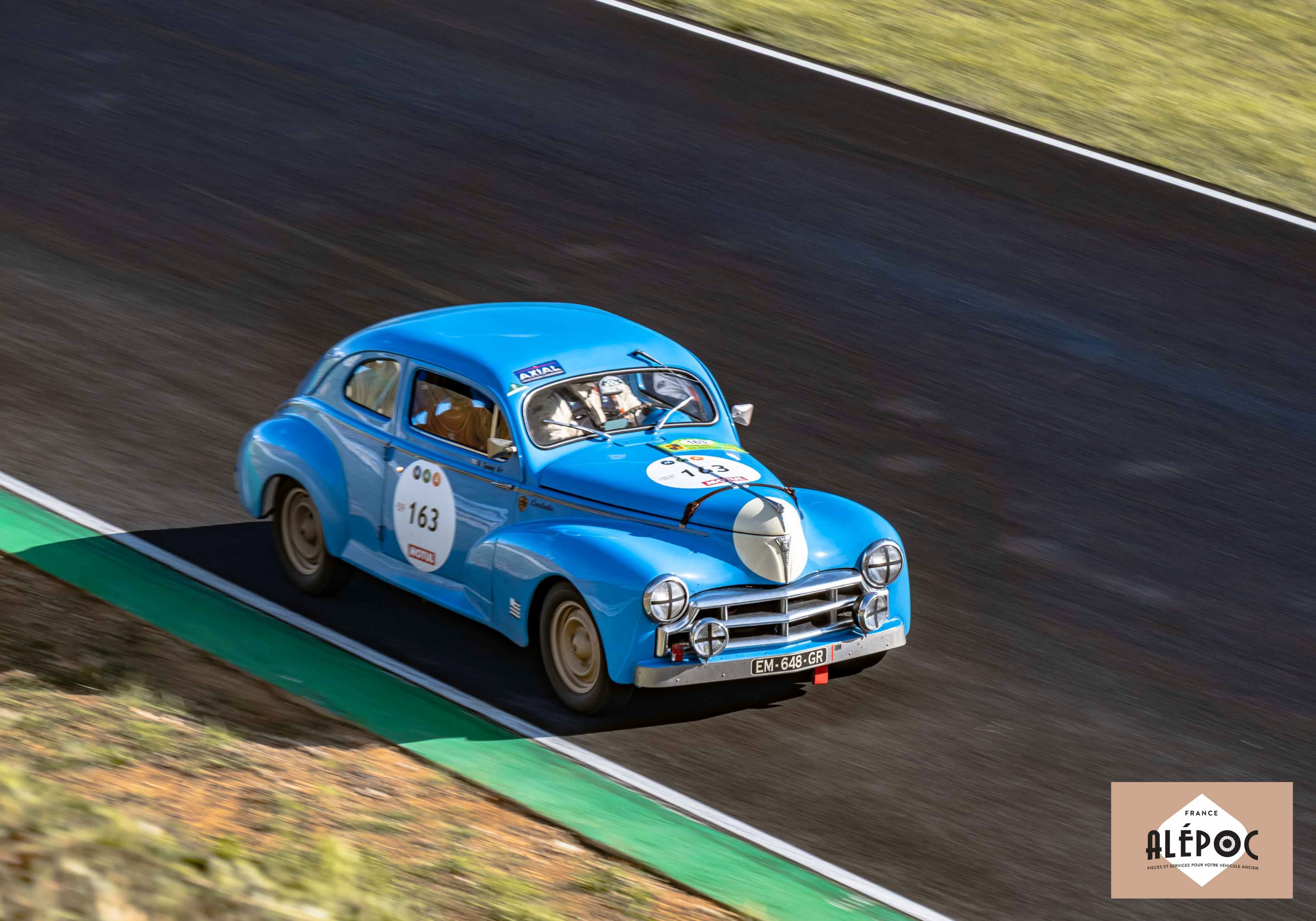
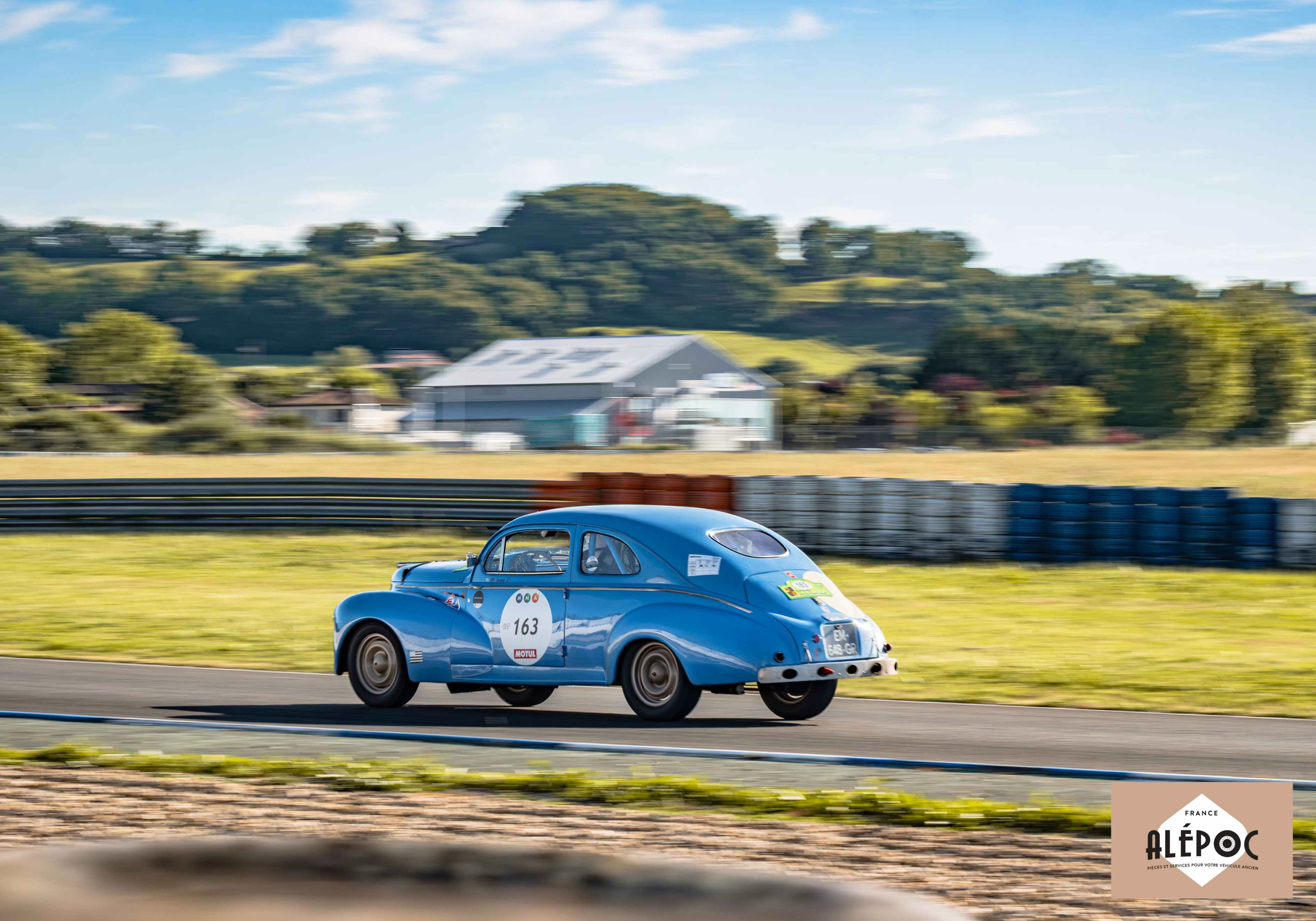
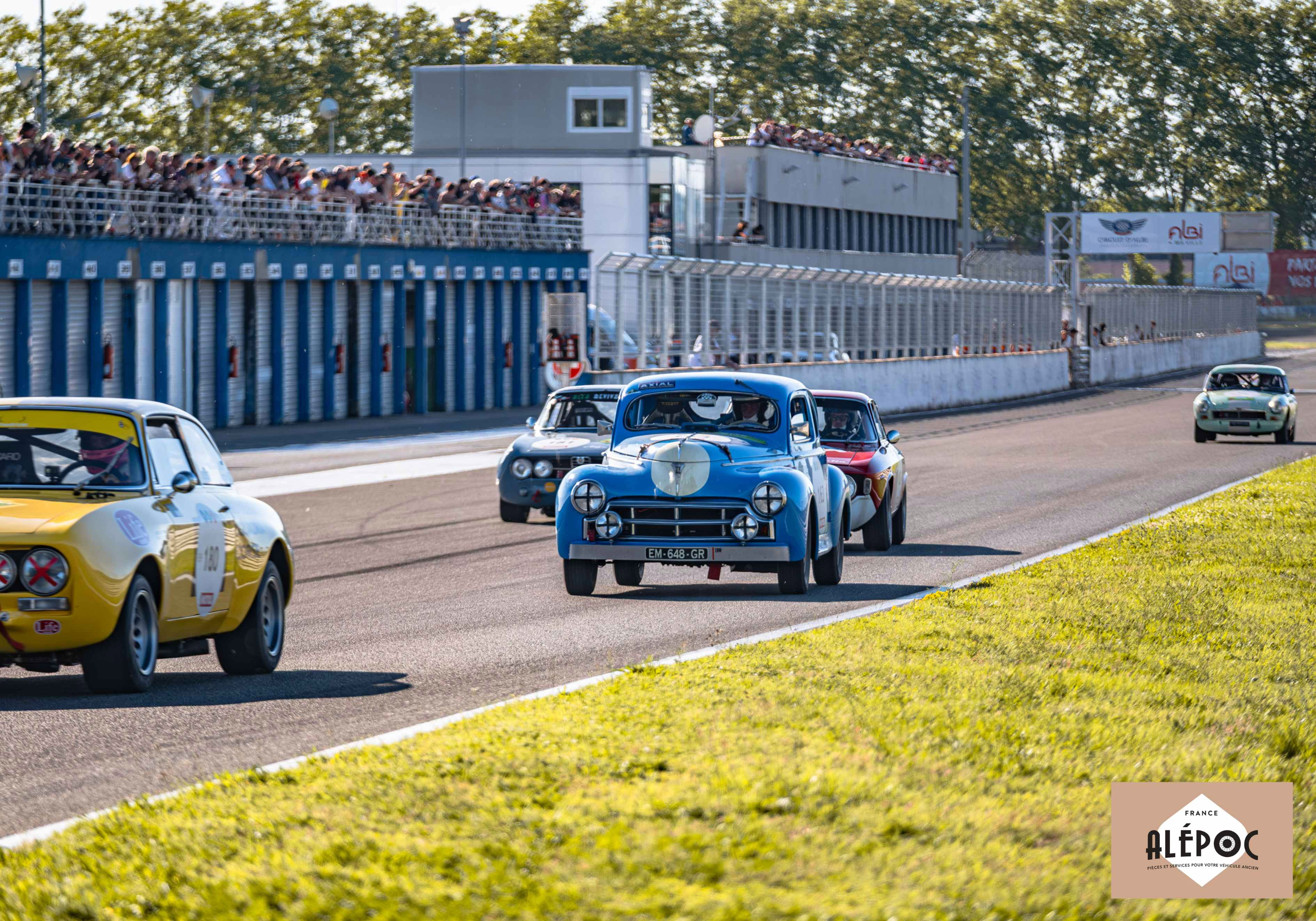
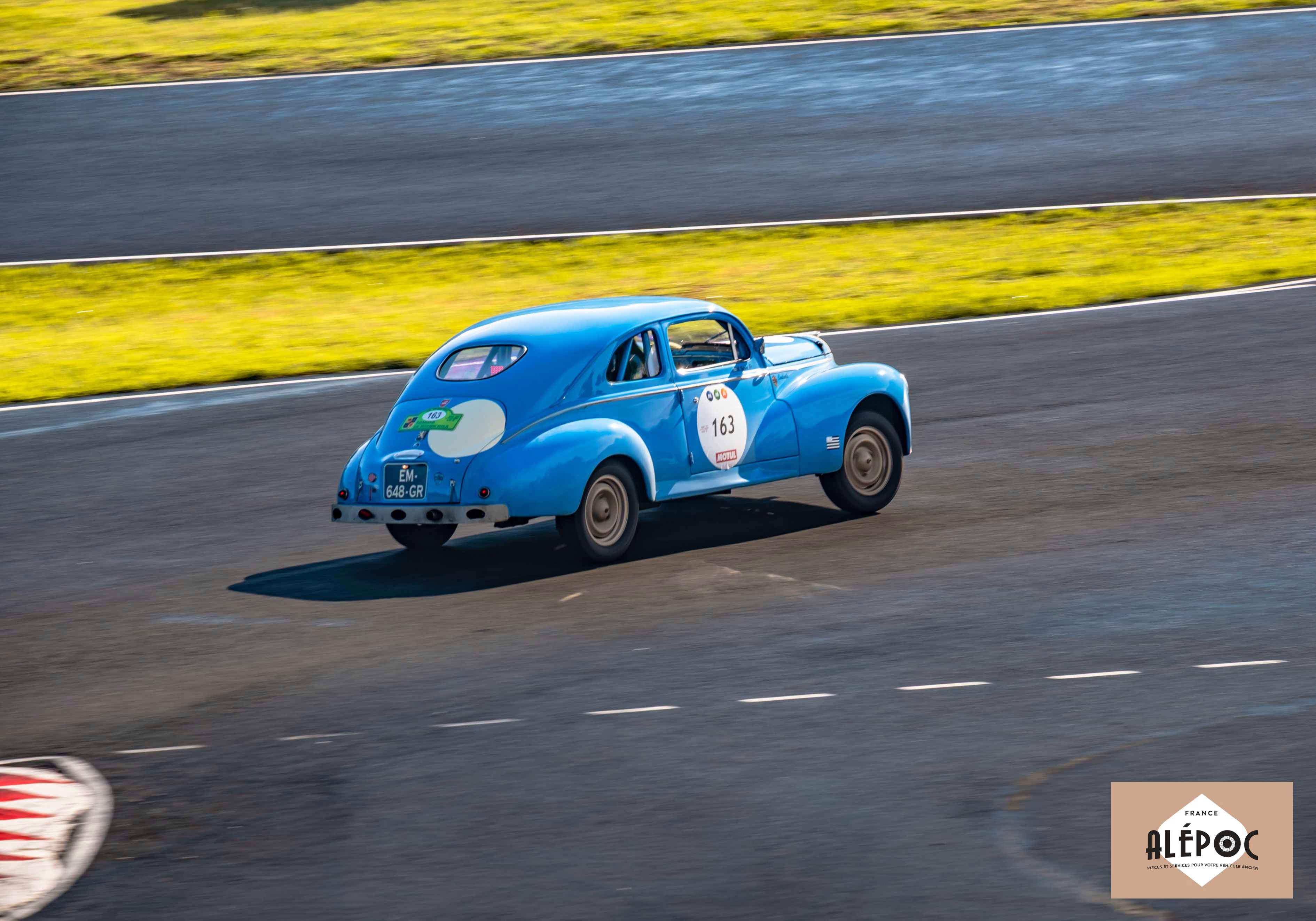
Peugeot 203 Constantin 1952 (#163)
It’s the oldest car in the French lineup. A magnificent and extremely rare Peugeot 203 equipped with a Constantin compressor.
How did a classic family sedan end up on a racetrack? Thanks to a group of passionate enthusiasts who, back in the day, tuned a few 203s into sportier cars, such as Darl'Mat or Constantine.
Alexis Constantin was passionate about racing. He made a name for himself with his superchargers, which could be easily installed on various French cars of the time. In 1951, he decided to modify a Peugeot A 203 coupe equipped with one of its superchargers to turn it into a race car, entered in 1952 at the 24 Hours of Le Mans under number 43. Unfortunately, she veered off the road at the thirteenth hour and ended up on her roof.
Several years later, a fan of the Peugeot 203, Jean-Michel Savary, came up with the idea of recreating this legendary car that had long since disappeared. After more than ten years of work, involving the Ateliers Perrin in Ille-et-Vilaine and the La Choletterie garage in Tours, the Peugeot 203 Constantine has risen from the dead.
After competing in Le Mans Classic in 2025, she took part in her first Tour Auto this year.
A stunning car featuring a Darl'Mat-style grille and a silhouette reminiscent of a three-door sedan. A one-of-a-kind car, which generated a lot of excitement with its small 4-cylinder engine, bored out to 1,500 cm³, and entered in the competition. The sound of the supercharger still echoes around the Pau circuit. It finished 59th in the competition class.
Explore our replacement parts for Peugeot 203
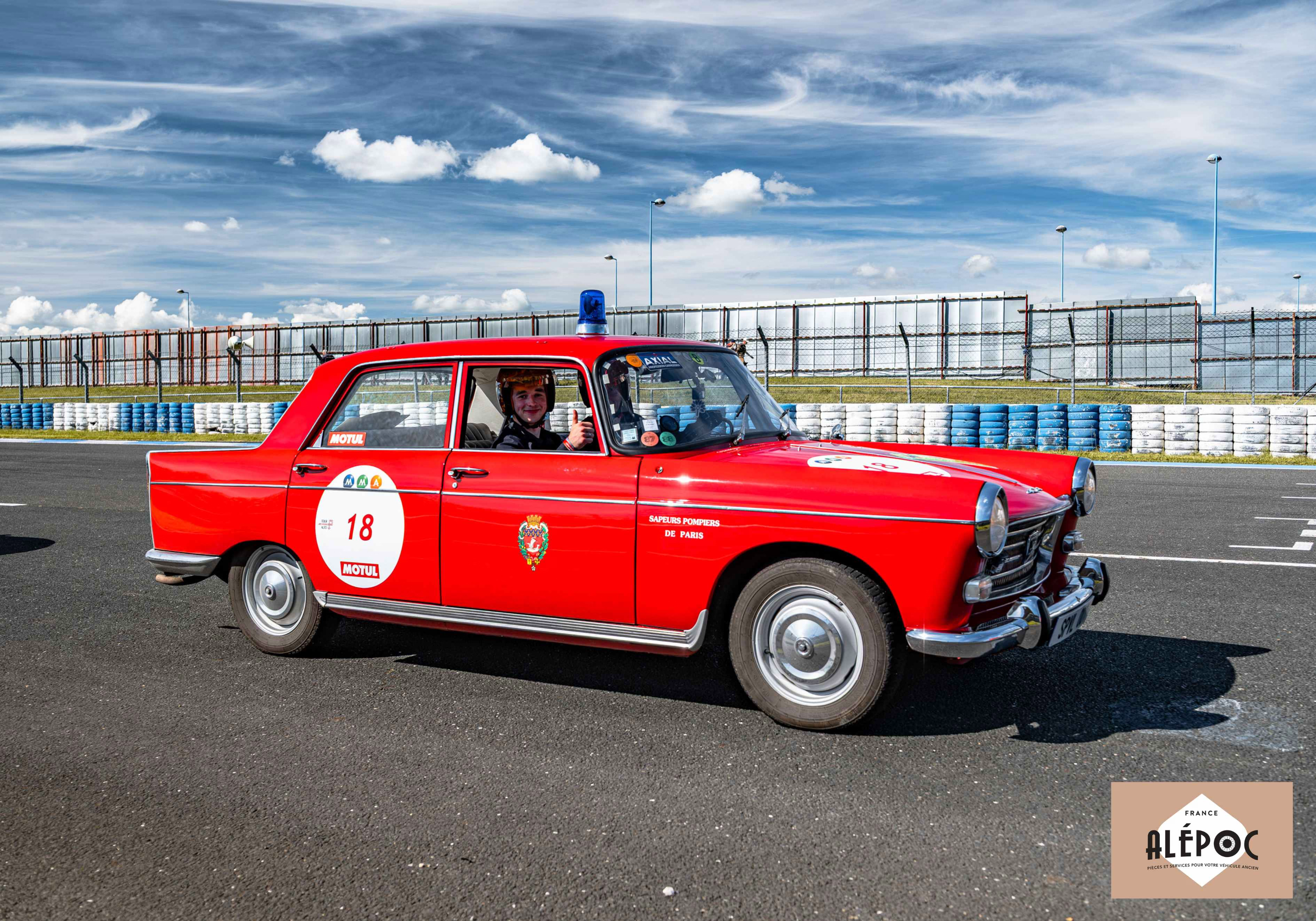
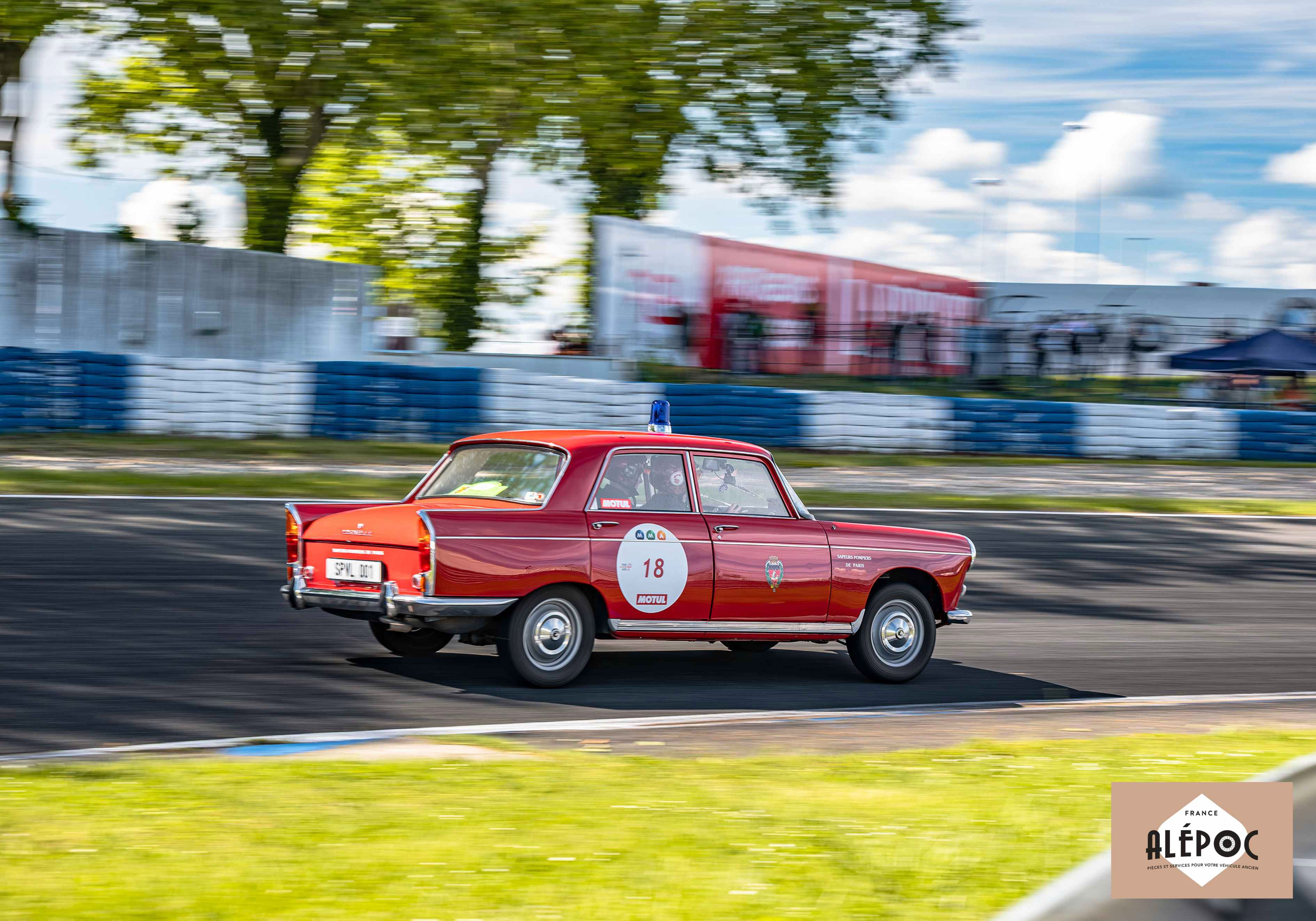
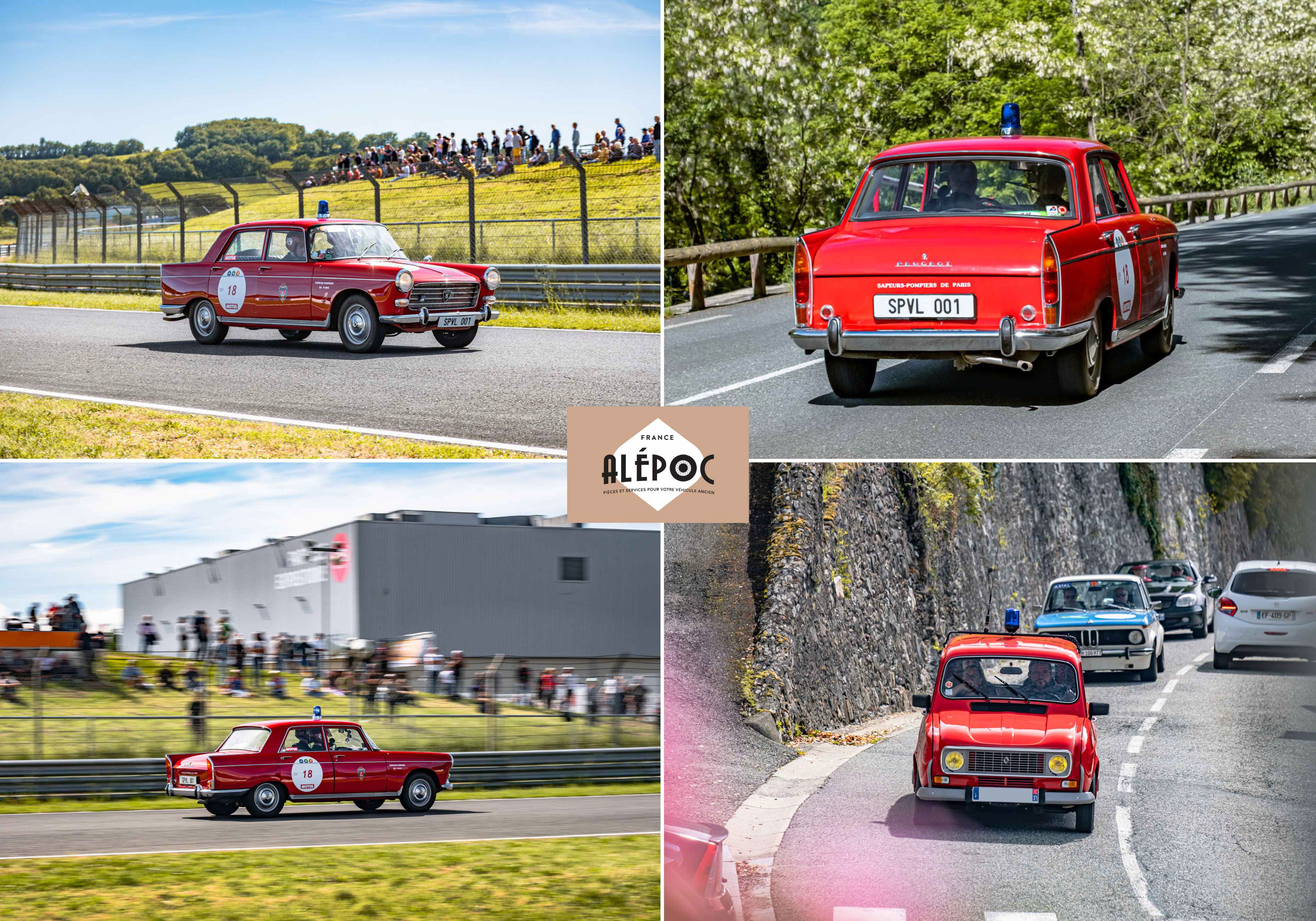
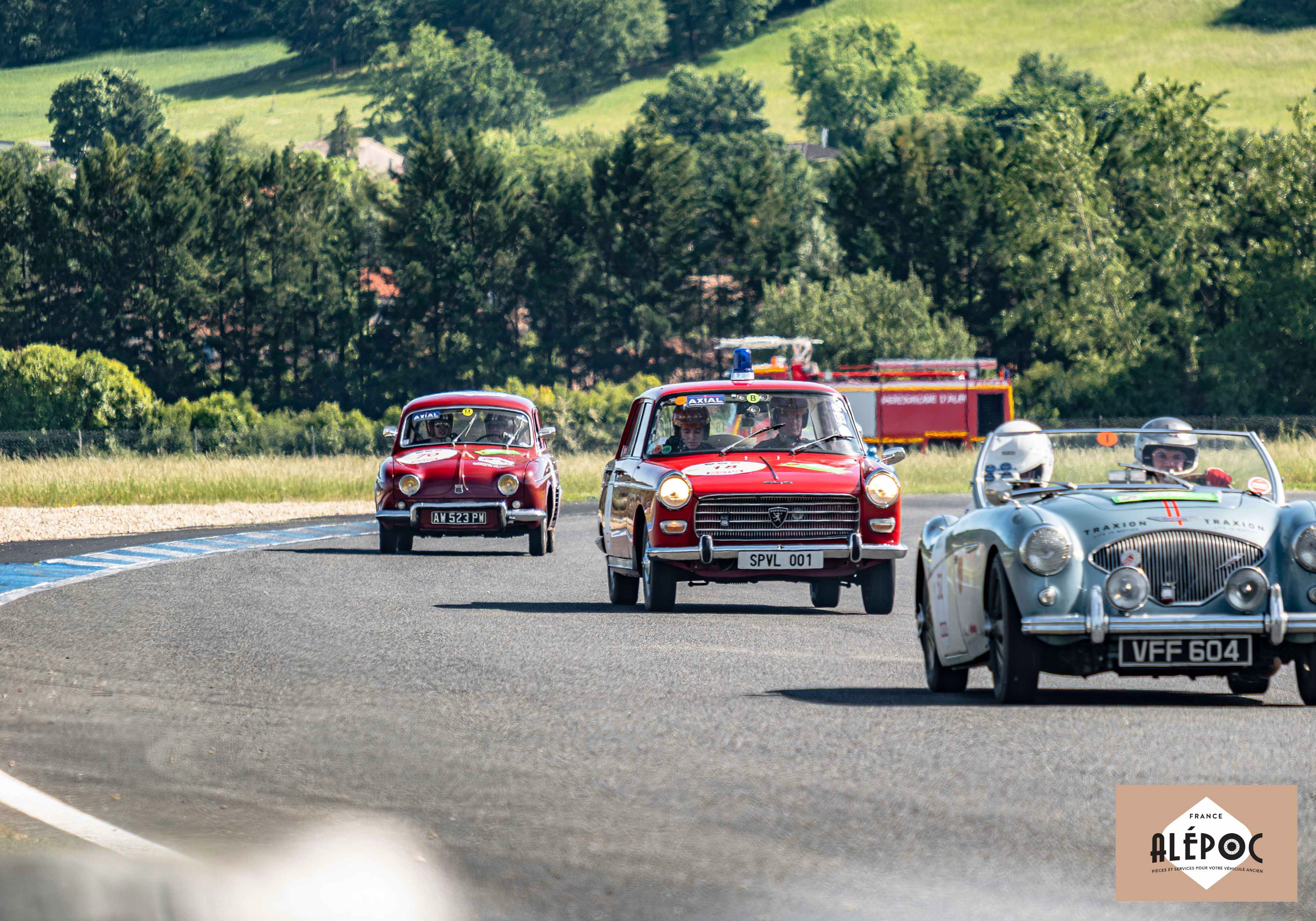
Peugeot 404 of the Paris Fire Department, 1962 (#18)
A second Peugeot the working class was involved, a Peugeot 404 of 1962 in the colors of the Paris Fire Department.
This popular character, wearing number 18—as was to be expected—caught everyone's attention. The world of firefighters is familiar to everyone. Who hasn't played at being a firefighter or dreamed of becoming one ?
We actually came across another decommissioned fire truck in the Pyrenees—a beautiful one Renault 4 red with its flashing light.
This beautiful Peugeot has been participating in the Tour Auto since 2024. The car was restored in the workshops of the Paris Fire Department, and it has come a long way: it no longer had an engine or a back seat.
A fantastic promotional tool, it performed admirably under the guidance of the crew of Vladimir Oursel and Antoine Pelissier, finishing 26th in the regularity category.
Explore our replacement parts for Peugeot 404

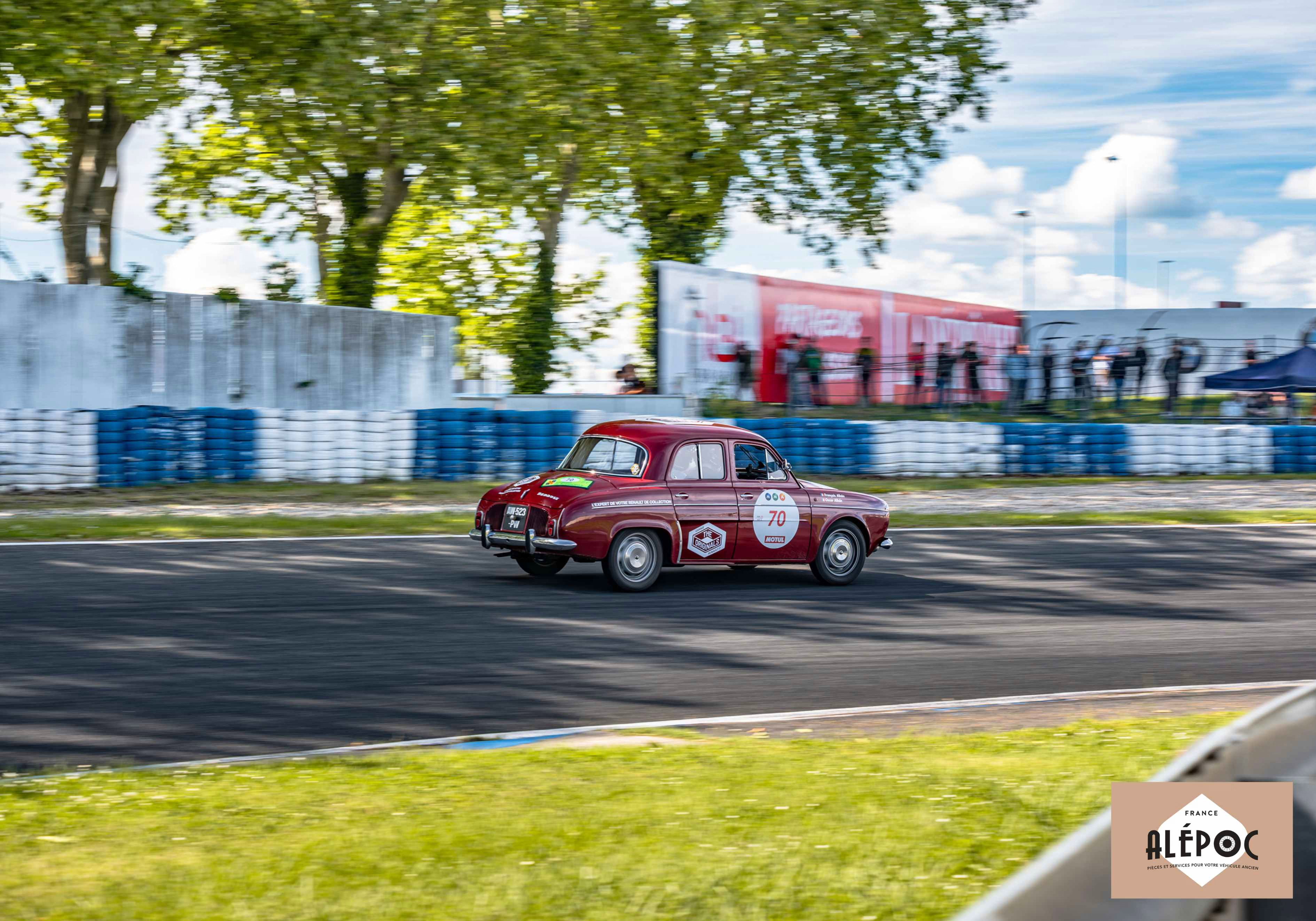
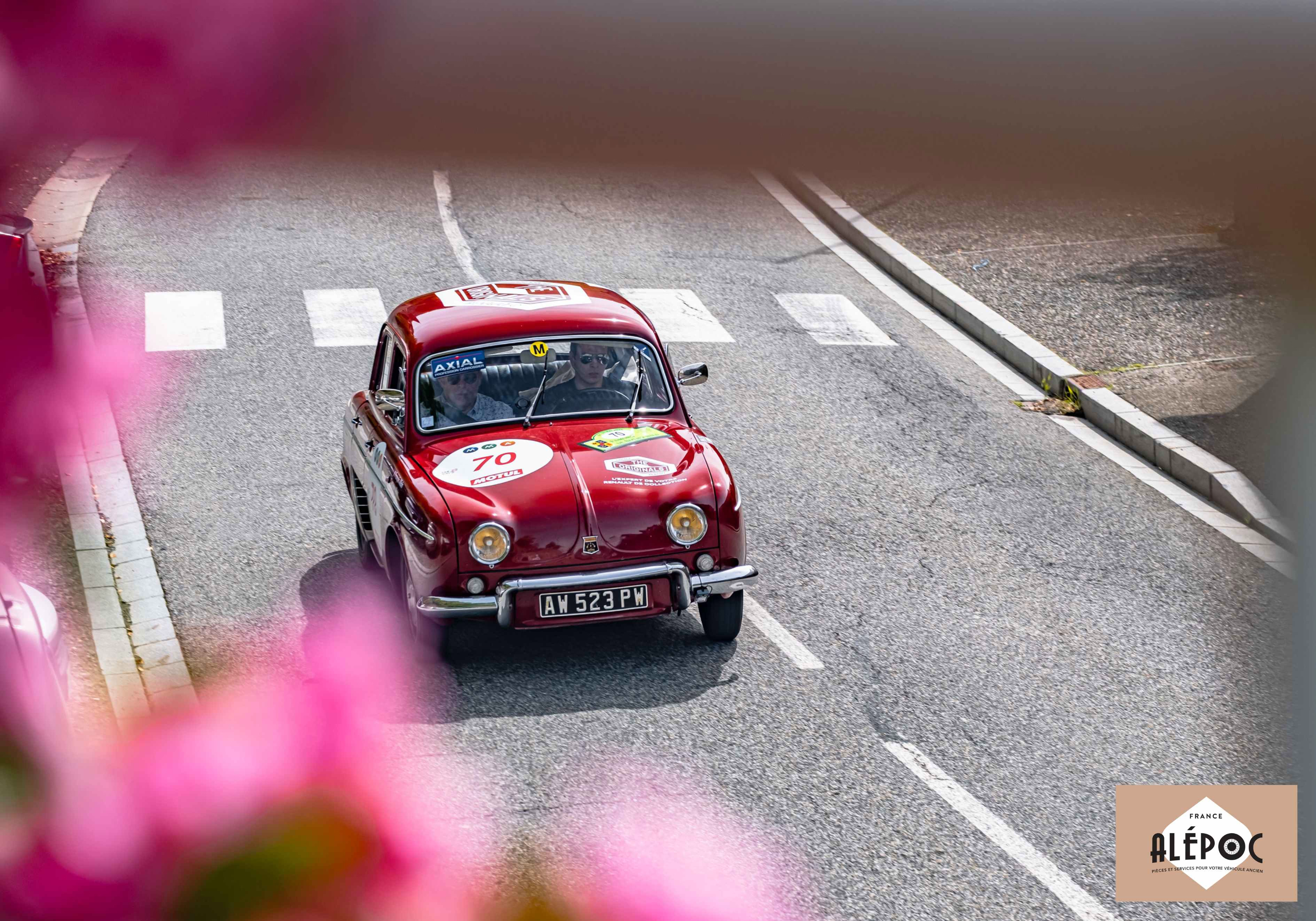
Renault 1968 Dauphine Gordini (#70)
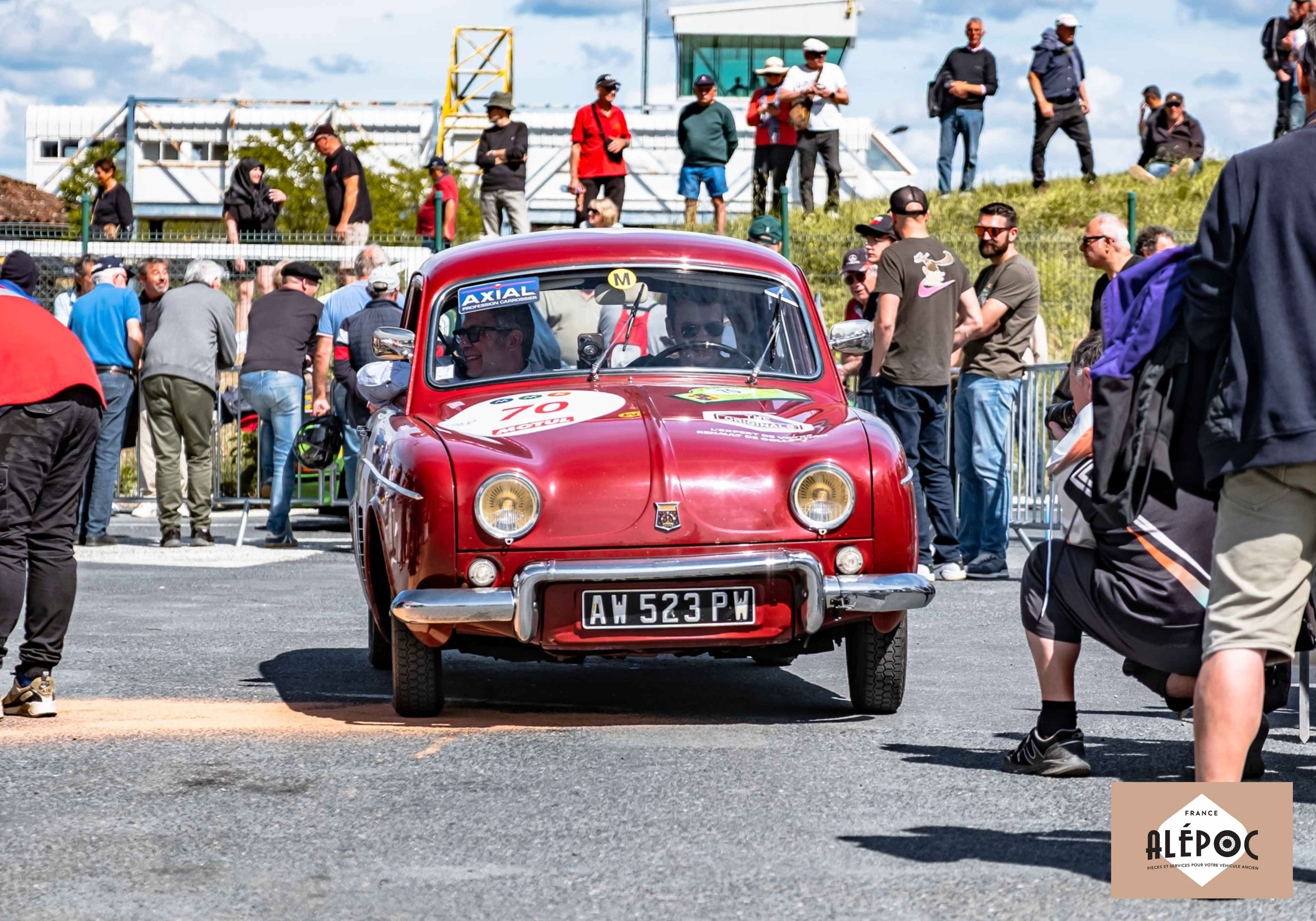
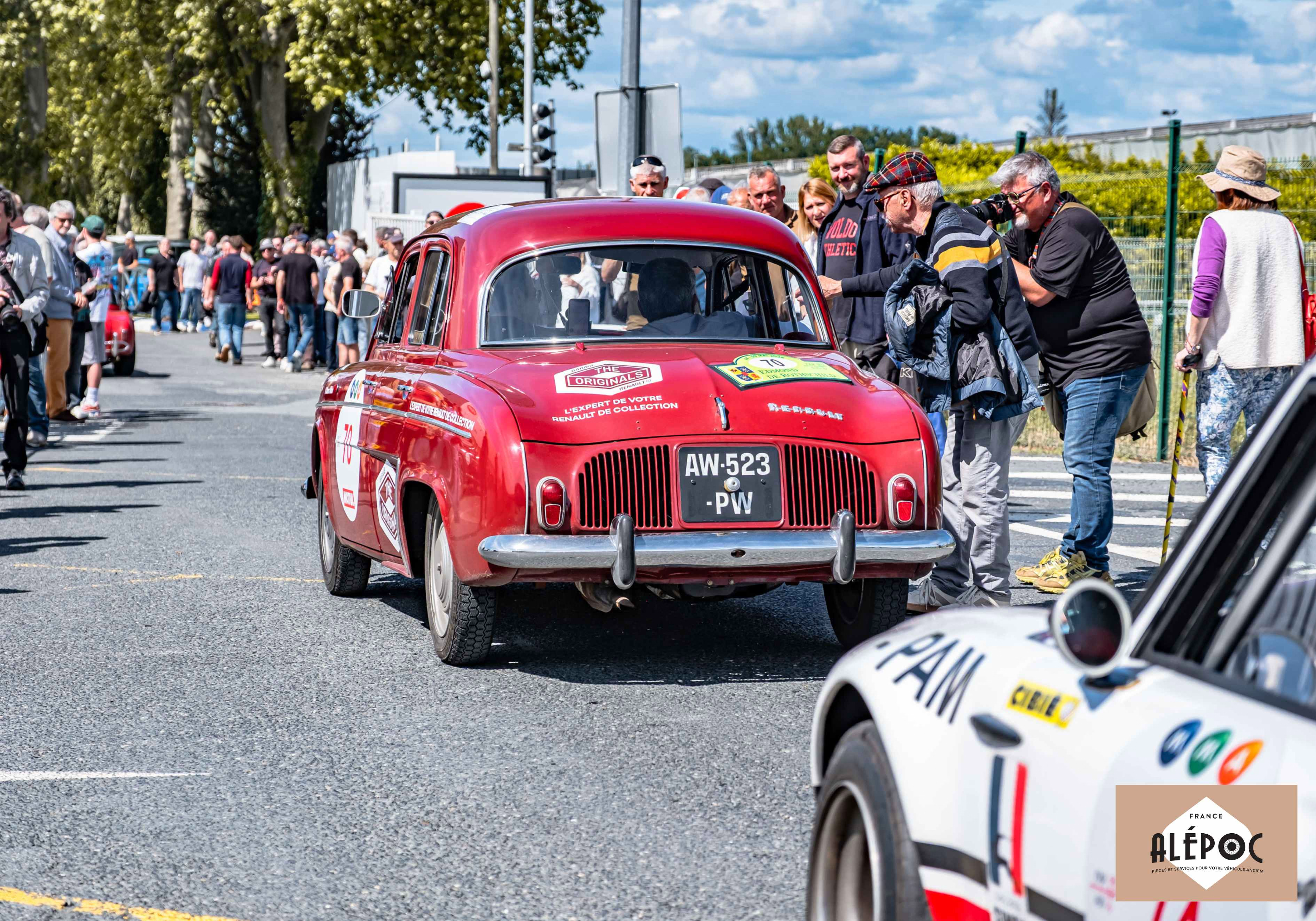
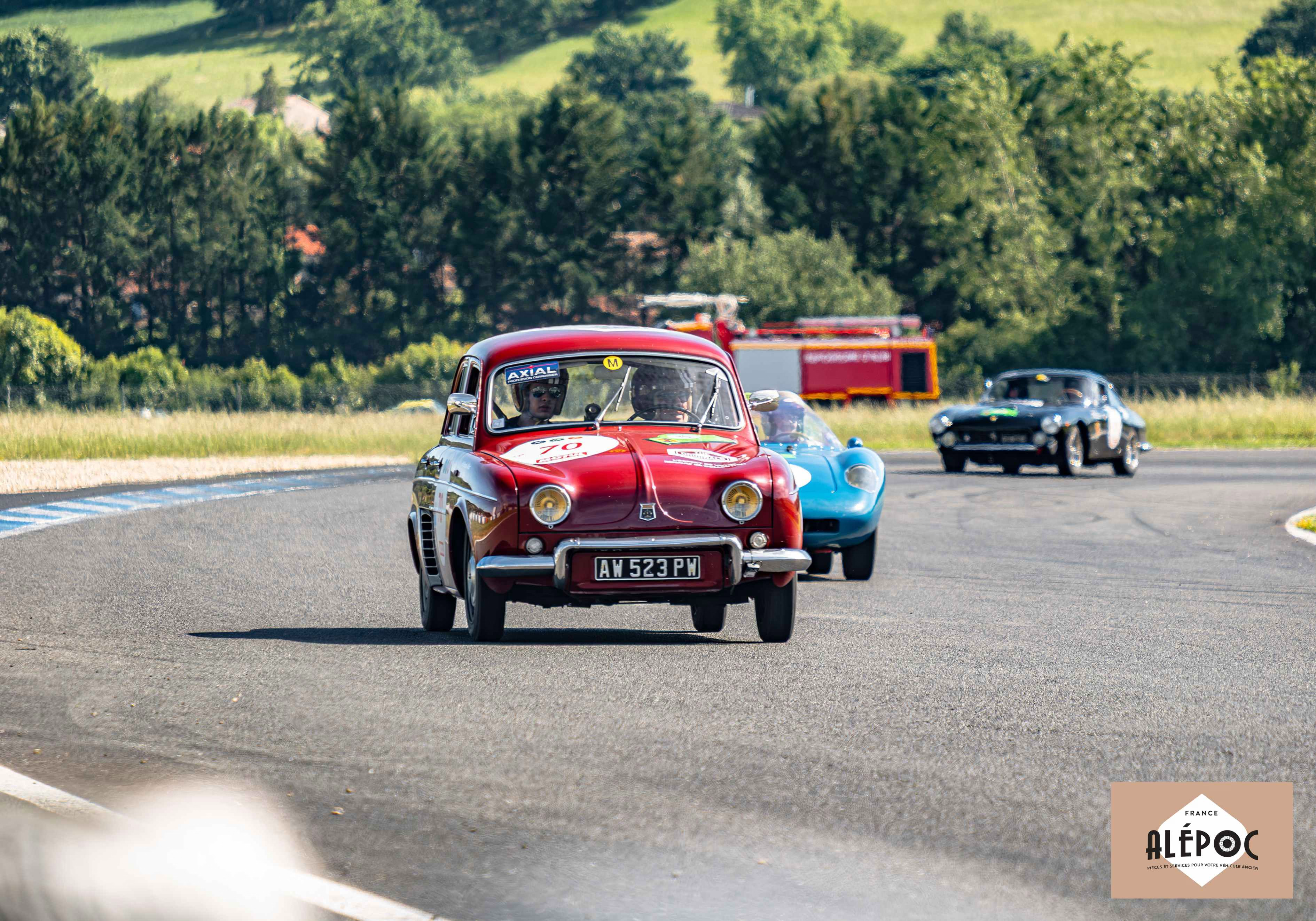
The little one Renault a popular event celebrating its 70th anniversary (Read "70 Years of the" Renault Dauphine: Setting Out to Conquer the World), was the standout French car at this year's event.
Renault wanted to pay tribute to this popular car by entering one of the last Renault Dauphine Gordini, model R1095, equipped with four disc brakes. This 1968 model is like new, with only 7,800 km on the odometer, and it’s a matching-numbers car.
A gem entrusted to the expert hands of the famous journalist and host François Allain and his son Oscar. We had already met François Allain at the Gazoline Festival (Read: The Gazoline Festival: A Retro-Themed Vacation) The message is clear: we need to instill a love of classic cars in young people.
In fact, the car was painted in the colors of The Originals Renault Garage, the new network of agents Renault dedicated to classic cars, with the goal of preserving our automotive heritage and, therefore, passing on to future generations the Renault iconic.
The Allain duo's enthusiasm was contagious throughout the race. They finished 94th in the regularity class.
Explore our replacement parts for Renault Dauphine
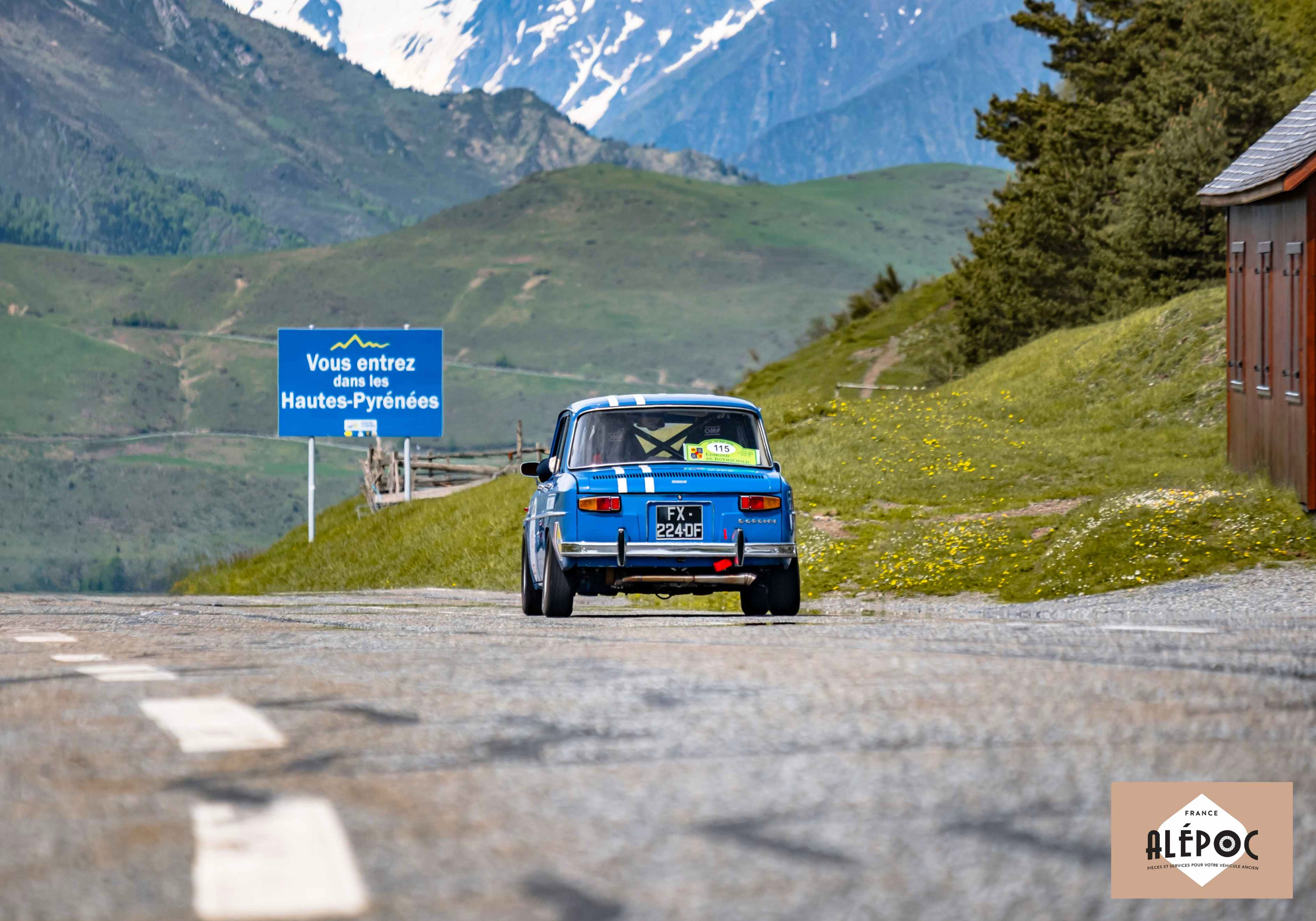
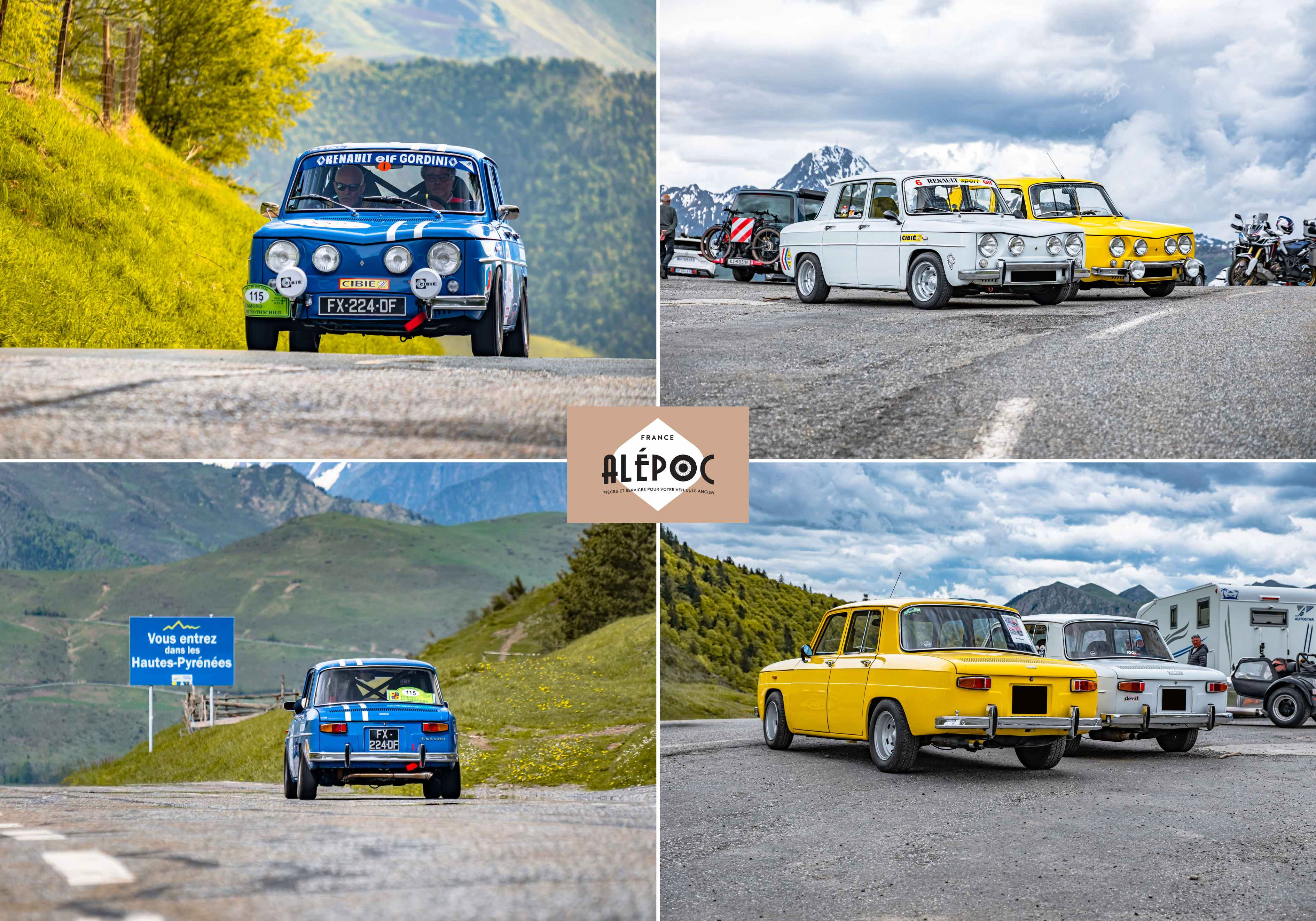
Renault 1969 R8 Gordini (#115)
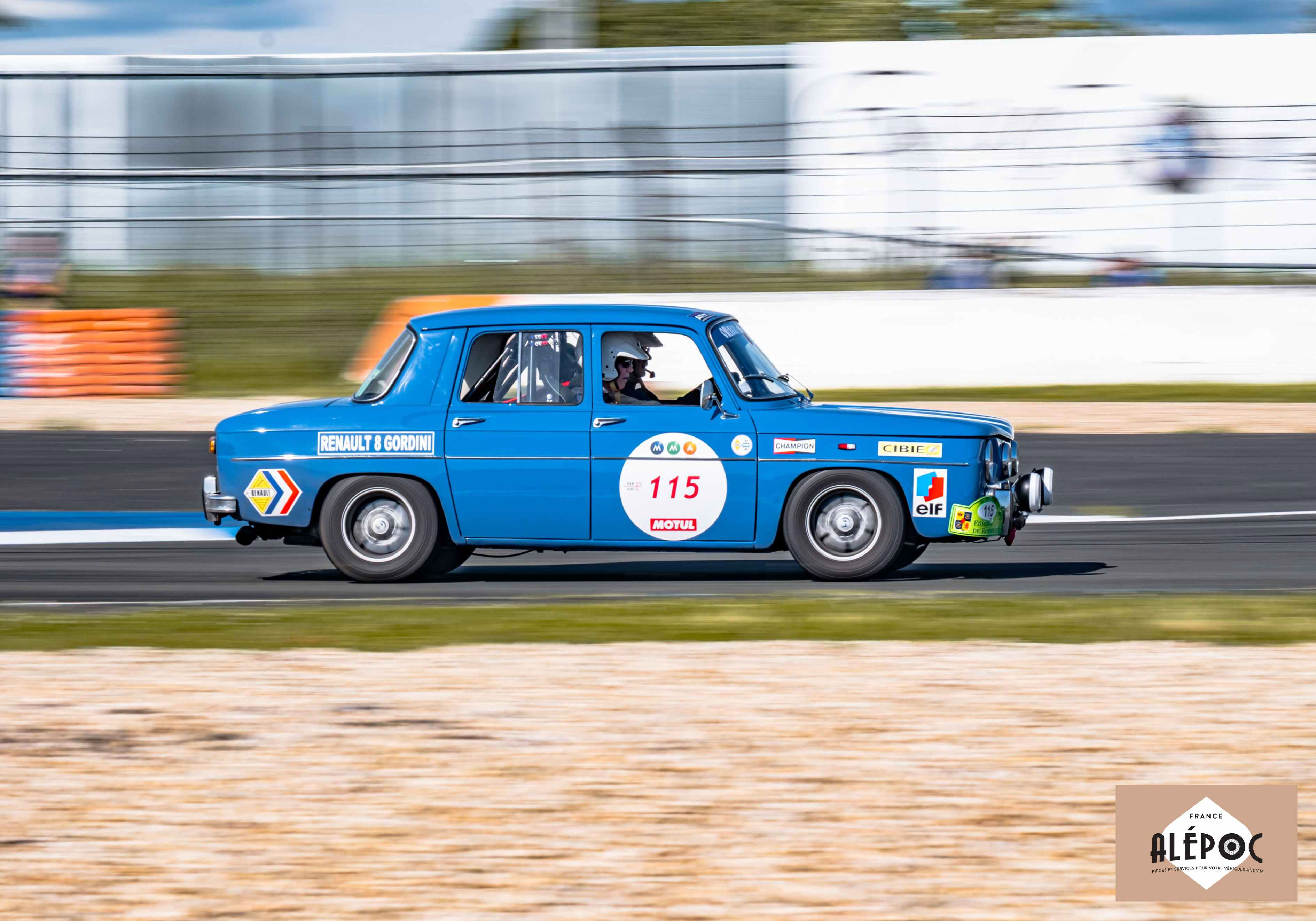
This is the second one Renault a popular, performance-oriented car, and it finished just behind the Dauphine Gordini.
The model hierarchy isn't followed, but Serge Dumas and Gérard Mattiussi had a great time behind the wheel.
It must be said that this little Renault a made sports cars accessible to the general public with its single-make series, where the greatest drivers cut their teeth.
A car that captured the imagination of many people. Serge Dumas remembers a neighbor who, when he was a teenager, owned a R8 Gordini and a Simca 1000. He had always dreamed of it but never thought he'd one day drive one of them in such a prestigious race. (Read: R8 Gordini—60 Years of a Beloved Sports Legend)
It had been slightly modified, with a racing steering wheel, a roll bar, and bucket seats. Its 1,295 cm³ four-cylinder engine, producing 100 ch, performed well in the Pyrenees mountain passes. In fact, loyal fans were gathered at the top of the Aspin Pass with two beautiful Renault 8. That’s also what the Tour Auto is all about: countless enthusiasts lining the route, coming to admire and hear these dream cars.
Check out our replacement parts for Renault 8
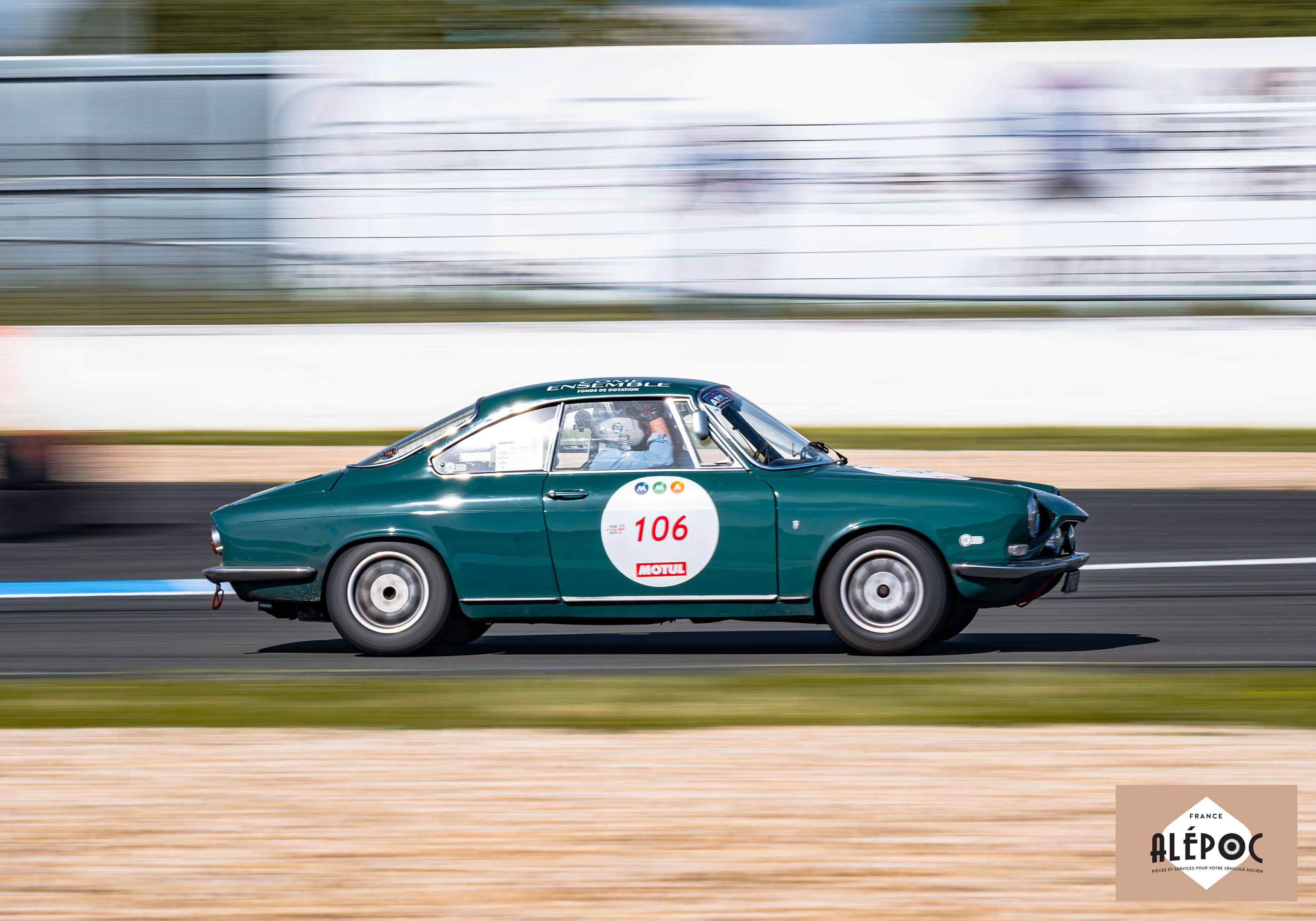
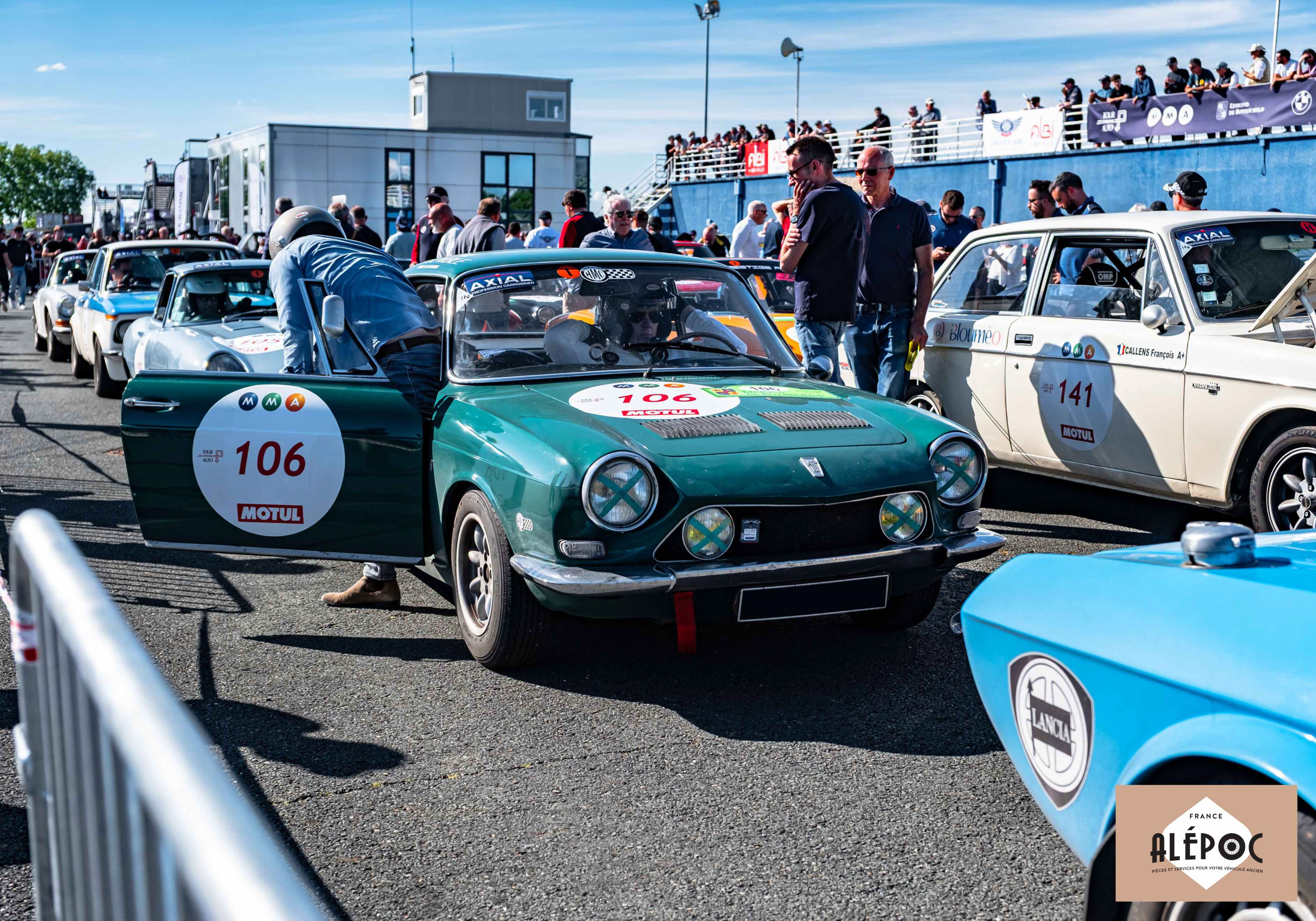
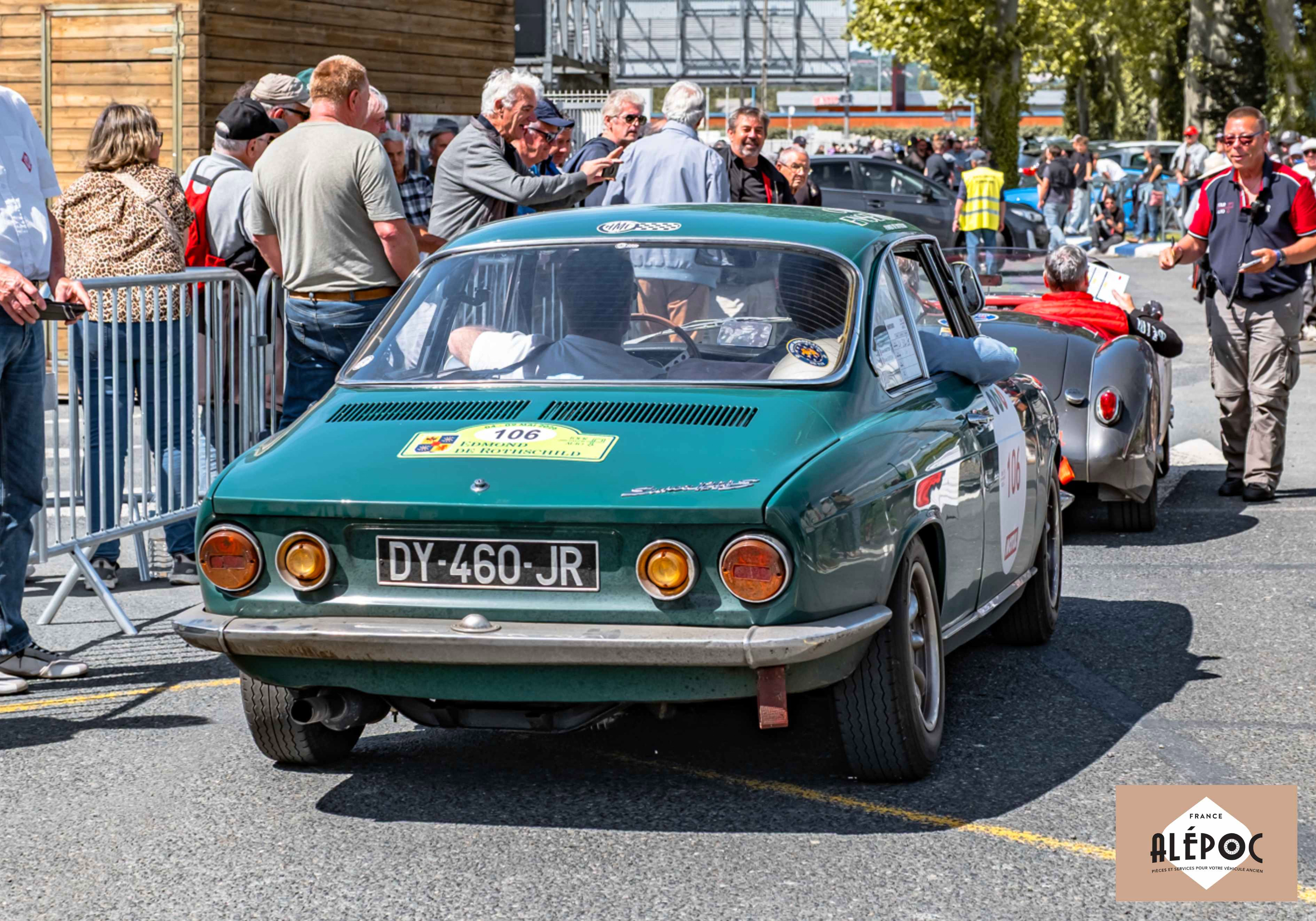
Simca 1970 Bertone 1200S Coupé (#106)
The third brand represented at this year's Tour Auto, Simca is highlighted by a lovely 1200S Bertone Coupe.
In 1967, Simca wants to finally own a true sports car, capable of competing with the Renault Gordini, NSU TT, or Fiat Abarth. The previous Coupé Simca 1000, illustrated by Giorgetto Giugiaro, was appealing in style but lacked spirit.
Marcello Gandini It then underwent a major redesign: a more aggressive front end, four headlights, air intakes, and a modernized rear end. Under the rear hood sat the new 1,204 cm³ Poissy engine, powered by two twin-barrel carburetors producing 80 ch, then 85 ch starting in 1969.
Weighing in at about 790 kg, the car can exceed 170 km/h, making it a high-performance sports car for its class.
The beautiful green coupe, driven by Xavier Dufour and Julien Magitterri, finished in 108th place in the regularity class.
Discover our products for Simca 1200
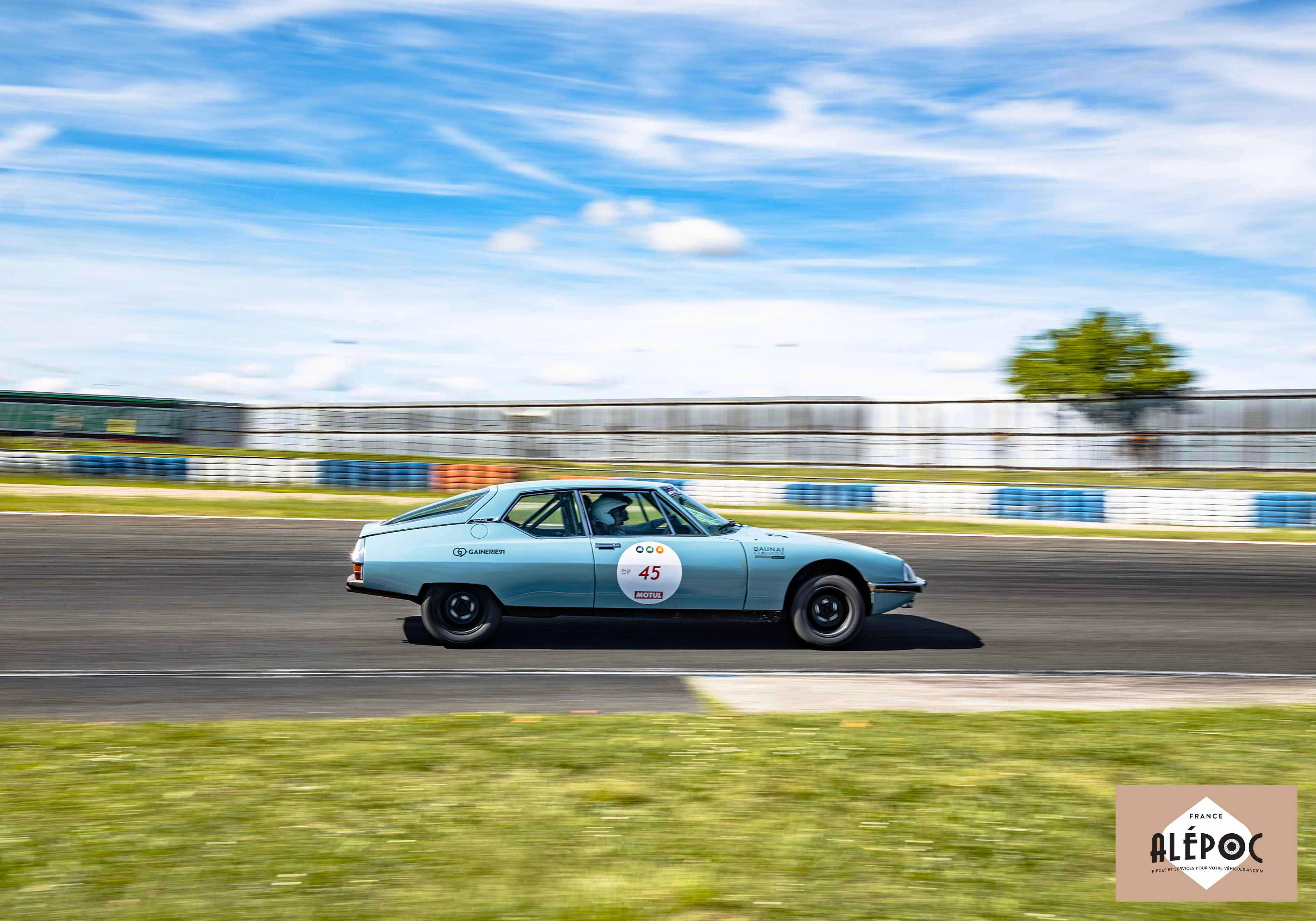
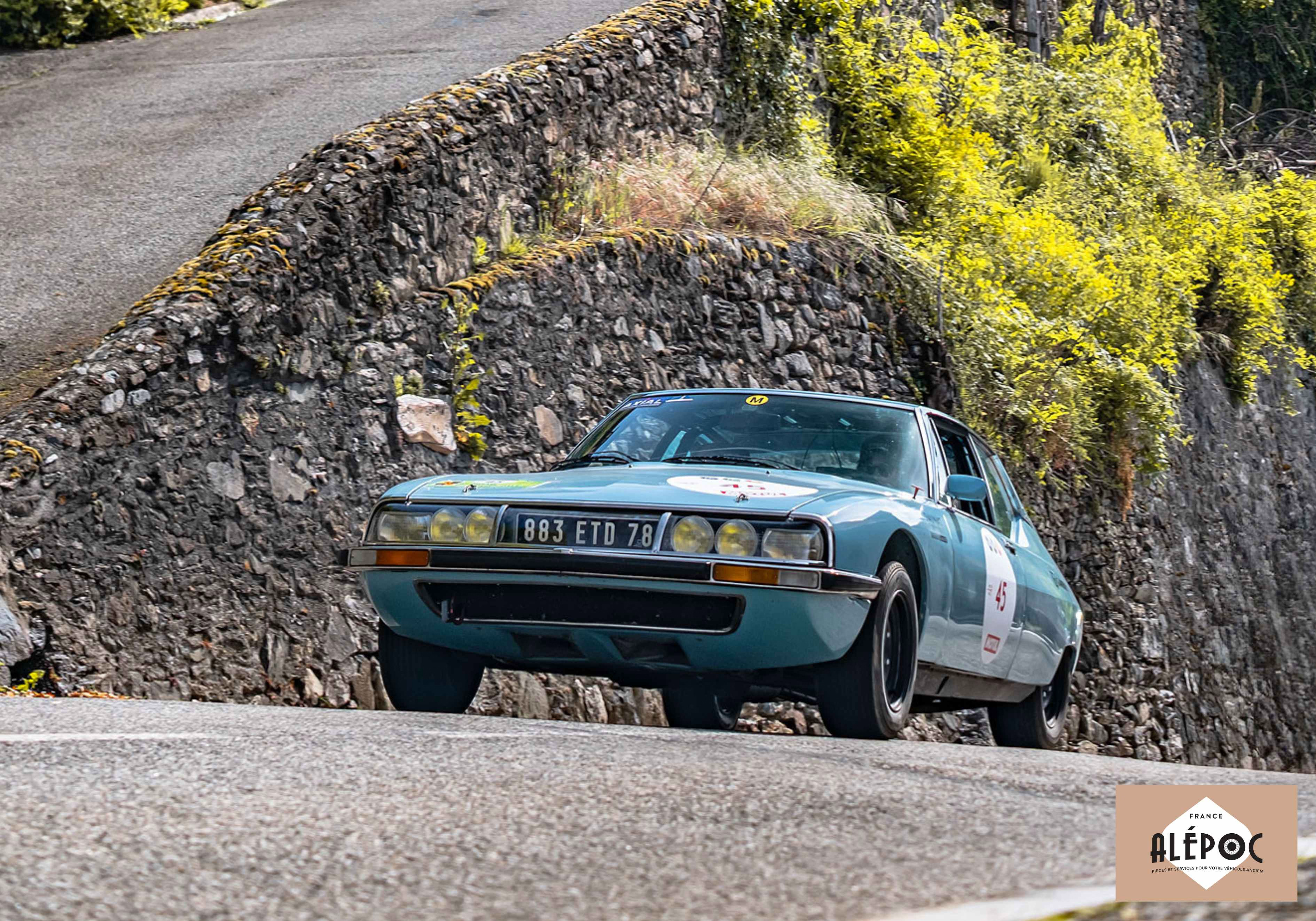
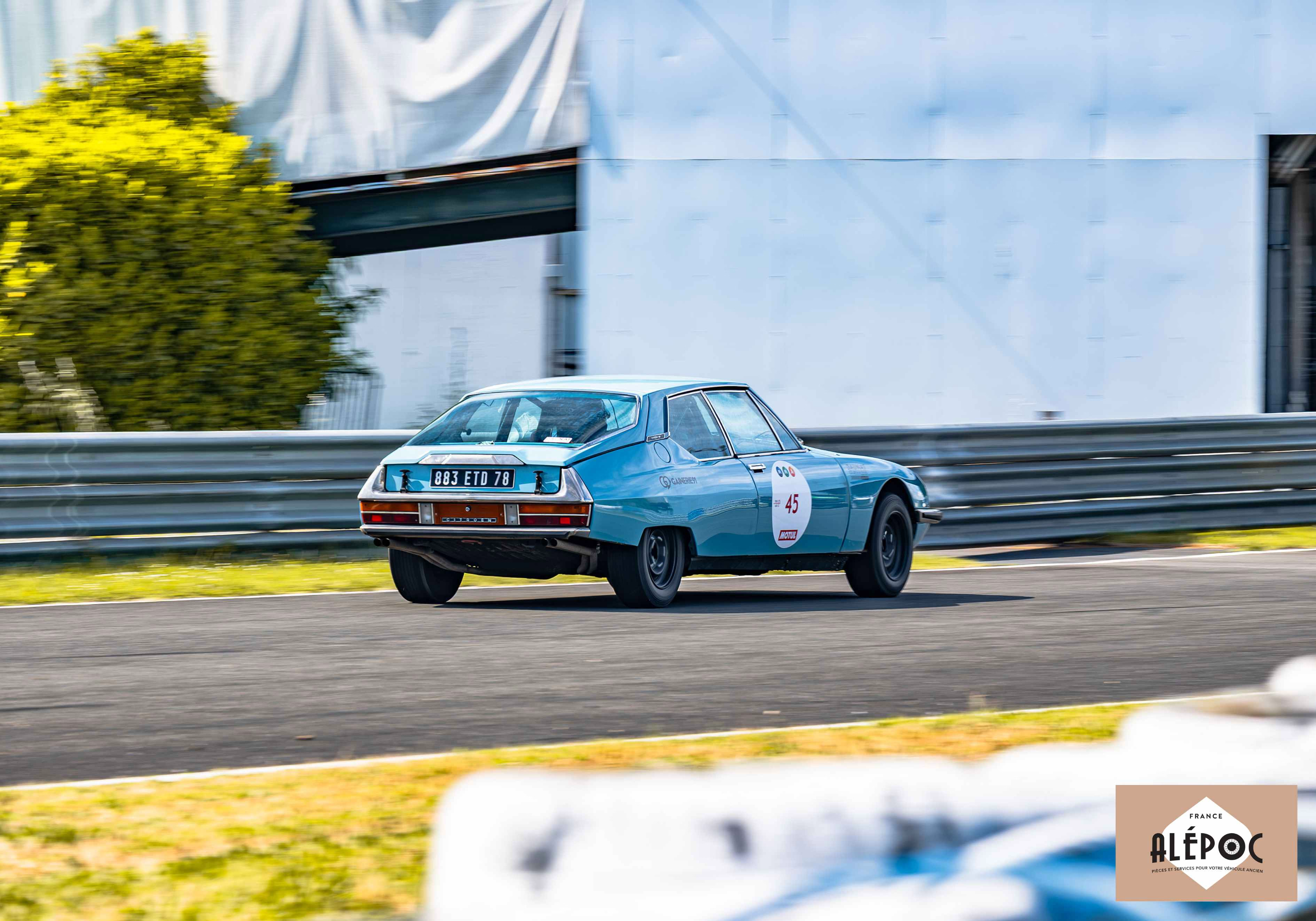
Citroën SM 1971 (#45)
Not exactly popular, the large coupe Citroën SM has never been very successful in sports, due to a lack of resources.
With its Maserati V6 engine and hydropneumatic suspension, it competed in the 1971 Morocco Rally. Since it didn’t perform well enough, the SM was redesigned. To improve agility, the engineers shortened the wheelbase (-36 cm) and the rear overhang (-24 cm).
To reduce weight, body panels are being replaced with fiberglass. The weight savings are impressive, with the car weighing 480 kg less.
Performance is on the rise, with a V6 engine that now delivers 250 ch thanks to a dual carburetor setup.
For this edition, there’s no chance of seeing any of those extraordinary race cars: here, simply a Citroën A classic SM, lightly modified, that finished in 49th place in the regularity class.
Explore our replacement parts for Citroën
An exciting event
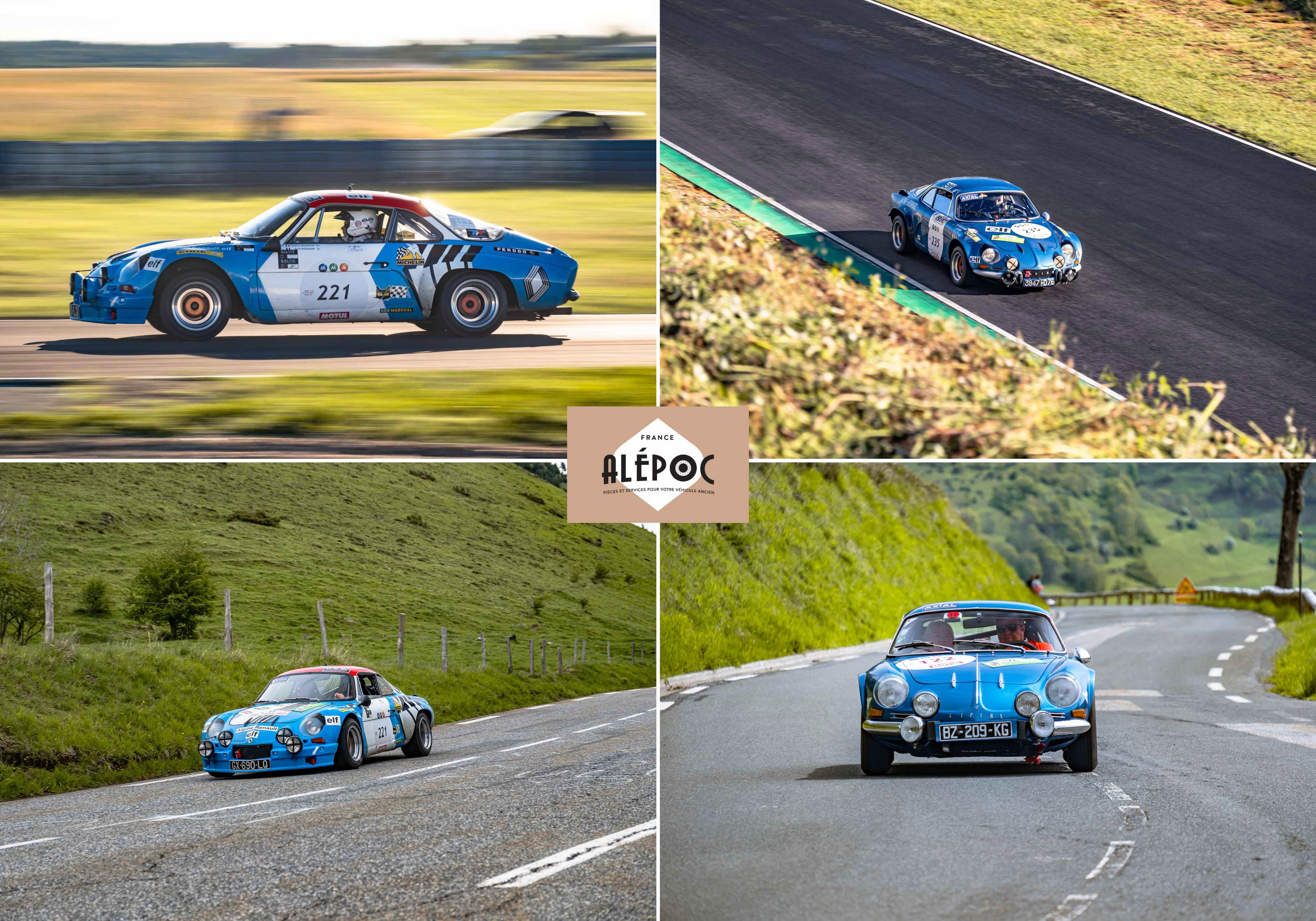
Taking part in such a race behind the wheel of a popular French car is a true labor of love. A Passion for Cars and France's cultural heritage. Driving through the most beautiful parts of our country, behind the wheel of vintage French cars, is undoubtedly a lot of fun for the crews, as evidenced by the many smiles on their faces as these beautiful cars pass by. Granted, they aren’t necessarily the best cars for winning, but in regularity races, they can work wonders thanks to their light weight. In competition, the Peugeot 203 Constantin went head-to-head with other, more spirited French cars—the Alpine A110 1800s. The A110 is a model built for racing, which has excelled in numerous competitions, including the 1963 Tour de France Automobile. All that’s left is to dream of participating in it, and in the meantime, We continue to keep popular French cars on the road with our replacement parts.
Check out our other event coverage:
A Visit to the 2026 Avignon Motor Passion Show: Classic Cars Take Center Stage
Traffic Jam in Lapalisse: Relive Your Vacation on the Legendary N7
18th gathering Simca : The 60th anniversary of the 1300/1500
Retromobile 2023: In Search of That Special Find
Published on
17-07-2026