Shopping Cart
 English
 Français
These derivatives that never replaced the "deuche"

On the online store Alepoc you will find many engine parts for the Citroën 2CV and its derivatives. Because our venerable and mythical national "deuche" (nickname for the 2CV) has had several derivatives that were sometimes supposed to replace it… but never did !
The first derivatives: the Ami to move upmarket
After the Second World War, one cannot even speak of a range at Citroën. The Deuche is the entry-level model... and then we have the Traction, 11 and 15, followed by the DS and ID from 1955 onwards. In between, there is nothing.
So we are launching the study of a new car. It will be a 3 fiscal horsepower, and will be a sort of Super 2CV. In fact, this new car will indeed be one since technically we will be using the chassis, the running gear, and the engine base of the 2CV. This engine, specifically, will be reworked. The 2CV at that time is powered by a 425 cm³ engine which will be insufficient for the new car. The cylinders are rebored and we end up with a 602 cm³ engine that will set a standard. This is not too much since the new bodywork, the last one designed by Bertoni for Citroën is more massive than that of the 2CV. And then we want comfort, so we don't skimp on the equipment.

The Ami 6 was introduced in 1961. Its unique design with the inverted rear window makes it stand out. But it sells, and quite well, in fact! A real range is even developed, with a station wagon version arriving in 1963.
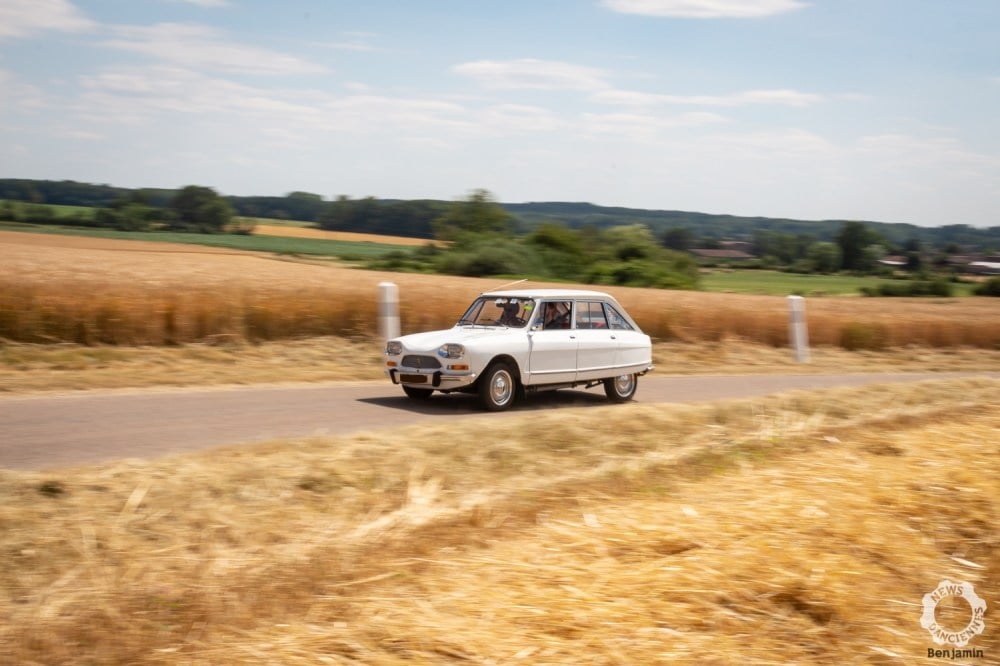
It was replaced by the Ami 8 starting from the 1969 Geneva Motor Show. The appearance changed, but the engine remained the same. Sales did not reach the level of the Ami 6, and the Ami 8 ended its career quite discreetly in 1978.
1.840.121 All versions of the Ami combined will have been sold, with more than half for the Ami 6… and the station wagon sold better than the sedan !
So, did the Ami harm the 2CV? Not really. It was always intended to complement it, and in the end, the longevity of the 2CV meant that both models were always offered together. In fact, it was rather the 2CV that encroached on the Ami 6's territory starting in 1968. When the 2CV6 was launched, equipped with the Ami's 602 engine, the new car... was no longer a 2CV but a 3CV !

The Dyane to try to get through the milestone
When Citroën launches the study of what will become the Dyane with the hope of boosting its sales in the 2CV segment. The Citroën was surpassed in sales by the Renault 4L and action needs to be taken. However, it is on the 2cv market that we want to persist, and not to directly challenge the 4L, which is at 4CV. Besides, the Ami are there for that.

As with the Ami, we will take advantage of economies of scale by using parts from the 2CV such as the chassis and engine, and even by reusing the assembly lines. If the new car sells well, it will simply replace the 2CV. The engine will be the 425 cm³ from the 2CV.
To tackle the 4L, one of its advantages, the tailgate, is utilized, while the rest of the bodywork, initially designed at Panhard, is taken over by Citroën.
The new car, named Dyane because the name was registered by Panhard, innovates with its square front headlights (which are actually round but surrounded by a trim) and its concave doors necessary for the rigidity of the whole structure.
The Dyane began production in August 1967. However, its engine was a bit limited for many customers, so the Dyane 6 was launched in 1968 with the 602 cm³ engine that appeared on the Ami. The 425 cm³ engine would quickly be replaced by a 435 cm³ engine, which was slightly more powerful, but more importantly, it allowed the car to remain a 2CV.
Now, did the Dyane manage to make people forget the 2CV? In the early years, yes, because in 1968 almost twice as many Dyanes were produced as 2CVs. The same was true in 1969, but from 1970 onwards, the 2CV6 revived the model. From then on, both models would be in the catalog at the same time, but the 2CV would have the advantage in sales figures, excluding the vans and Acadiane.
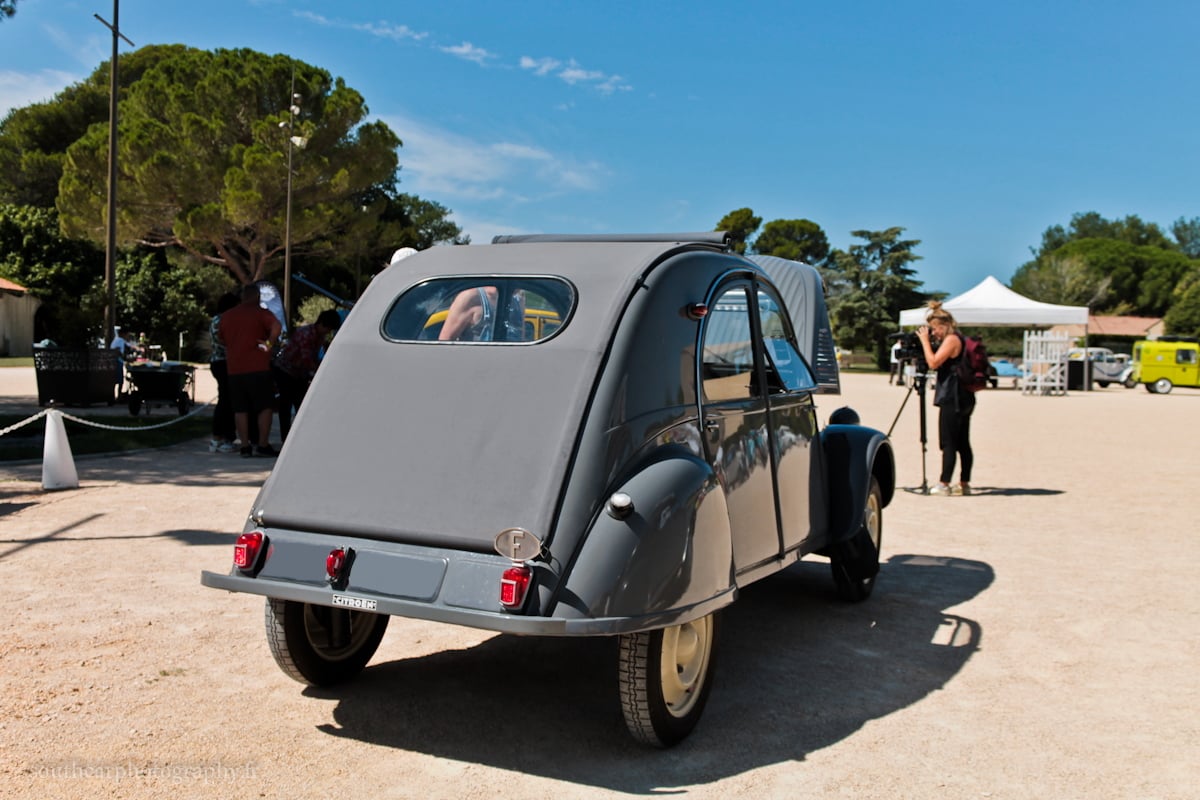
But the Dyane will stop in 1983 after 1.4 million units produced. The "deuche" will continue until 1990 !
Engine parts for 2CV and derivatives
You will have understood that these three models had many parts in common. Alepoc Therefore, propose engine parts that you can install on either one.
To be sure not to make a mistake:
You can find the engine parts for Citroën 2CV here
Published on
14-09-2020