
Shopping Cart
 English
 Français
80th Anniversary of the 4CV " Renault ": The Little Queen Who Revived France
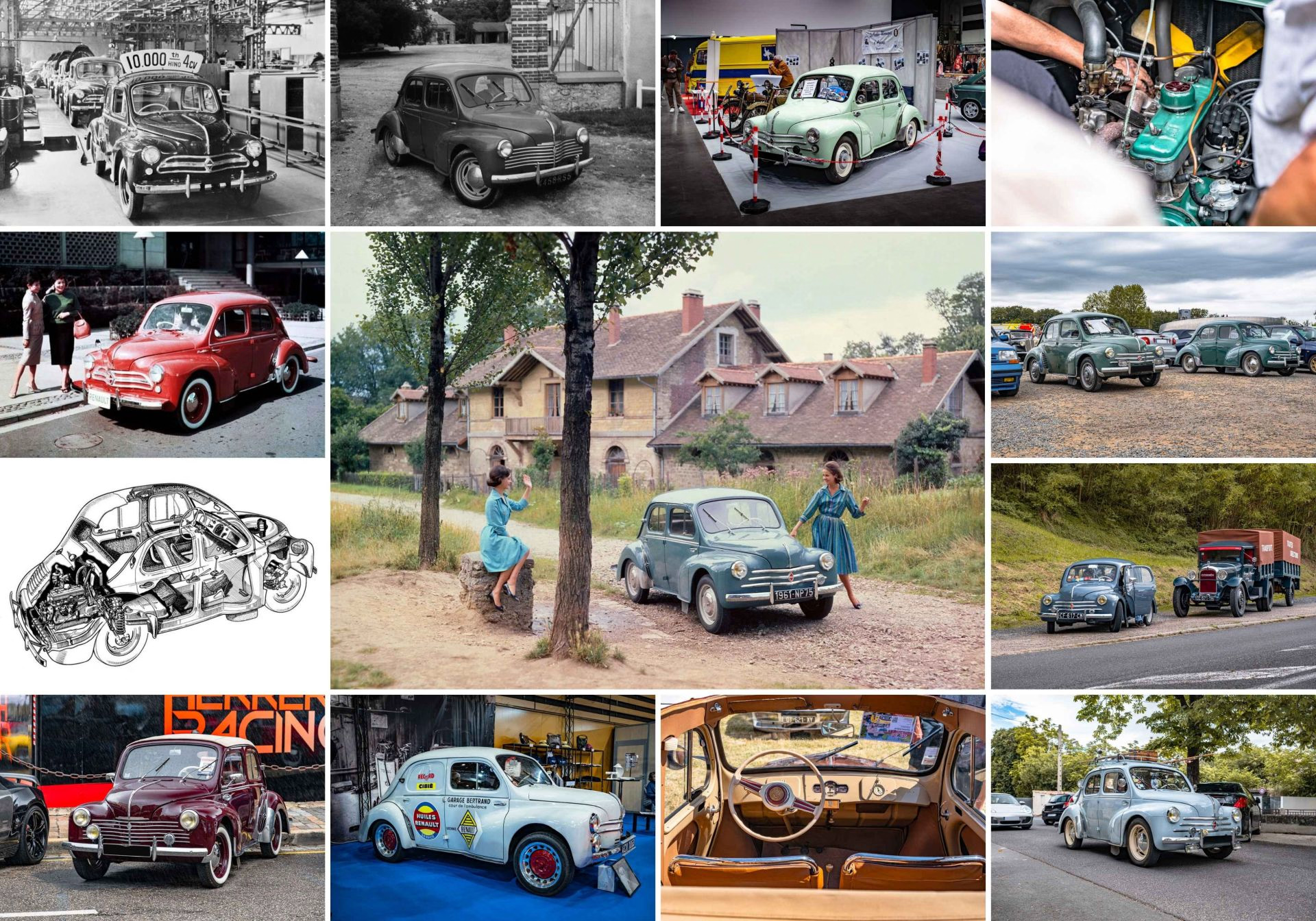
In 1946, the Régie Renault is launching a small rear-engine sedan on French roads that will become the first French car in history to surpass one million units sold. The Renault This year, the 4CV is celebrating its 80 years old. A look back at the history of this cultural icon.
The origins: a project born in the shadow of the Occupation
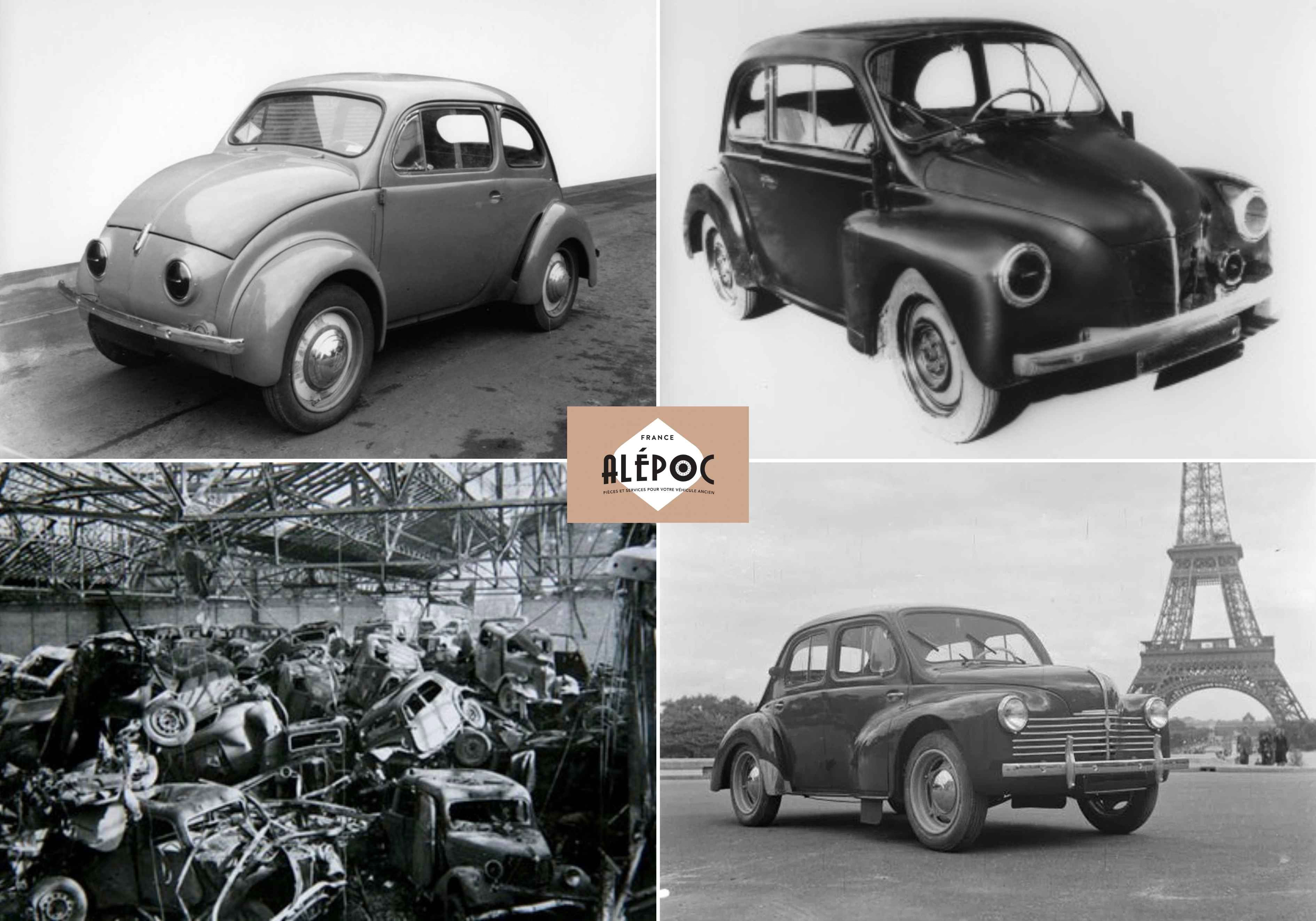
The history of the Renault The 4CV’s story began under extraordinary circumstances, in the midst of World War II. While the factories Renault, while under occupation, repairing tanks for the Wehrmacht and enduring regular Allied bombing raids, three visionary men secretly continued to develop a small, affordable car: Fernand Picard (Director of Studies), Edmond Serre (chief engineer) and Robert Barthaud (chief illustrator). Louis Renault He himself wasn't convinced by the concept of a small rear-engine car—but his engineers persisted.
It was Project "106," developed with minimal resources, that gave rise to January 1943 the first prototype, made of aluminum, with two doors, and a rather unattractive design. Von Urach—the German representative in charge of the factories—wasn’t fooled and questioned Picard about this mysterious vehicle spotted near the Sèvres Bridge. Picard vehemently denied it and carried on without batting an eye.
Fourteen months later, a second prototype was unveiled, featuring a more appealing design, still with two doors. In total, between 1943 and 1946, 47 pre-production models and prototypes were manufactured in the utmost secrecy.
After the Liberation, Pierre Lefaucheux takes the helm of the Régie Nationale des Usines Renault (RNUR) on October 6, 1944. A visionary, he simply called for improvements to the design, four doors, and set an ambitious goal: 300 copies per day. He commissioned a market study before the launch—a first of its kind in France—which confirmed the engineers’ hunch: the French wanted an affordable, fuel-efficient, and modern car, not an 11 CV.
Louis Renault, charged with collaborating with the enemy, died on October 24, 1944, without ever seeing his company reborn. Ferdinand Porsche himself, imprisoned and then transferred to Saint-Cloud, was asked to give his opinion on the 4CV—which he greeted with contempt, recognizing in broad strokes the design of his own Beetle, unveiled in 1938.
Browse our replacement parts for Renault
The Launch: The Butter Loaf at the Paris Fair
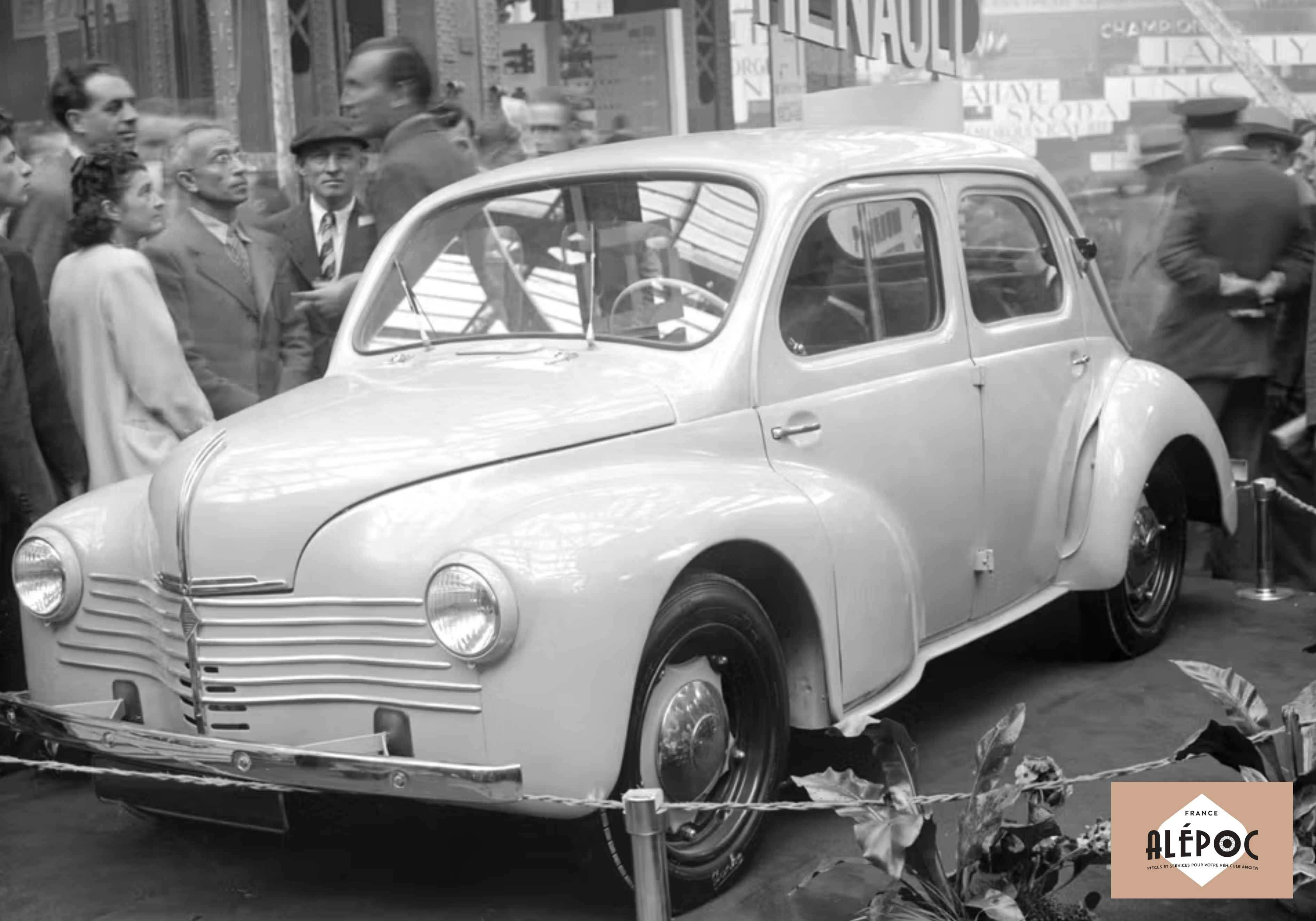
The September 26, 1946, on the occasion of the 33rd Paris Motor Show, the Renault The 4CV was unveiled to the general public. The reveal caused a sensation. The little yellow sedan—painted with leftover camouflage paint from the Afrika Korps—was immediately nicknamed "knob of butter".
As virtually the only new model at the show, this 4CV was warmly received by the public. They saw it as a return to a normal, carefree life with paid vacations.
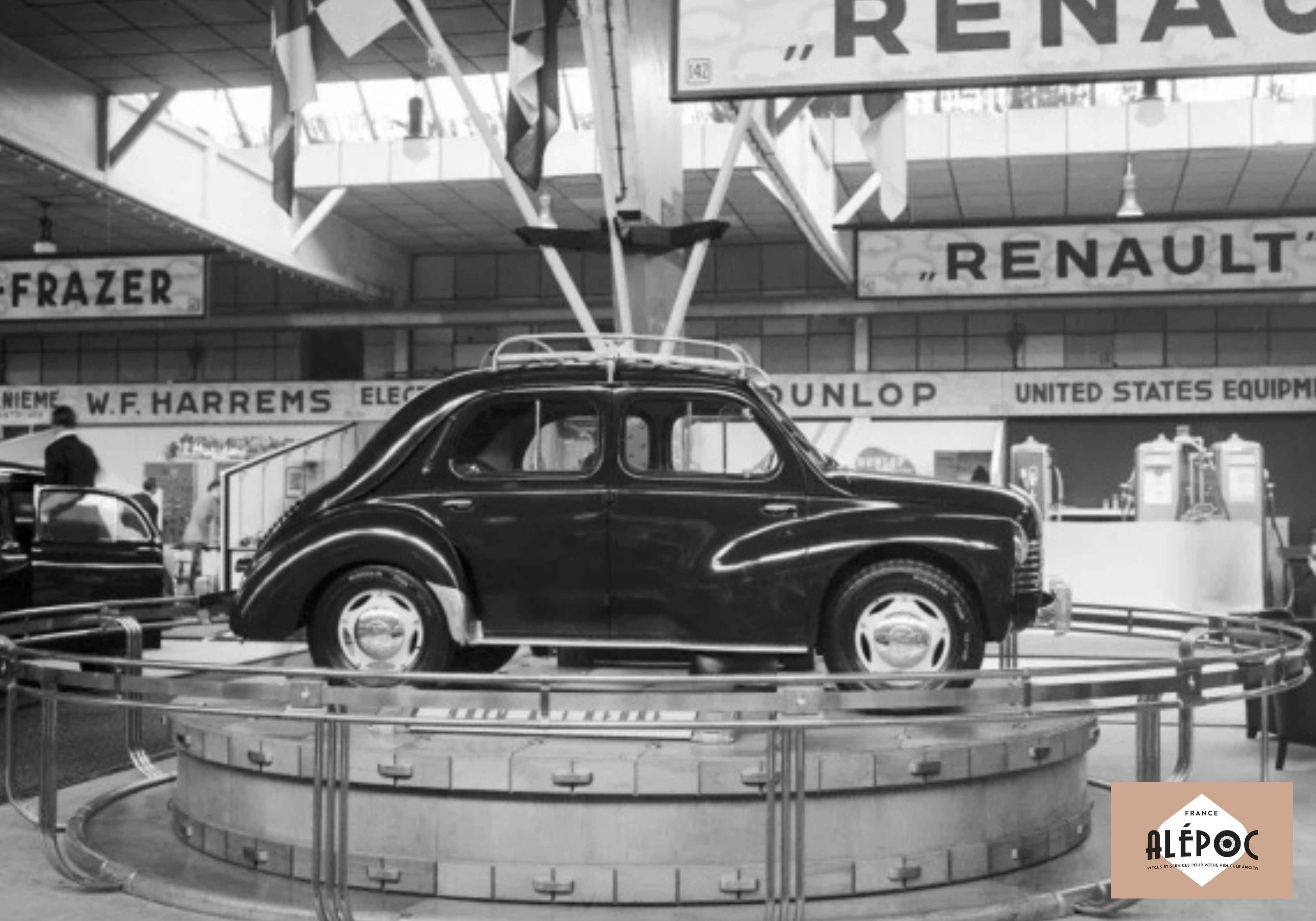
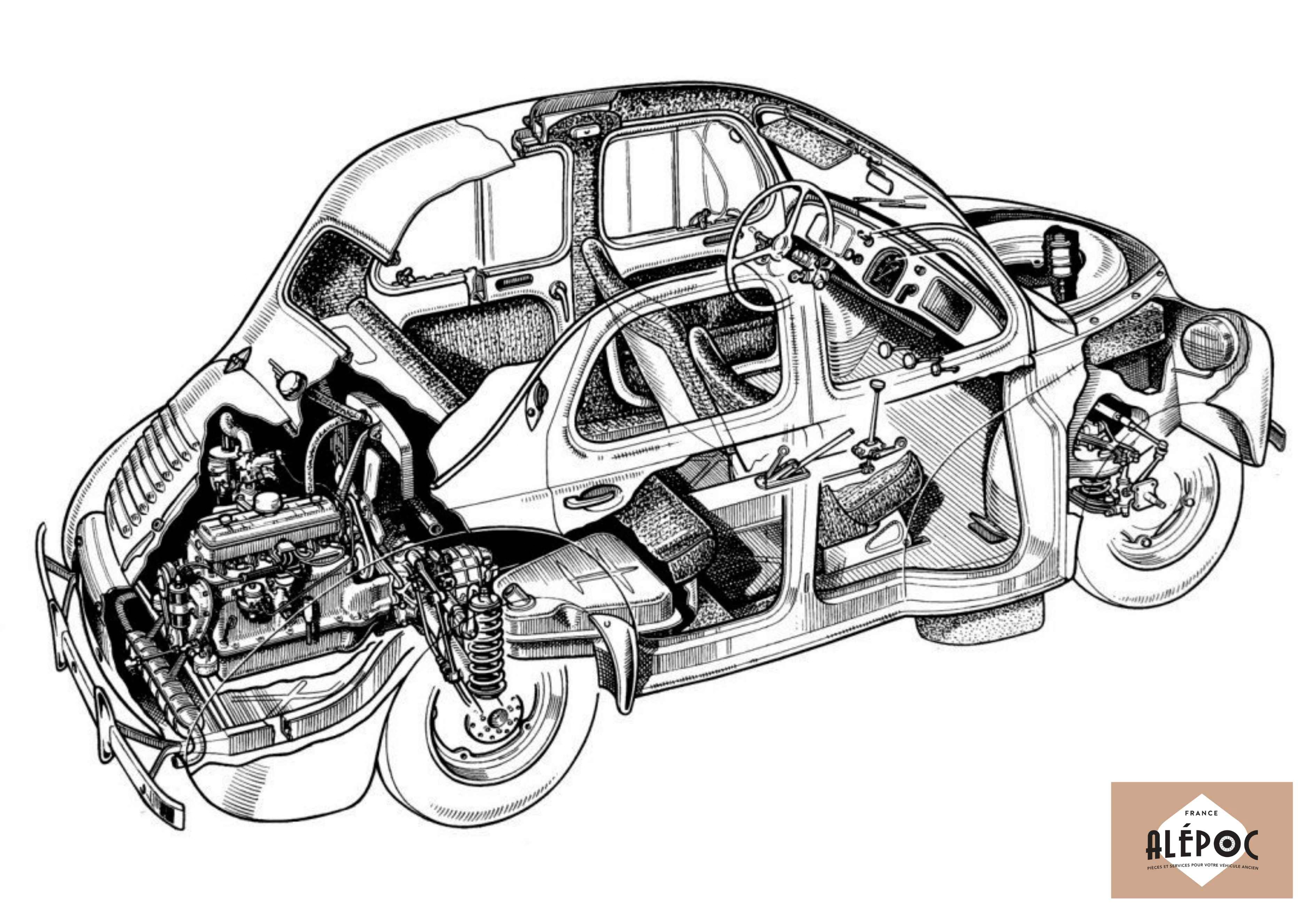
Sales begin in August 1947, with an admission price of 185,000 francs. The car is built on a steel monocoque chassis, featuring a water-cooled rear-engine layout and a 4-cylinder 760 cc, producing 17 hp and four independent wheels. Simple, sturdy, and economical: it gets about 6 liters per 100 km and has a top speed of 100 km/h—more than enough for its time.
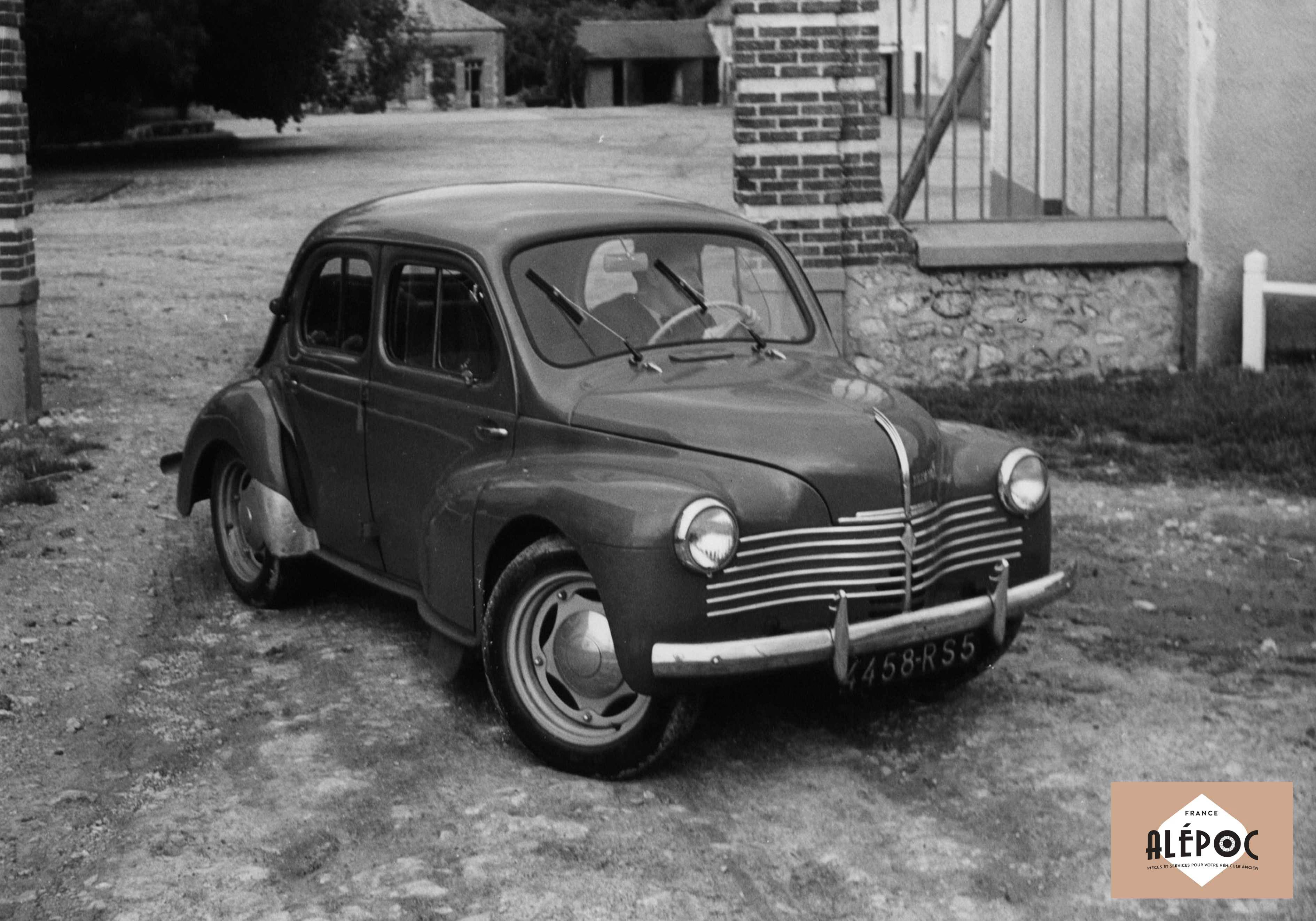
Its rounded, endearing silhouette—with its four curved wings, egg-shaped canopy, and flattened nose—gives it an instant charm that its contemporaries cannot rival. The press is talking about it a car “made for the French” and production rates are ramping up to meet demand that has exceeded all expectations.
An unprecedented popular success
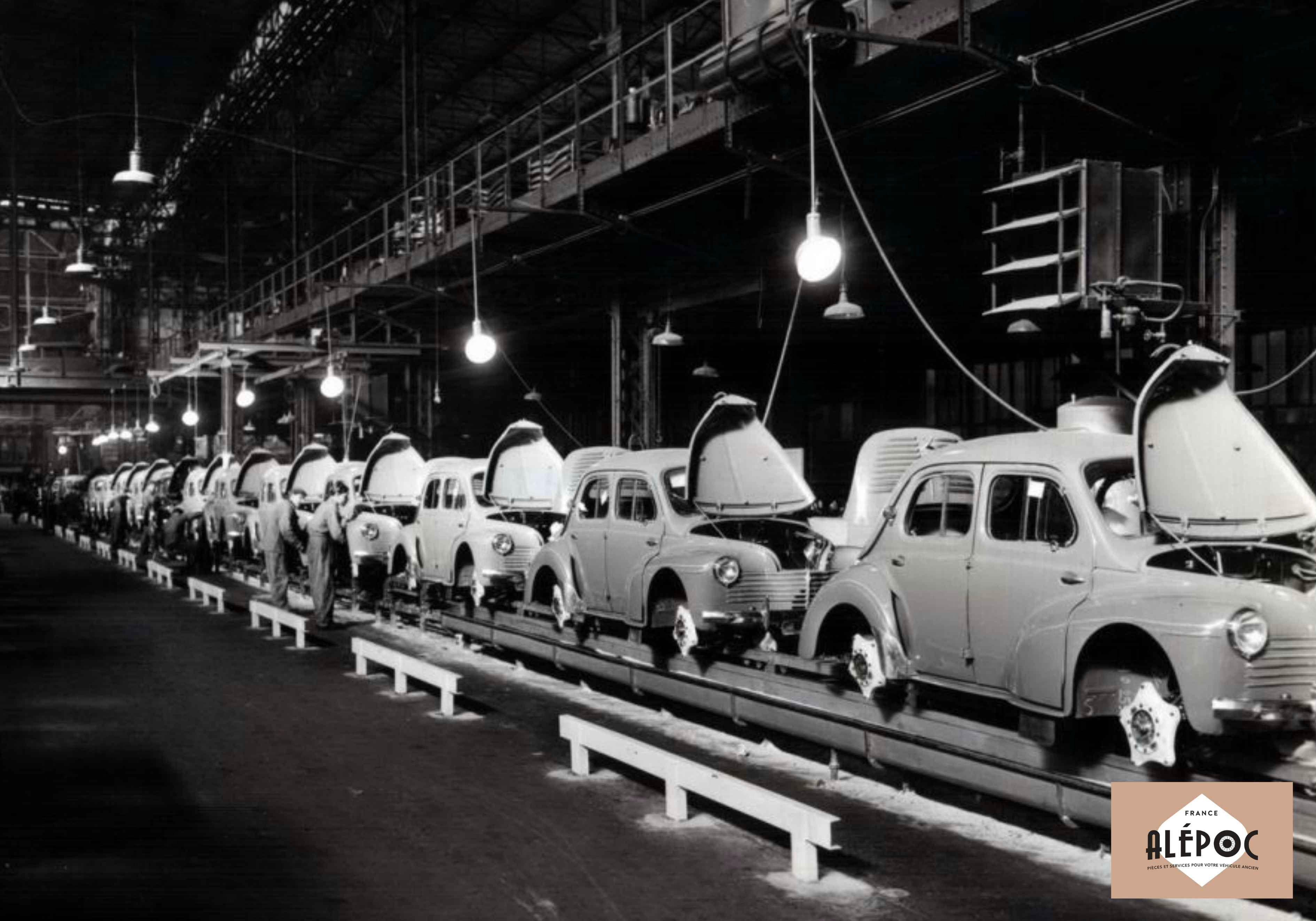
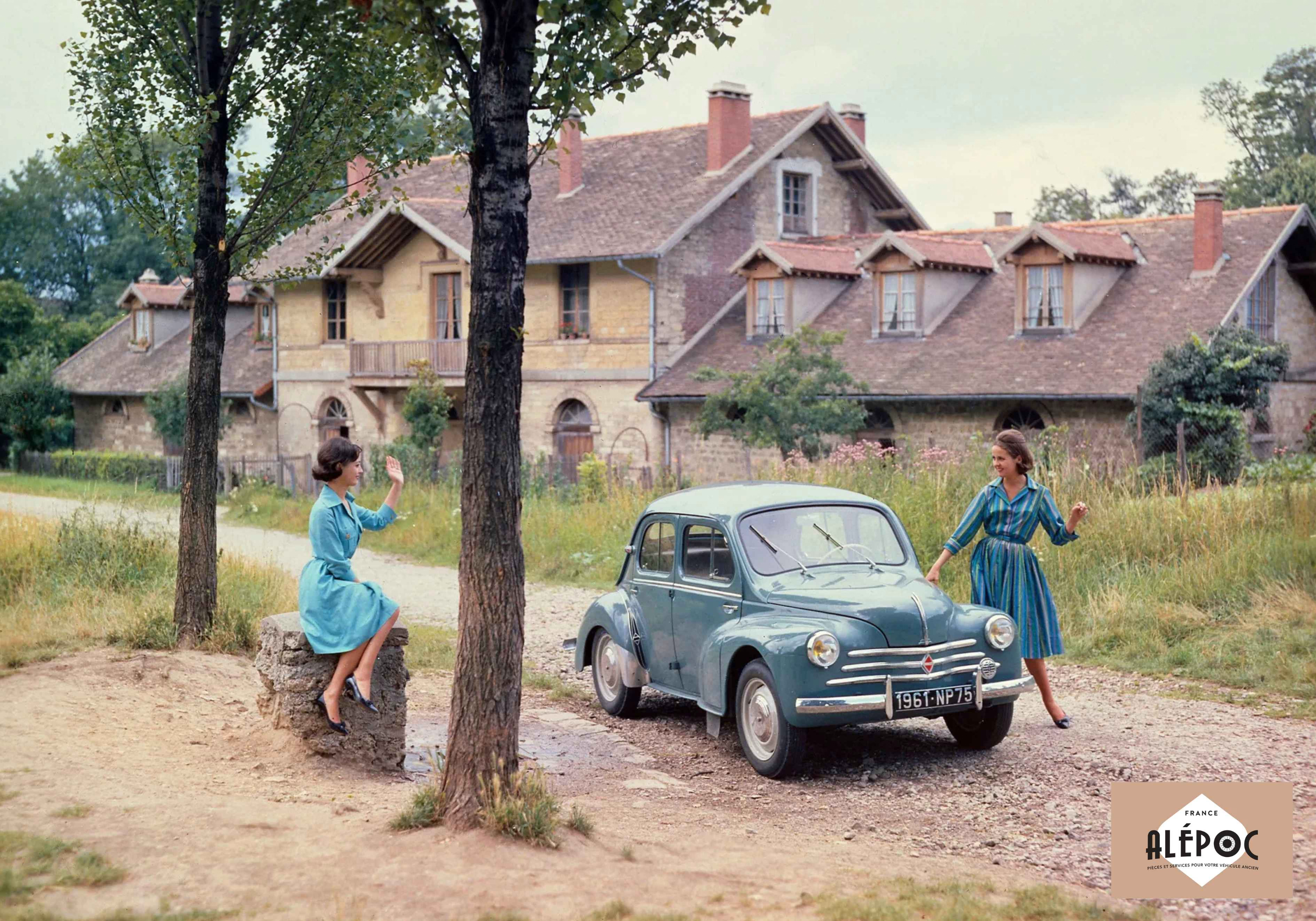
The success was immediate and overwhelming. Within a few years, the 4CV had established itself as the French car : that of working-class families buying their first car, that of schoolteachers and shopkeepers, and that of couples taking their first road trip on the national highways. It made car ownership accessible to the masses on a scale France had never seen before.
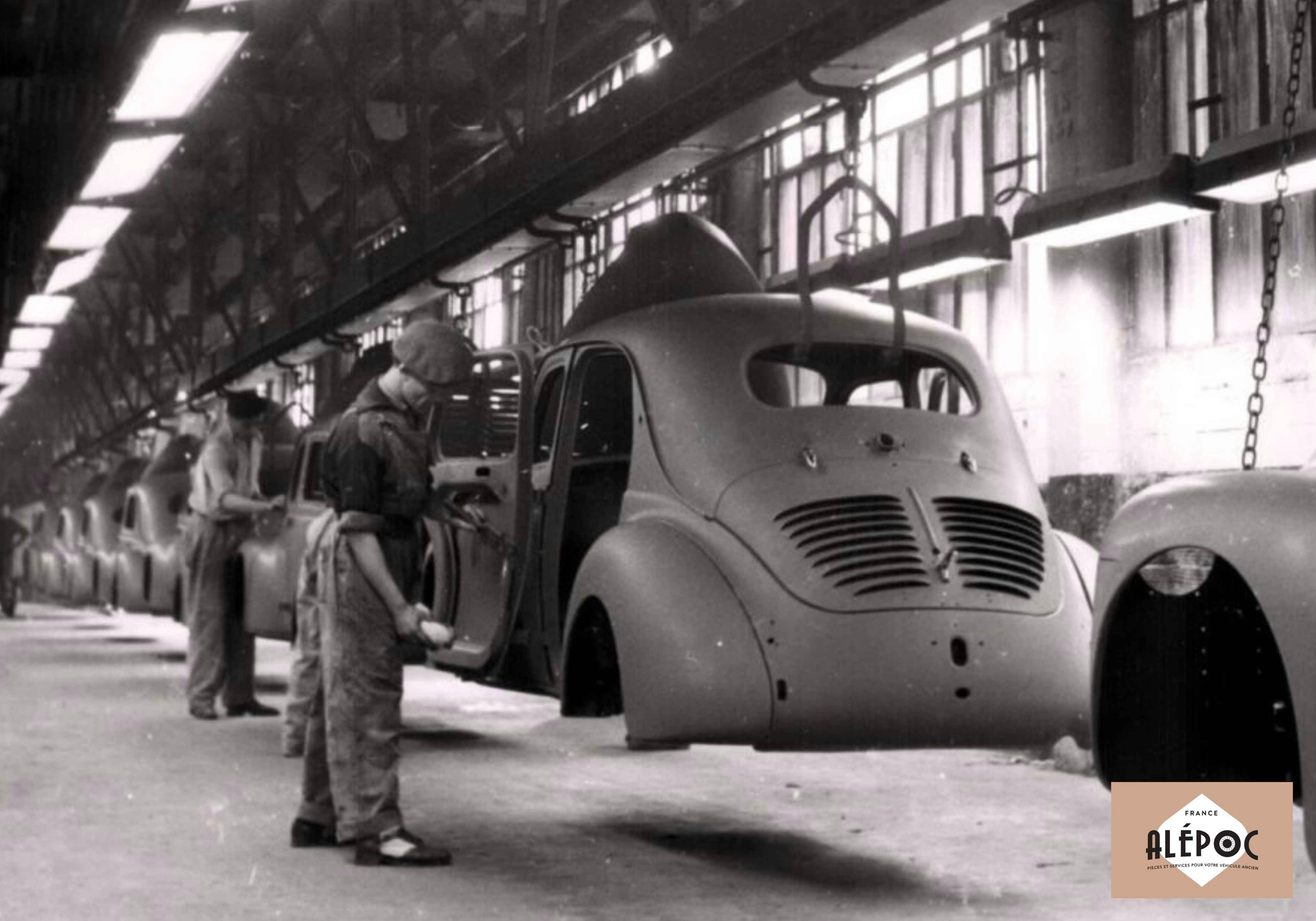
The March 17, 1954, the millionth 4CV rolled off the assembly lines in Billancourt, making the Renault 4CV the the first popular French car to reach this symbolic milestone. Production is in full swing at the Île Seguin plants, which have become one of Europe’s largest automotive complexes.
The Evolution of the 4CV
Throughout its career, the 4CV continued to improve without ever straying from its core principles. It was this ability to evolve gradually that allowed it to remain competitive in the face of growing competition.
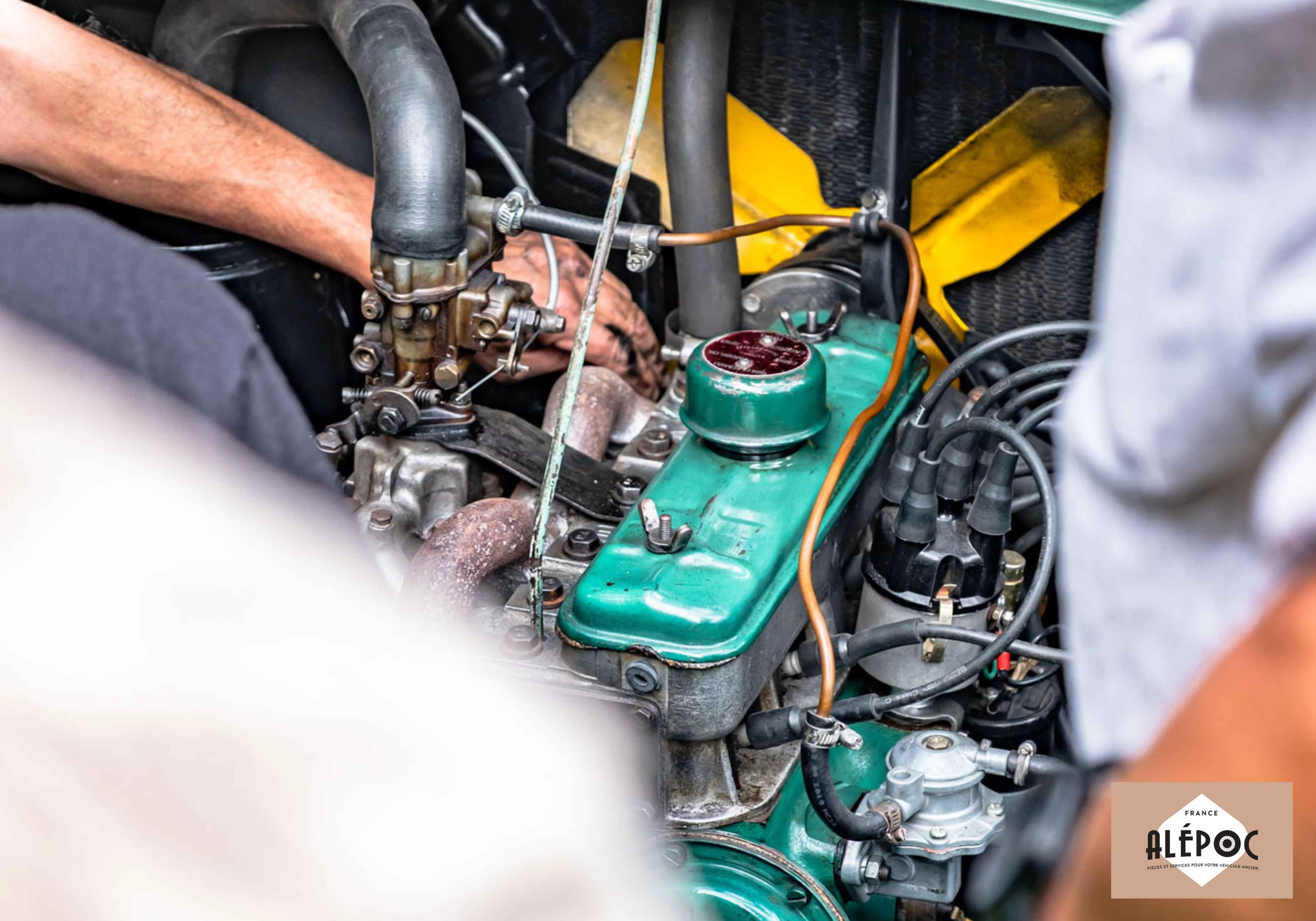
As early as 1950, the original 760 cc engine was increased to 747 cc (official) for tax reasons (the official power rating remains at 4 hp), and was then gradually optimized to increase power and flexibility. It is available in 17- and 21-hp versions.
Discover our mechanical parts for the 4CV
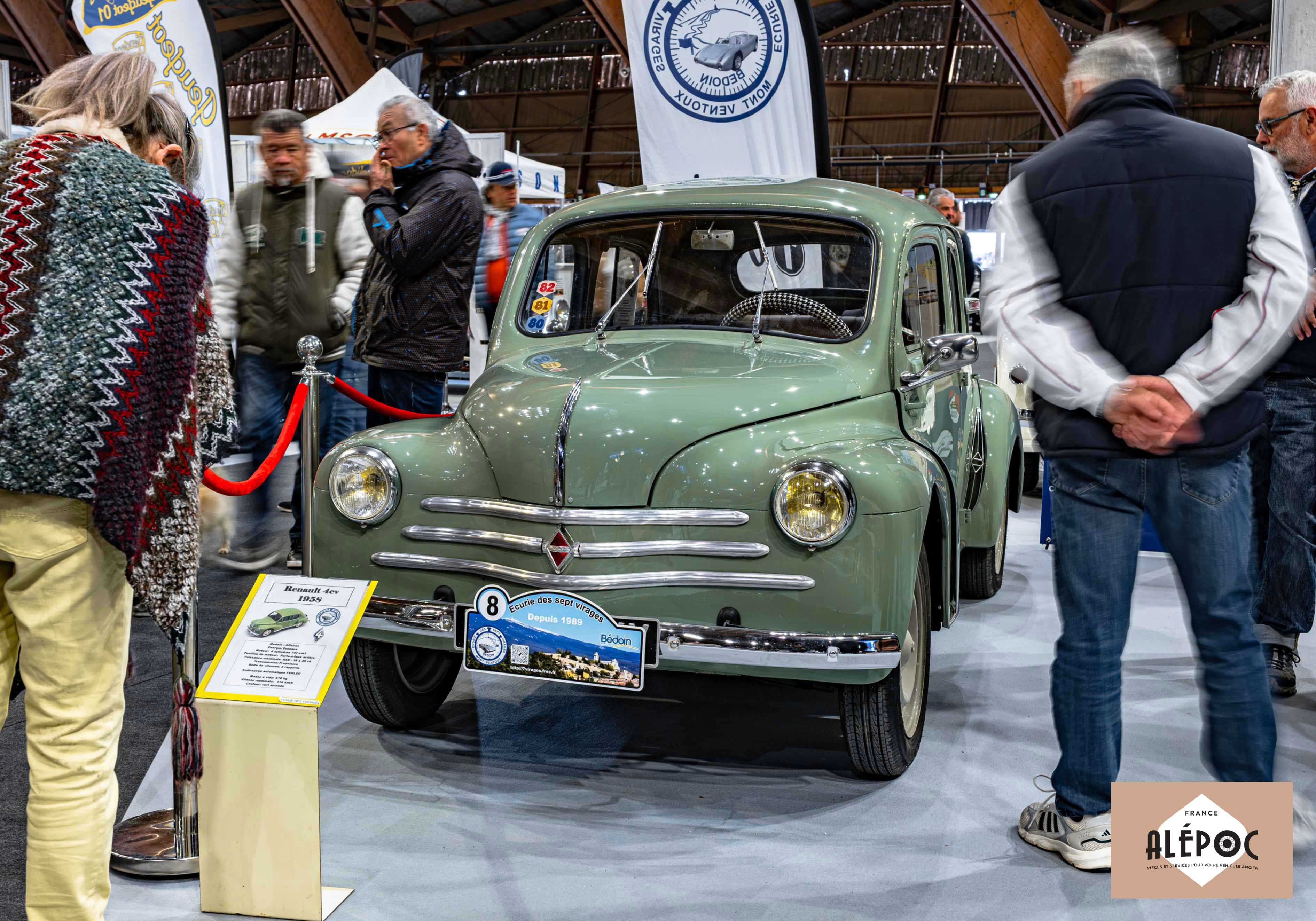
In 1954, the Renault The 4CV features a three-bar grille. Only the 21-horsepower engine is available.
In 1956, the Ferlec Automatic clutch was introduced.
See our clutch parts for the 4CV
The 4CV Convertible
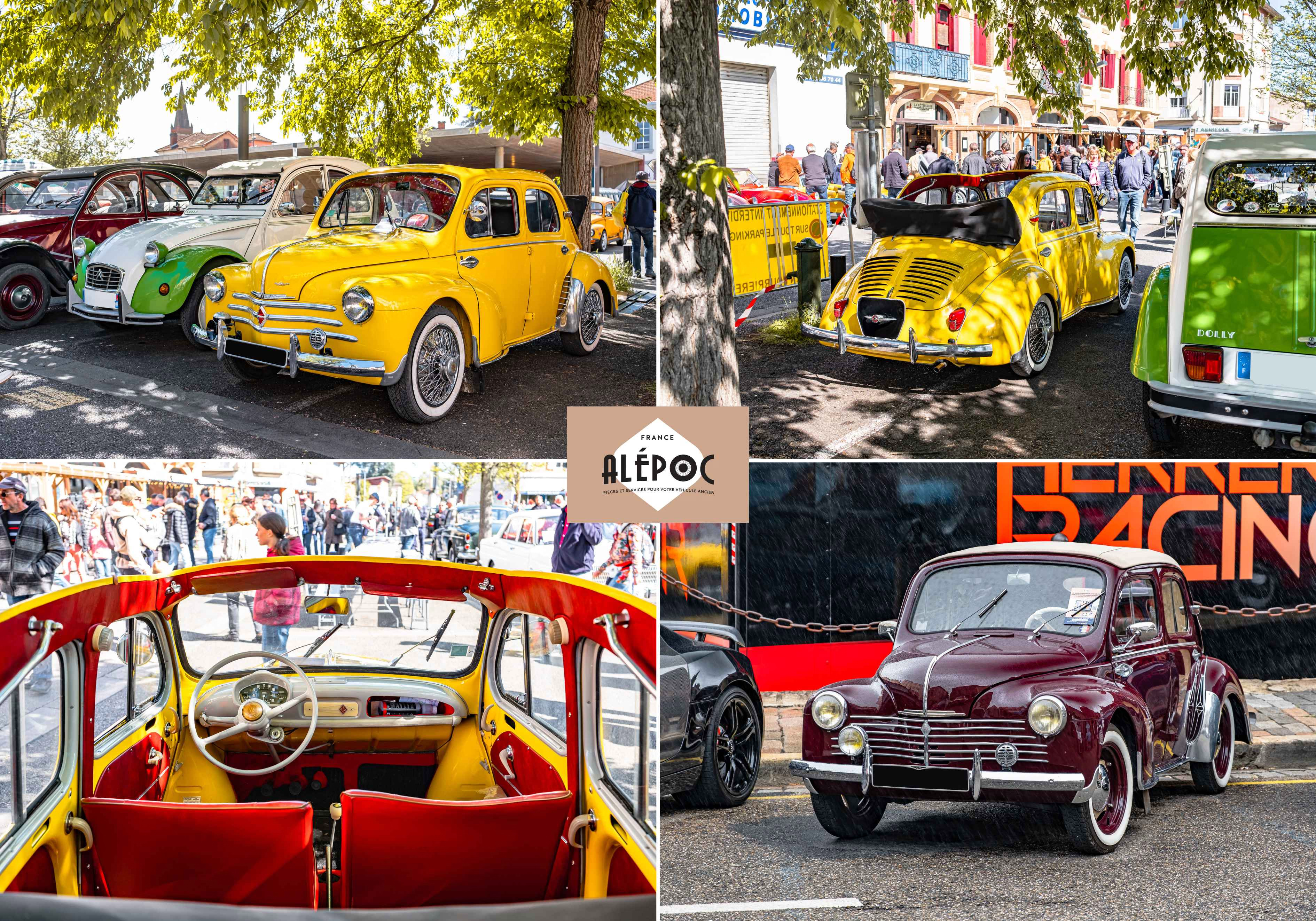
To attract outdoor enthusiasts, Renault began offering a convertible version as early as 1950, the 4CV Convertible, whose canvas roof retracts completely. Ideal for summer drives along the banks of the Loire or the roads of Provence, it enjoyed critical acclaim among customers who wanted to enjoy the sunshine without sacrificing the fuel economy of a small car. It foreshadowed the concept of the “pleasure” car, which would become a major trend in the automotive market in the decades to come. It is one of the most sought-after body styles, with fewer than 10,000 units produced.
The 4CV Commercial
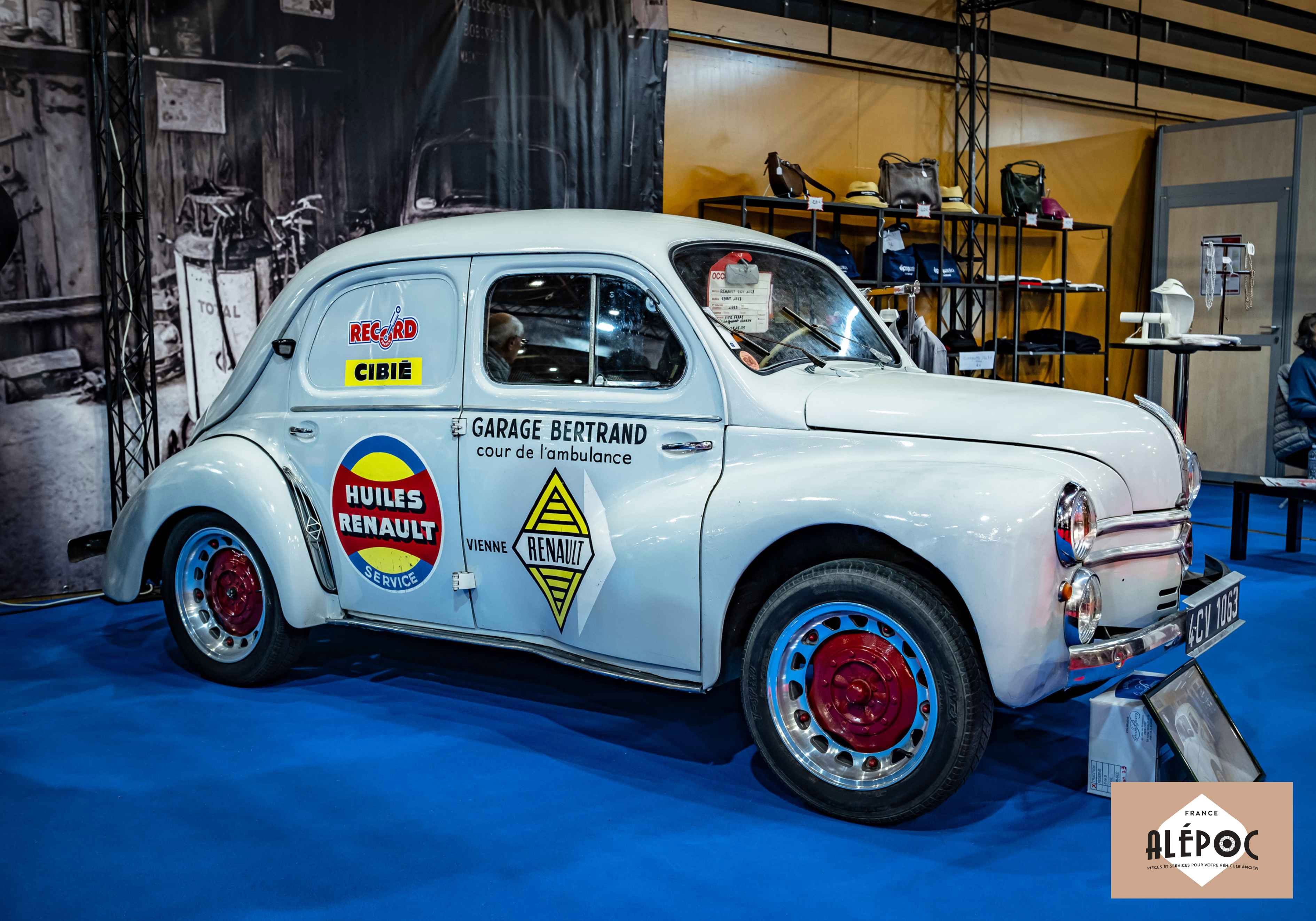
Very soon, Renault offers a utility version of its 4CV, known as the Commerciale, which was perfect for small-scale craftsmen and shopkeepers in cities. It came in black, with a sheet-metal body, and had all seats removed except for the driver’s seat, providing a payload capacity of 200 kg. It was not a success and was discontinued in 1952.
The 4CV Business and Service
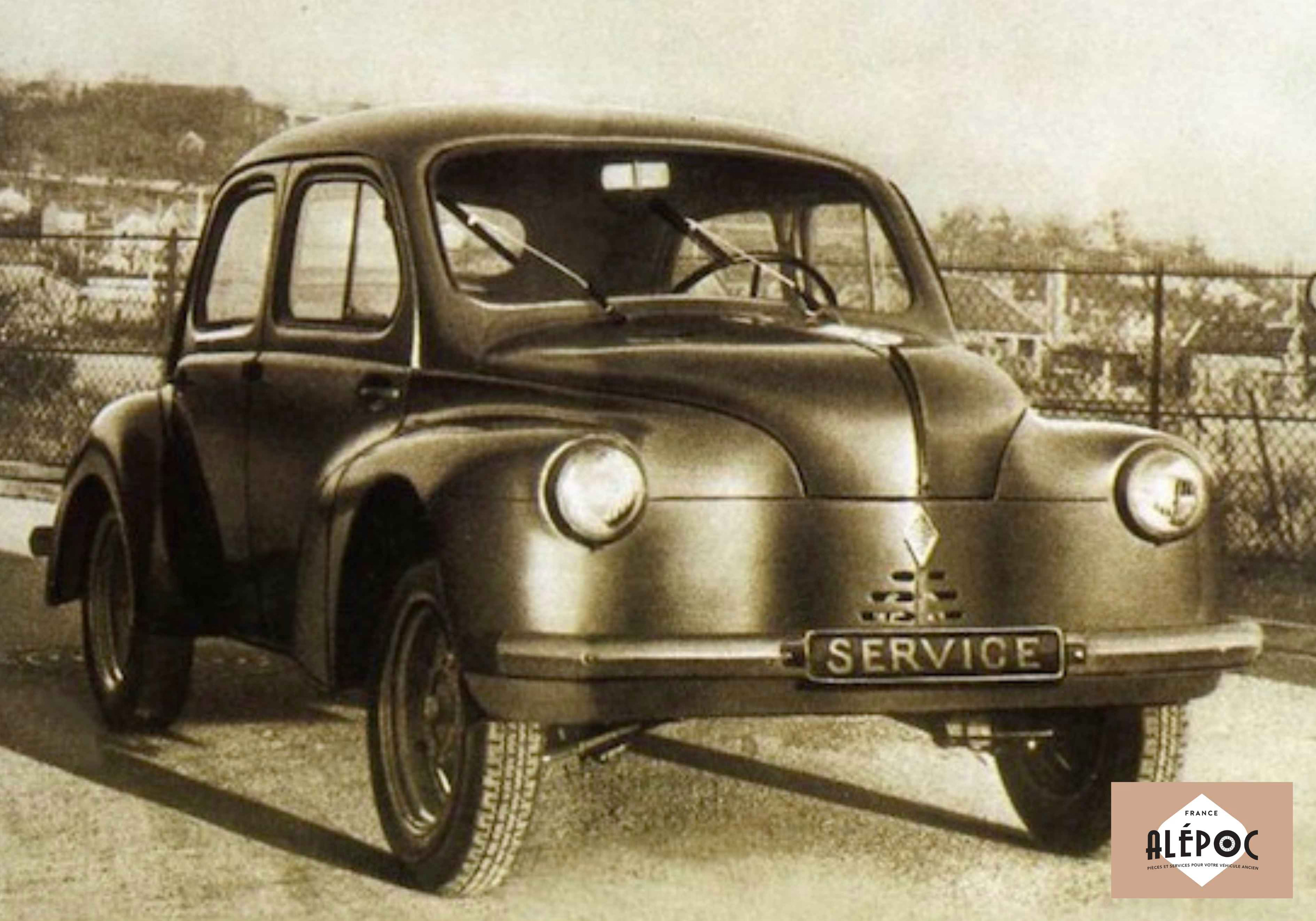
At the entry level, we find the 4CV Business, which stood out for its lack of chrome and, depending on the model year, a single front grille bar. For a time, the role of entry-level model was taken on by the 4CV Service, which took minimalism to its extreme. The doors opened with cables, the turn signals were eliminated, the grille no longer had chrome trim, and the only available color was a matte gray called “Antoinette.” It was quickly discontinued in 1954.
The R1063 Sport Edition
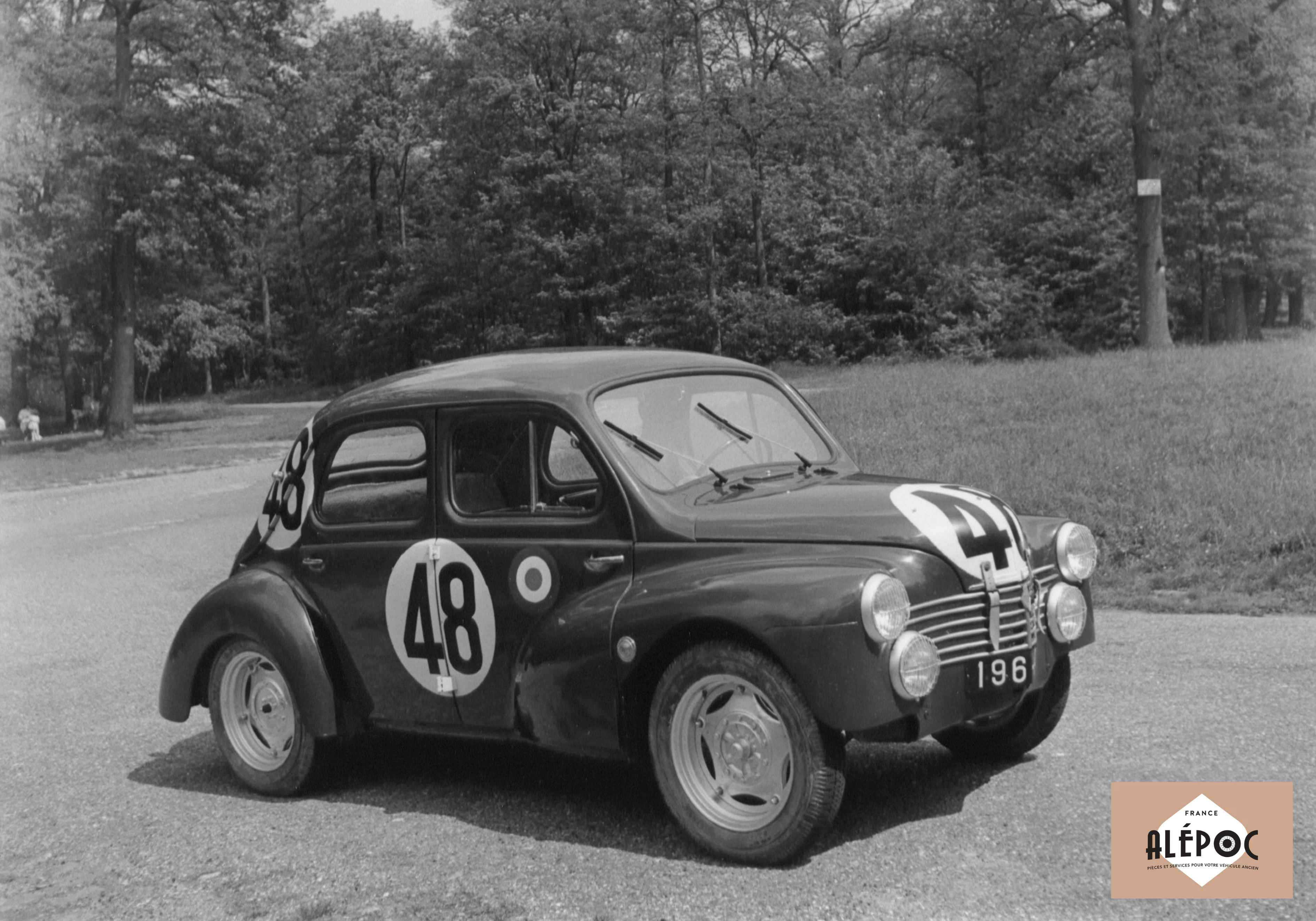
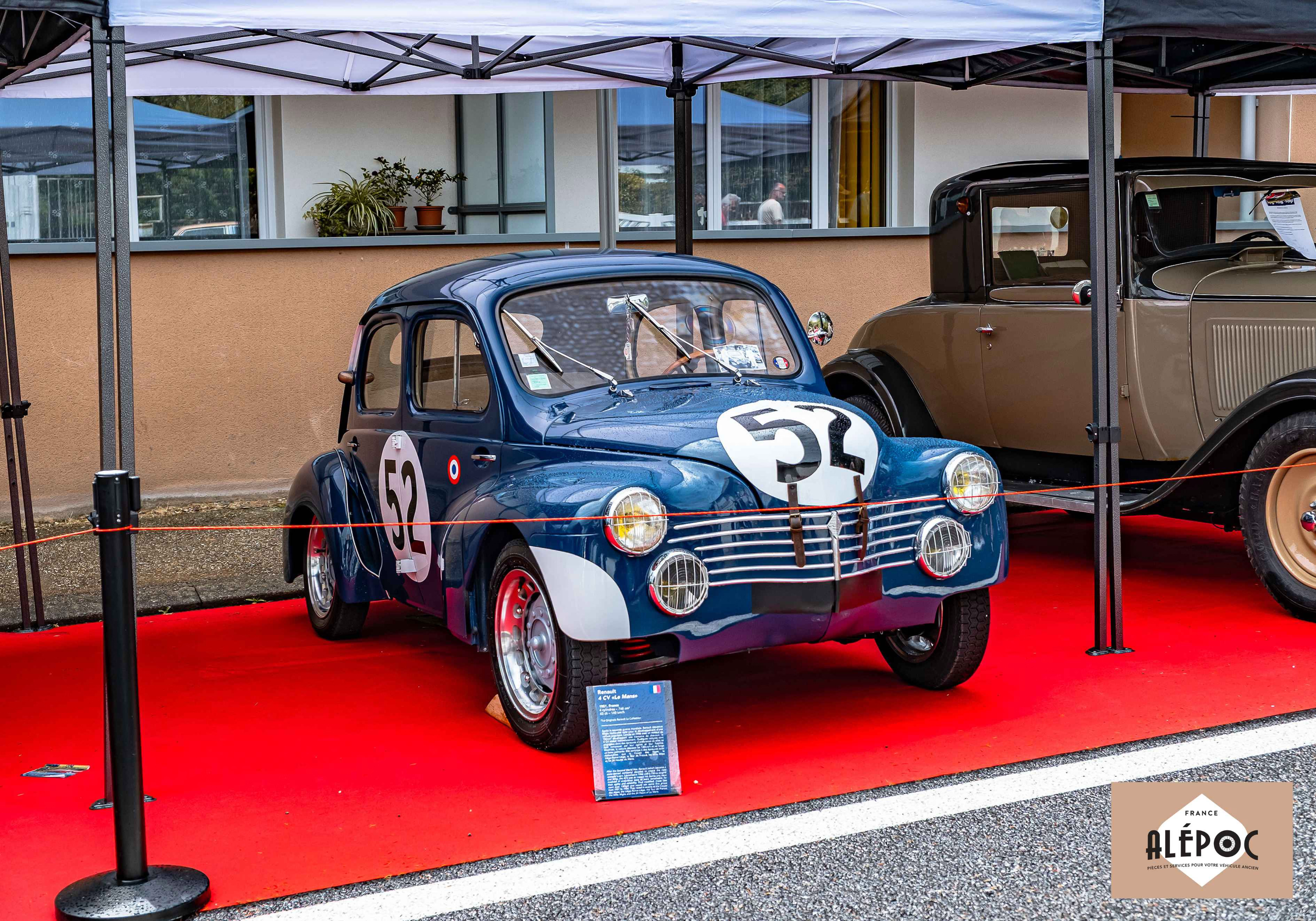
Very quickly, the Renault The 4CV made a name for itself in competition, leading to the development of a dedicated sports version: the 4CV R1063.
The brand's first racing department was established in 1951, working intensively to transform the 4CV into a true racing machine. Numerous modifications were made:
- Aluminum hood and rear fenders with cutouts, resulting in a weight reduction of 45 kg
- Additional rear ventilation grille
- Four shock absorbers at the rear
- Revised braking system
- Recessed fog light
- Heavy-duty clutch
- A more direct approach
The engine has also been modified: lighter camshafts and connecting rods, and the addition of a dual-barrel Solex carburetor, resulting in 32 hp and a top speed of 135 km/h. Fewer than 100 units were produced, in addition to those retrofitted using the conversion kit.
Exports: From the Americas to Japan
The 4CV was one of the very first French cars to attempt a genuine global conquest, with varying degrees of success across different continents.
United States: The Unsung Pioneer
In the late 1940s, Pierre Lefaucheux launched the 4CV to take on the American market. Priced at less than $1,300—when American cars of the time started at $2,000—it appealed to a segment of the population seeking savings and modernity. Dealers Renault are popping up along the East Coast and in California. In total, more than 60,000 units will be exported to the United States throughout the model’s production run. This experience with the 4CV in the U.S. will serve as the foundation for the export strategy of the Dauphine, its direct successor.
Japan: The Birth of an Industry
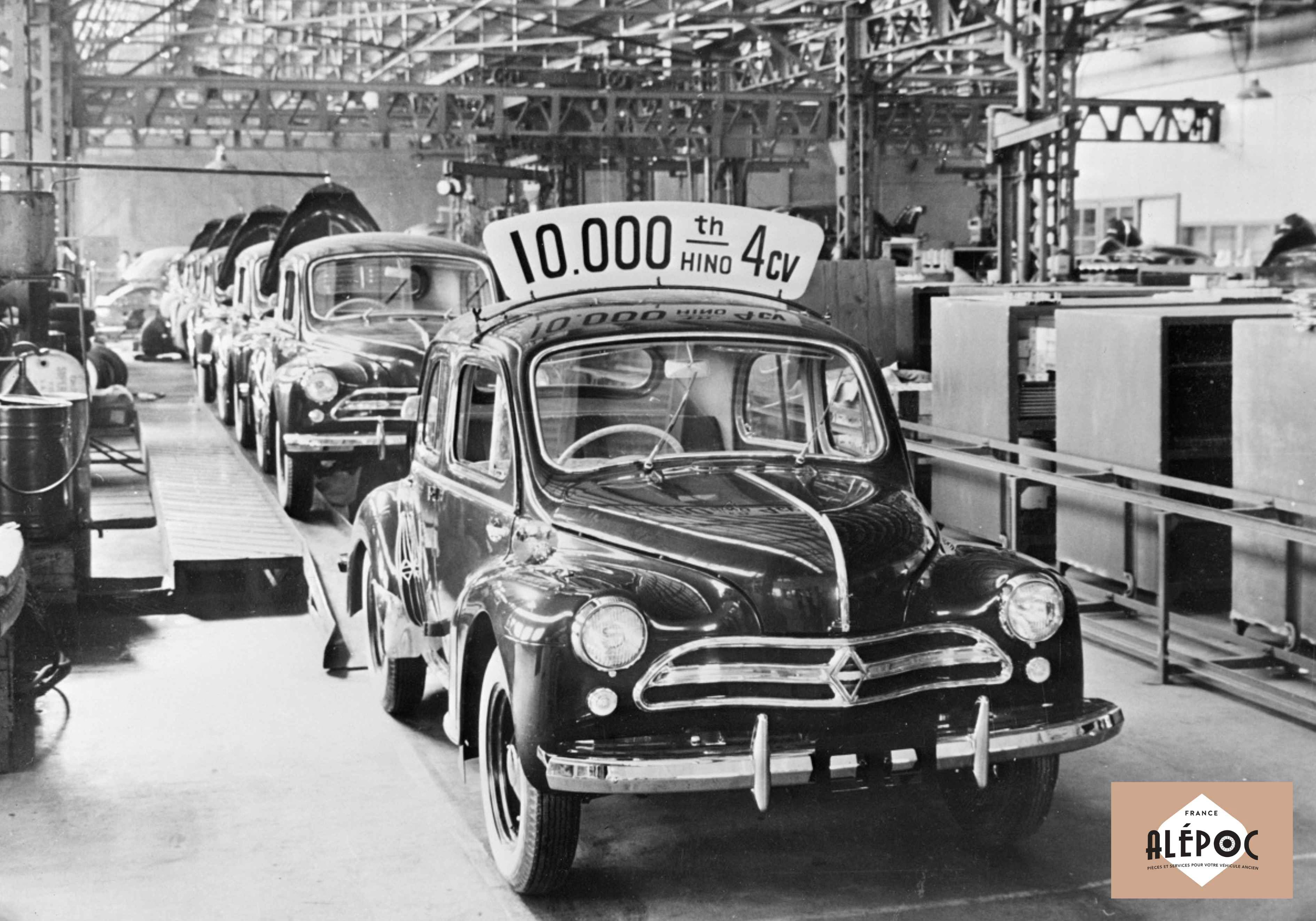
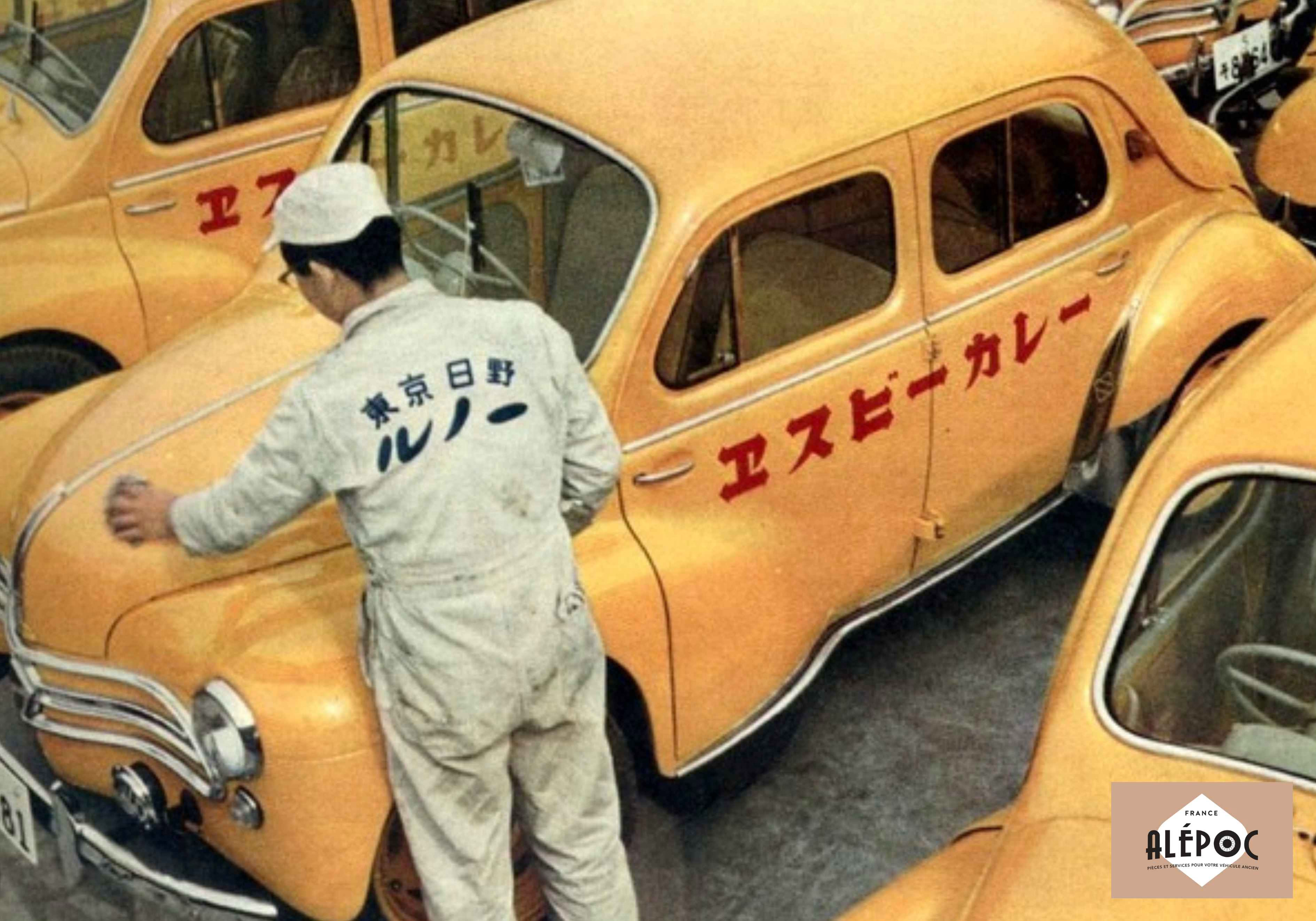
One of the least known—yet most fascinating—chapters in the history of the 4CV took place in the Far East. In 1953, the Régie Renault signs a licensing agreement with Hino Motors (Toyota’s future partner) to produce the 4CV in Japan. The French car was assembled in Tokyo until 1963, with numerous modifications, and played a direct role in the birth of the modern Japanese automotive industry.
Australia, Belgium, Ireland: global distribution
The 4CV will also be assembled in Australia, Belgium, and Ireland, according to local assembly agreements that allow Renault to circumvent customs barriers and establish a lasting presence in high-potential markets. This decentralized production strategy, which was groundbreaking for its time, paved the way for the Régie’s international expansion in the decades that followed.
The 4CV in competition: the start of a great adventure
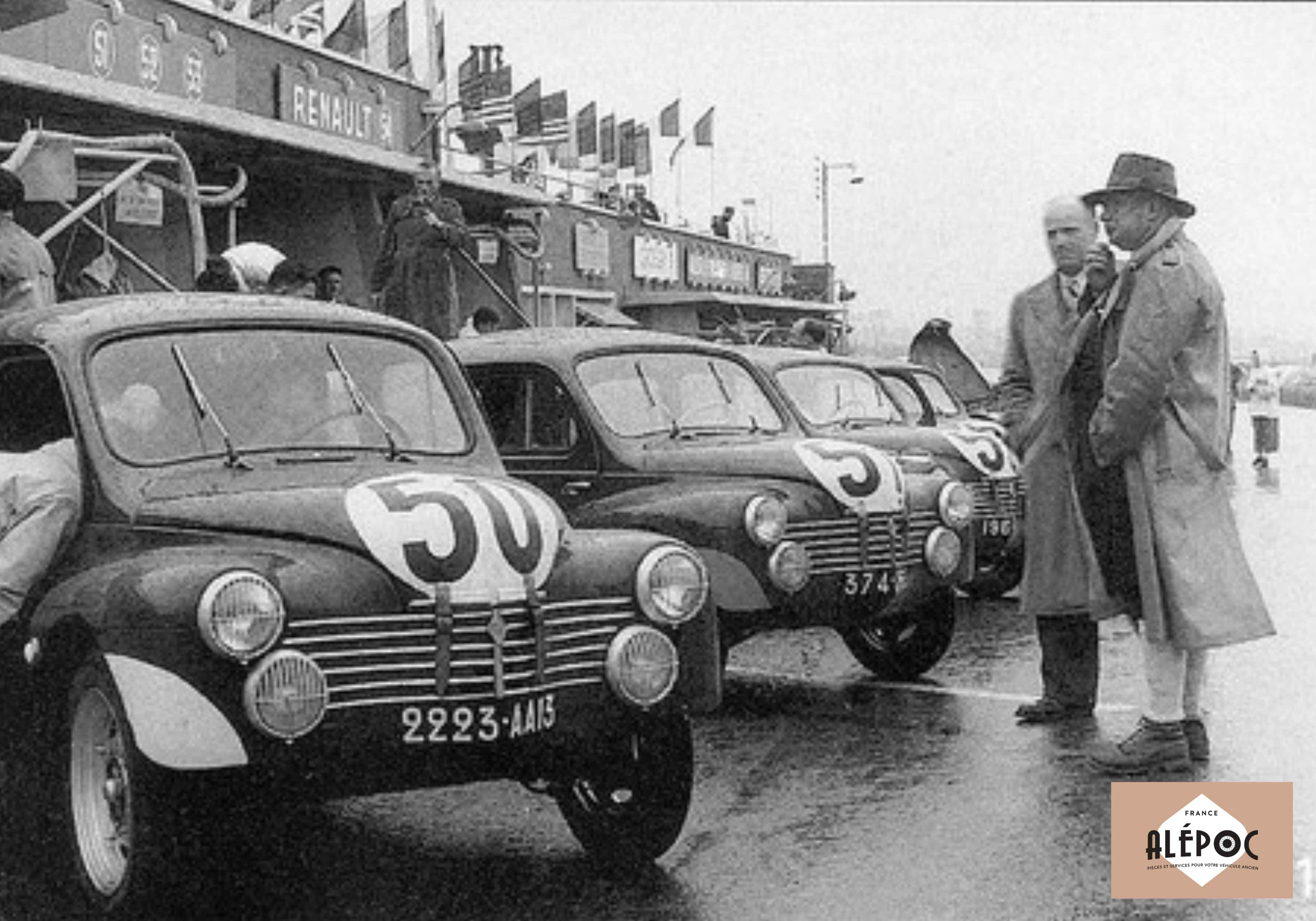
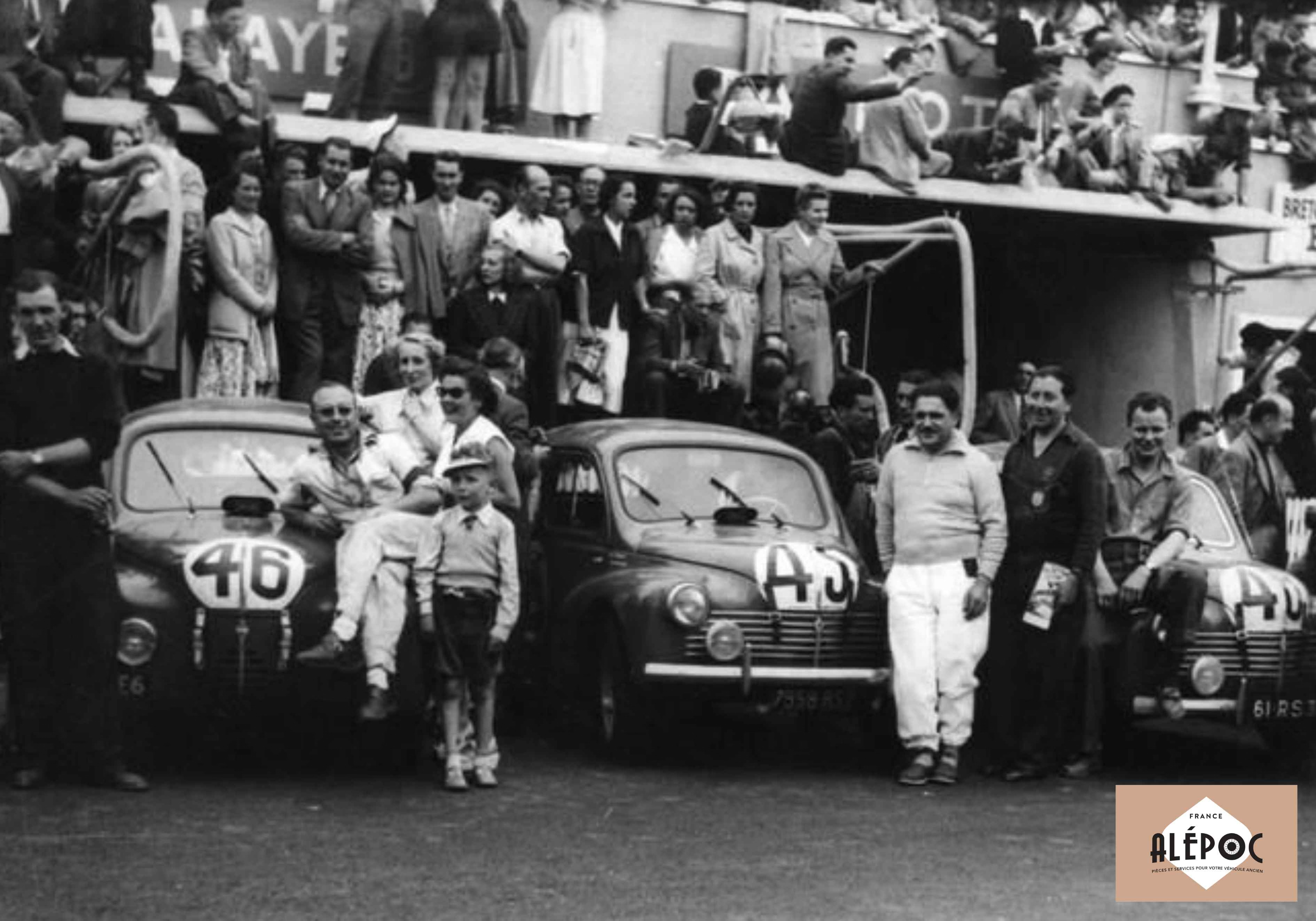
In competition, the 4CV quickly made a name for itself. Its light weight and the excellent handling provided by its four-wheel independent suspension make it a formidable competitor in its class. As early as 1948, it distinguished itself in the Ventoux Hill Climb. In particular, she won the 1950 24 Hours of Le Mans in its class, secured a commanding victory at the Mille Miglia in the hands of a certain Jean Rédélé, and distinguished itself in numerous European rallies: Tour de France Automobile, Monte Carlo…
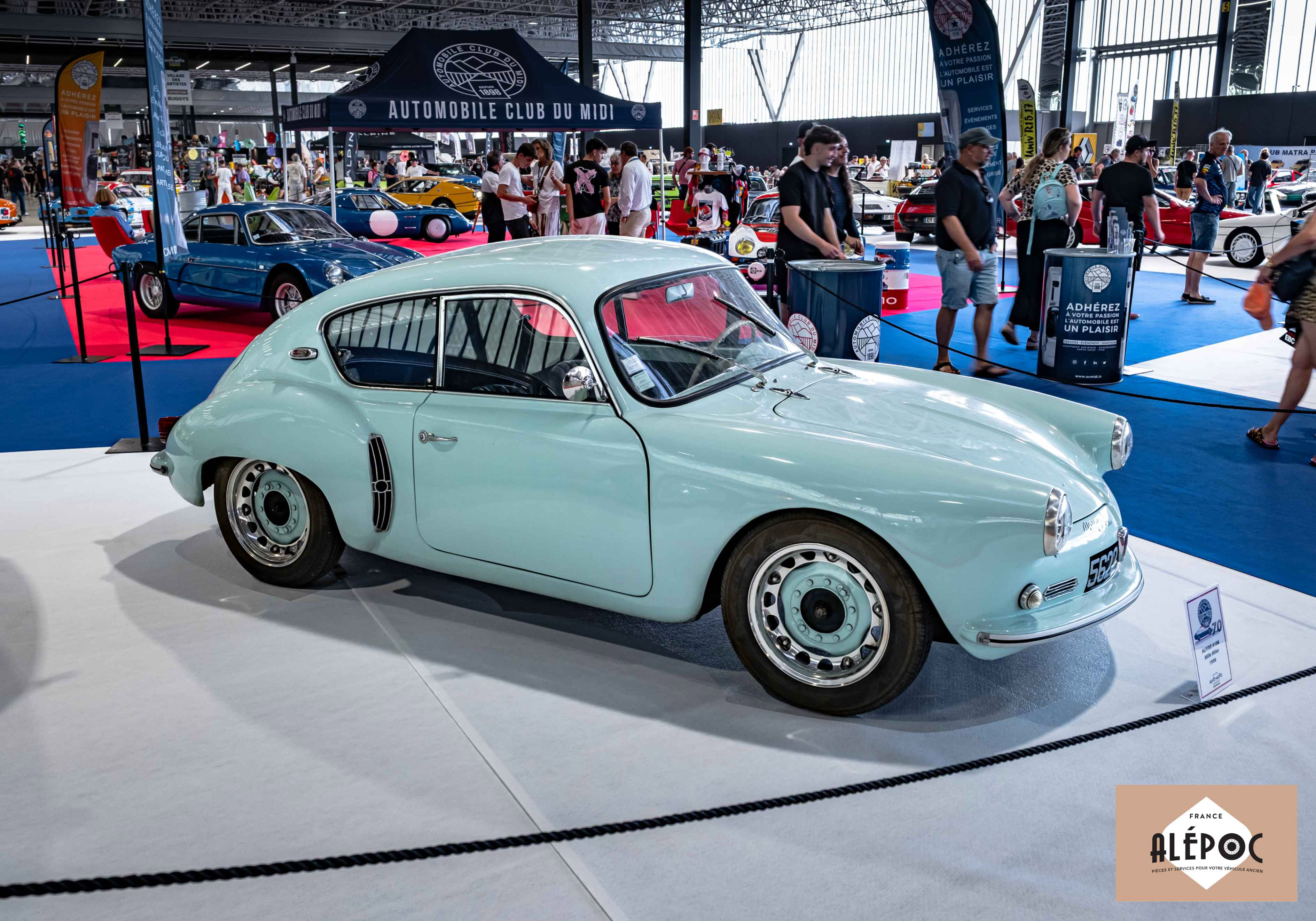
These racing successes would come to fruition when the dealer Jean Rédélé modified the car to make it more powerful. The Alpine A106 was introduced in 1955, based on the 4CV.
The End of a Reign
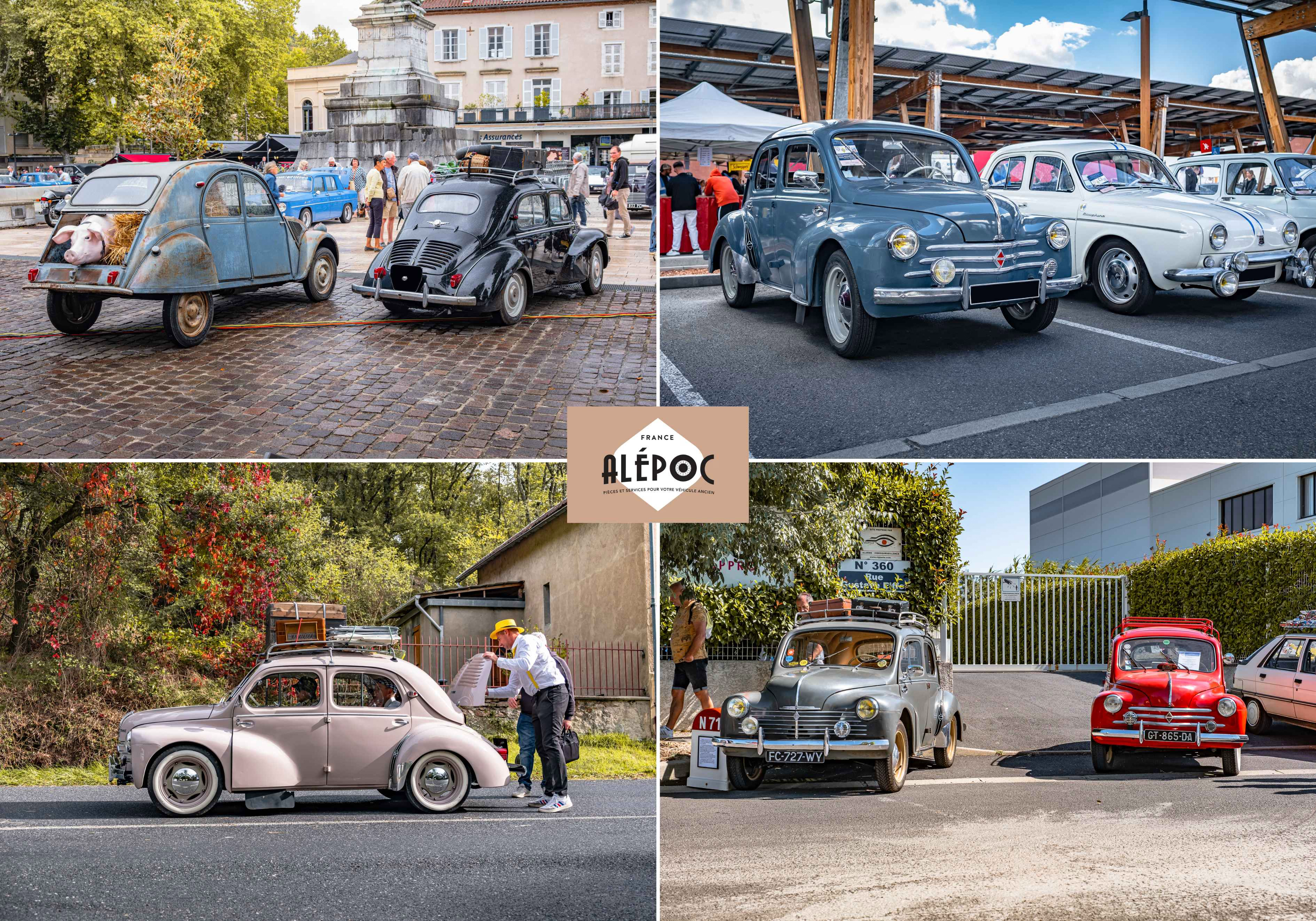
After a a record year in 1954 With more than 170,000 units produced, the 4CV was gradually beginning to decline. Competition was intensifying: the Citroën 2CV is gaining ground in the budget segment, while the Dauphine — launched in 1956 and built on the same mechanical platform — gradually began to steal the spotlight from it within its own lineup Renault. The French now want bigger, more comfortable homes, and social progress has given them the means to achieve this.
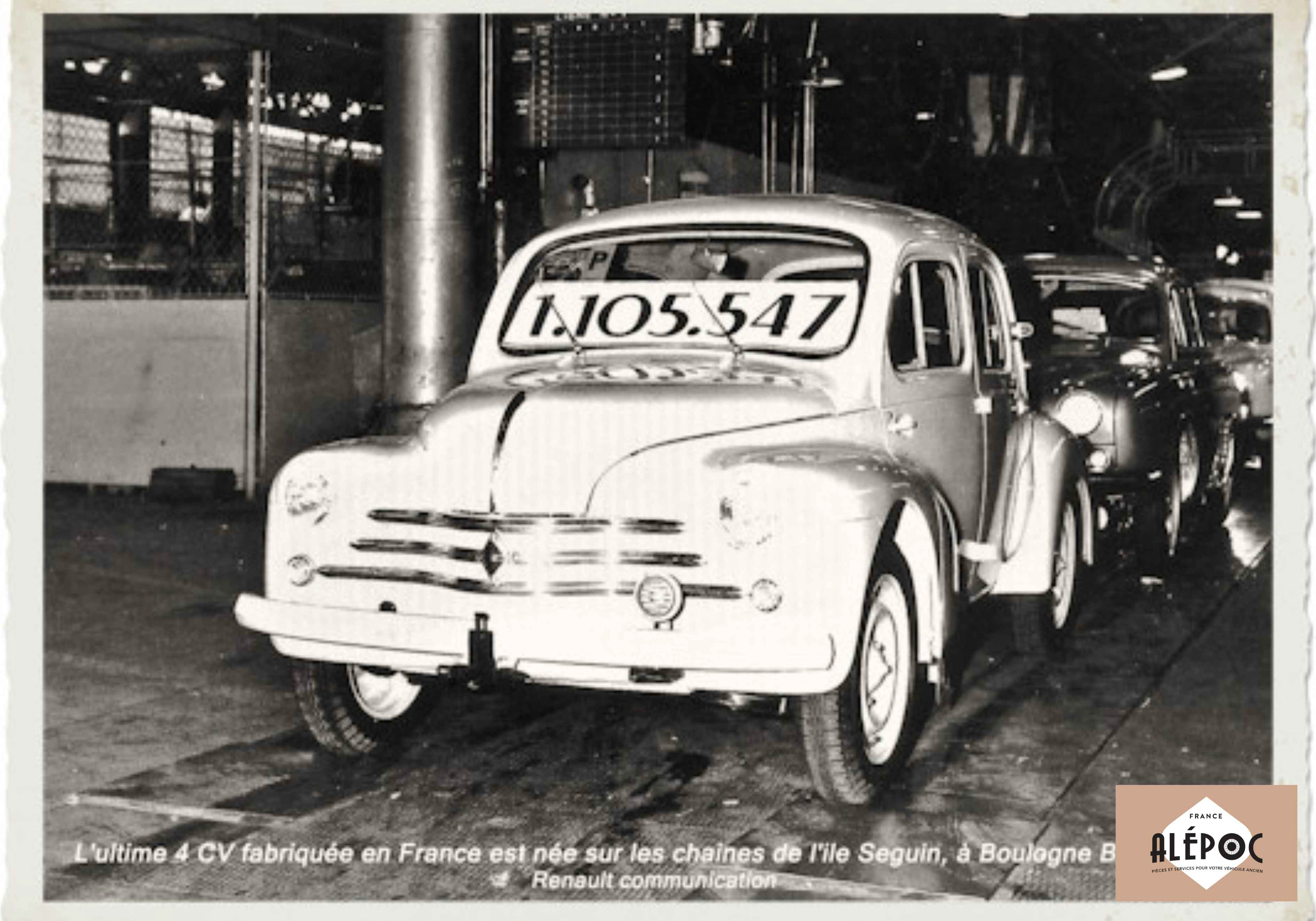
In 1961, after fourteen years on the market, production of the 4CV came to an end. The final tally was staggering: 1,105,547 units produced in France, in addition to licensed production abroad, making the 4CV the the first French car to surpass the one-million-unit mark. Her legacy is immense: she drove France’s post-war reconstruction and paved the way for the country’s export-oriented economy Renault, and proved that a popular French car could make its mark on every continent. Eighty years after its debut at the Paris Motor Show, the 4CV remains a living symbol of the golden age of the French mass-market automobile. Happy birthday, little queen.
Check out all our replacement parts for Renault 4CV
Check out our other articles on Renault :
70th anniversary of the Renault Dauphine: Conquering the World
The Renault 8 Gordini Celebrates Its 60th Anniversary — The History of a Beloved Sports Icon
Published on
04-06-2026