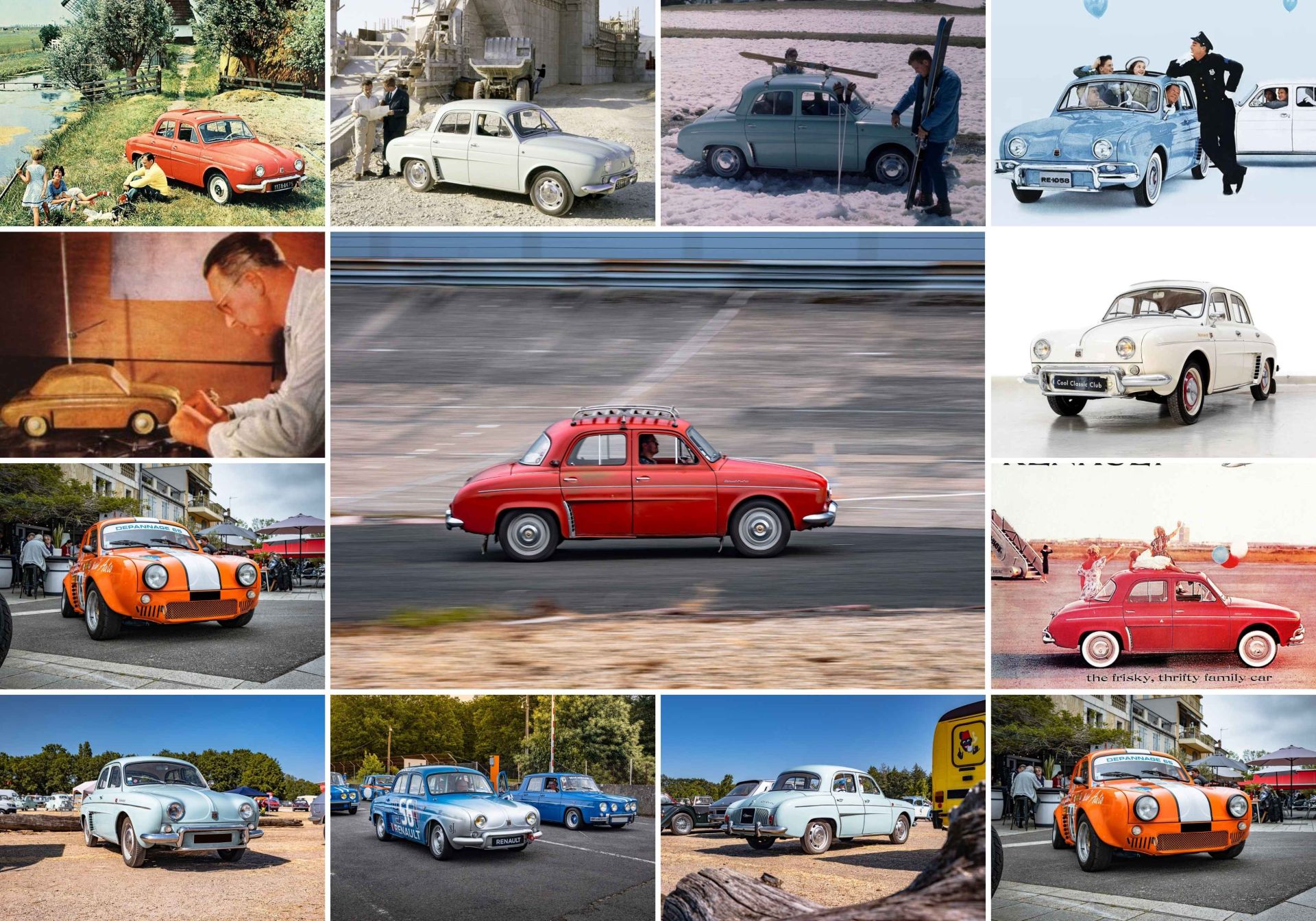
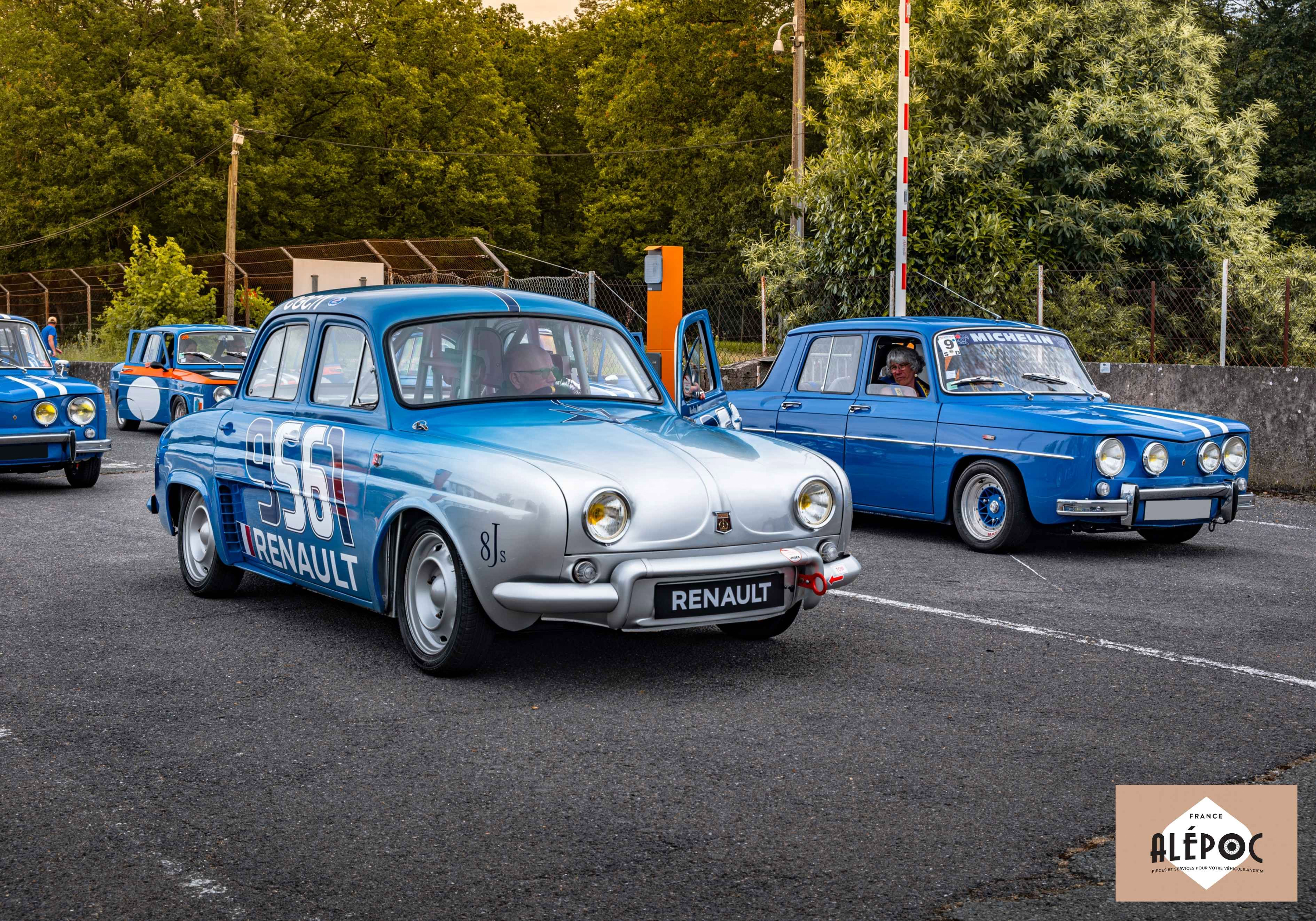
In 1956, the Régie Renault is launching a small rear-engine sedan that is set to become the first French car the first in history to sell over two million copies. *La Dauphine* is Seventy years of passion, anecdotes, and records. A look back at its history.
The origins: Project 109
In 1949, Pierre Lefaucheux, CEO of the Régie Renault, have dinner with Fernand Picard, Director of Research. Between courses, he makes an obvious point: the 4CV is selling well, but the French will soon want something bigger and more comfortable. We need to anticipate the rise in the standard of living of the French. This marked the launch of Project 109.
Before drawing a single line, Renault commissioned surveys titled “Why do we buy one car over another?”. The result: price ranks first among purchasing criteria, followed by fuel economy and interior space. Additionally, 77% of French people are satisfied with a top speed of 110 km/h, which is faster than most cars of that era. The specifications The answer is obvious: a four-seater sedan capable of exceeding 110 km/h, with fuel consumption of less than 7 liters per 100 kilometers, and priced between the 4CV and the expensive Frégate.
In July 1951, the project was assigned file number “109.” The main constraint: reuse as many parts from the 4CV as possible to cut costs. Same rear-engine layout, same 4-cylinder engine… but a all-new body, designed to comfortably seat four adults.
Check out our replacement parts for the Renault 4CV
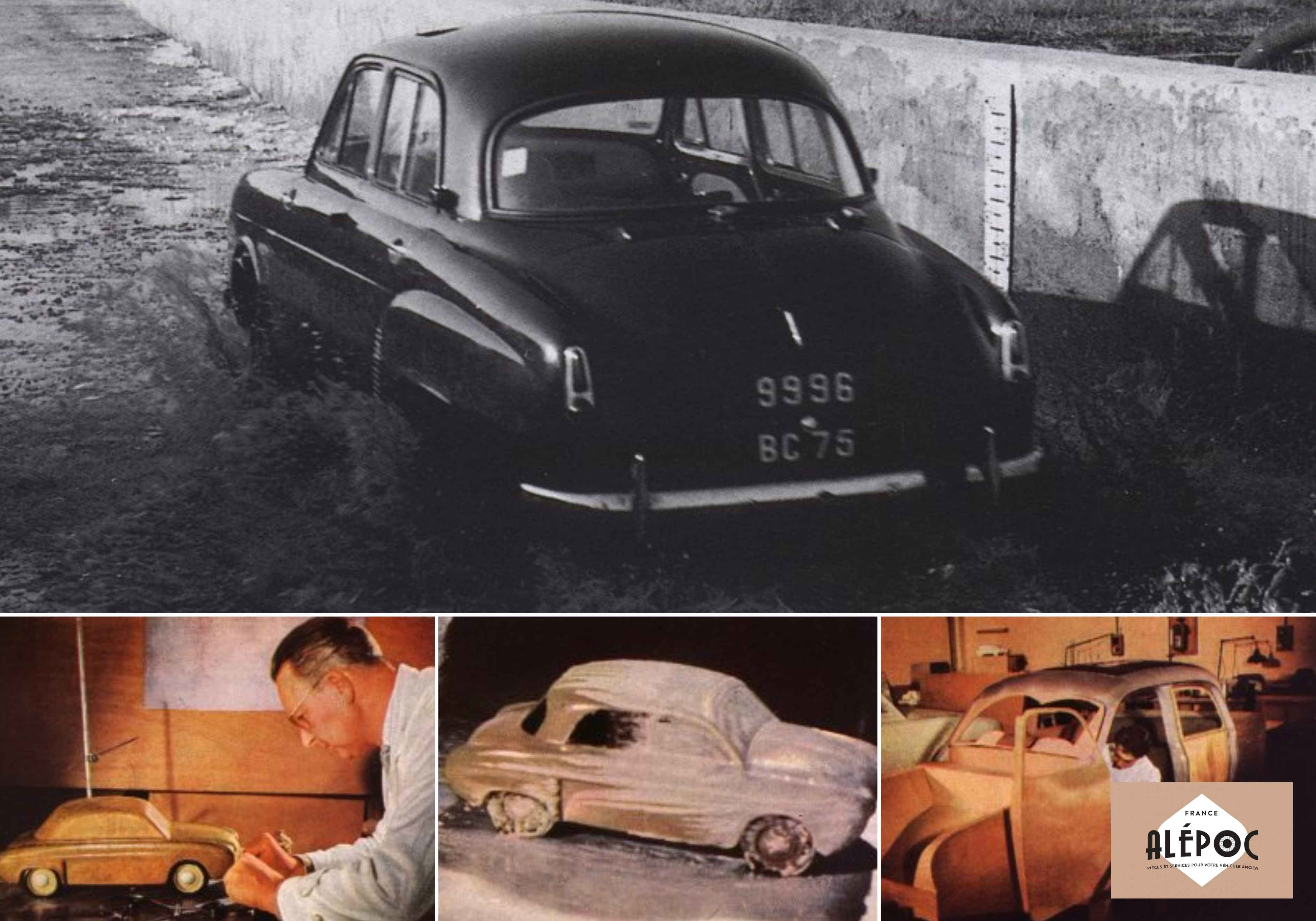
On the night of July 24, 1952, the first prototype left the Billancourt Technical Center and covered its first few kilometers. The design by Philippe Charbonneaux are nearly final. It will then take two million kilometers of testing on roads across Europe, plus another million on the Lardy test track, to validate every detail.
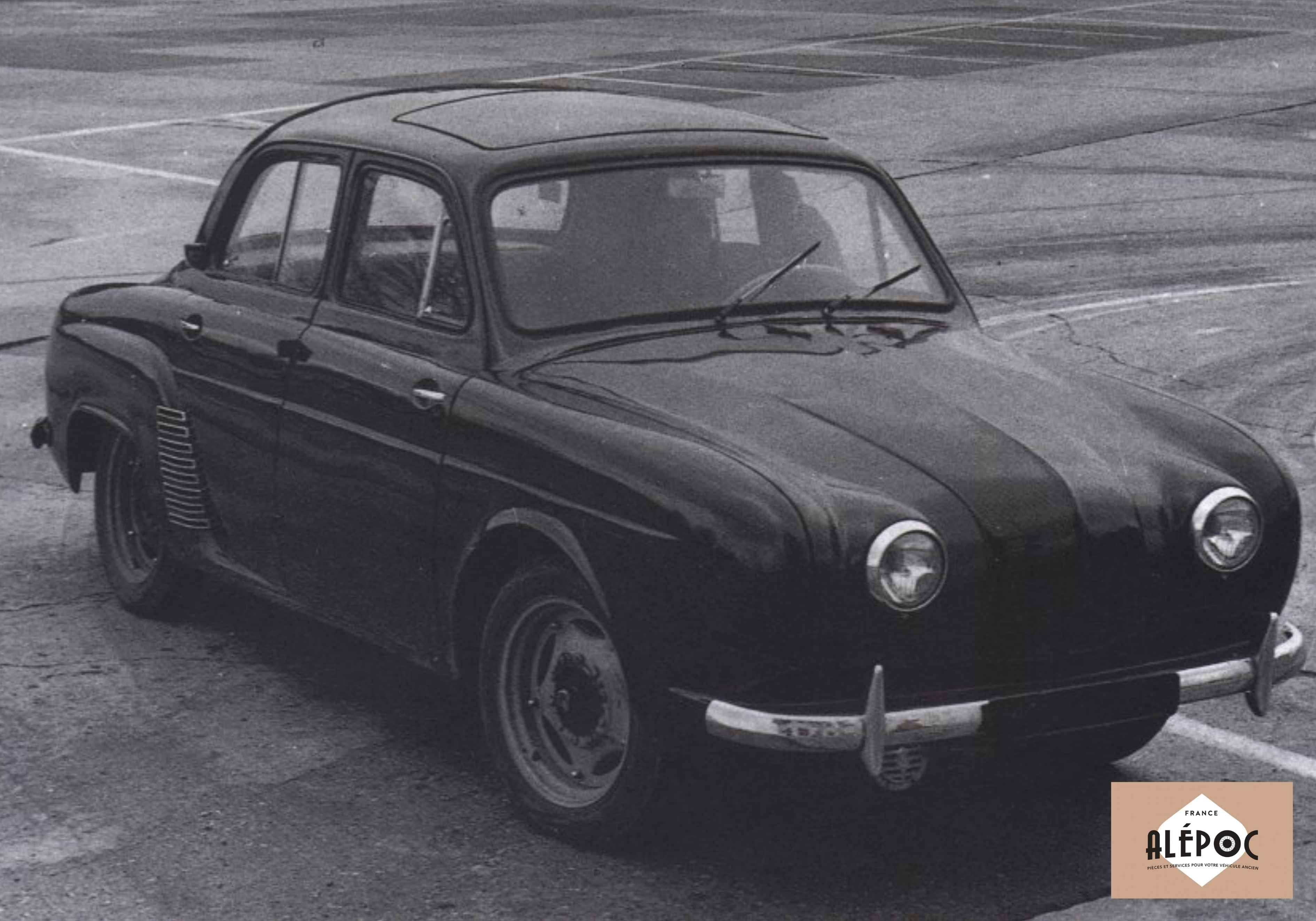
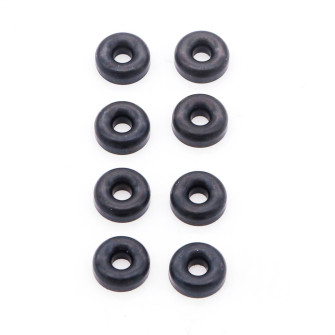
In August 1953, Fernand Picard secretly delivered a prototype to the dealership Renault from Madrid, and drives 2,200 kilometers on Spain’s dusty roads. The verdict is clear: the 748-cc engine is underpowered, with disappointing acceleration. The decision is made to increase to 845 cc by increasing the bore to 58 mm. The tax horsepower is 5 hp.
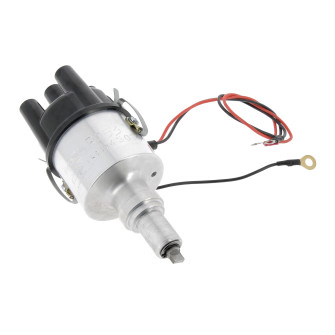
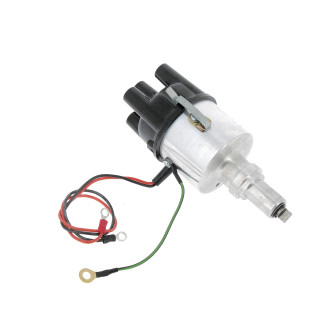
Discover our mechanical parts
That same year, consultation with the Italian coachbuilder Ghia helped refine the rear of the car and finalize its design.
Tragically, Pierre Lefaucheux will not be attending the launch. He died on February 11, 1955, while driving his Renault Frigate who skidded on a patch of black ice near Saint-Dizier. It’s Pierre Dreyfus takes the reins from the Régie on March 1, 1955, and oversaw the Dauphine through to its launch.
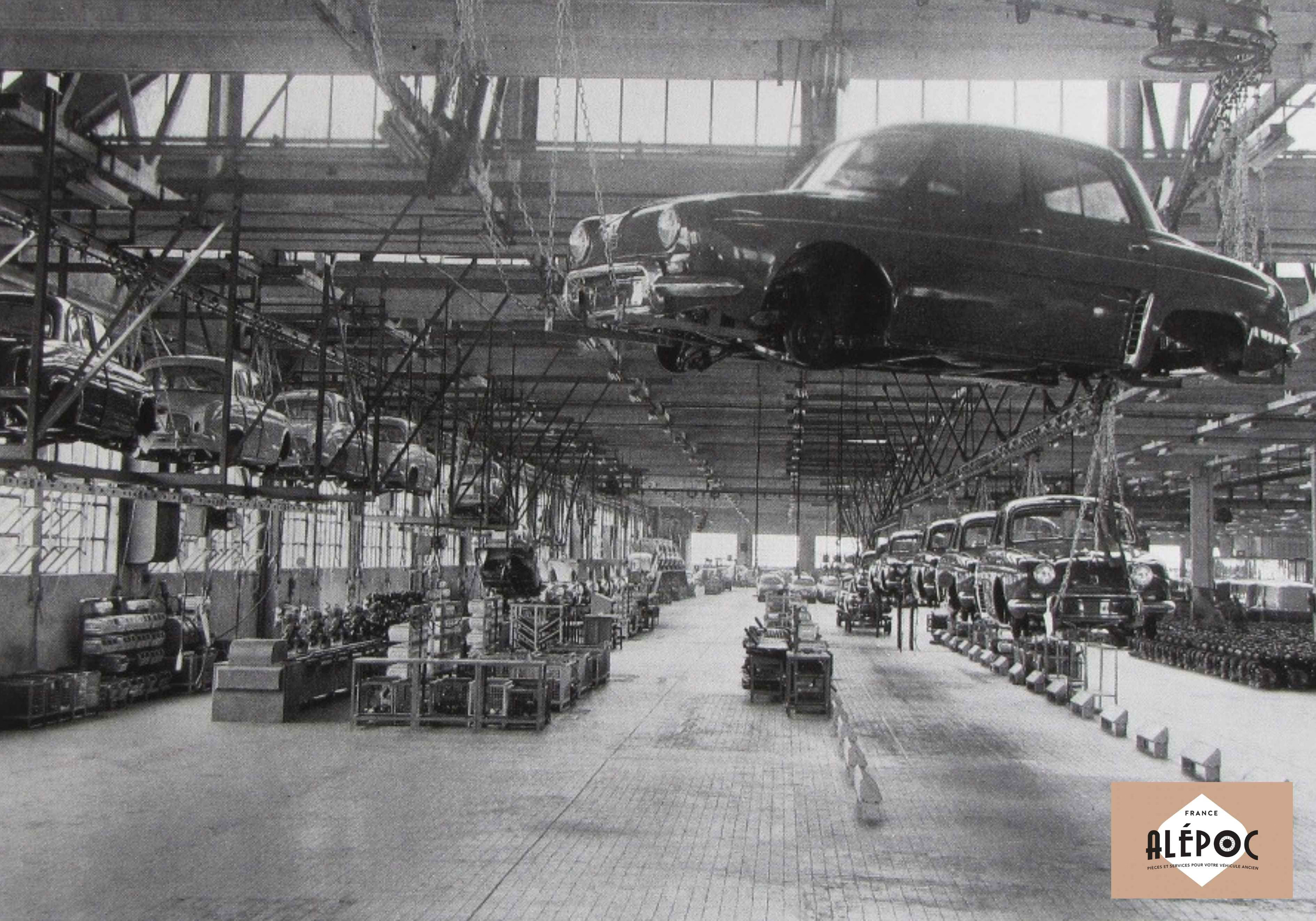
In December 1955, the first production Dauphine rolled off the assembly line in Flins. Project 109 was ready. All that remained was to find a name—and it would be Dauphine! The name was coined during a dinner hosted by Fernand Picard at the Auberge de Port-Royal. One employee exclaimed, “The 4CV is the queen! The newcomer can only be the Dauphine!” The name was adopted on the spot.
The launch: an instant success
On February 4, 1956, six Dauphines arrived discreetly in Ajaccio, hidden in large crates aboard the cargo ship Cymos. Robert Sicot organized a secret test drive for the European press on the snow-covered roads of Corsica.
On March 6, 1956, at 6:30 p.m., La Dauphine is being unveiled to the public at the Palais de Chaillot in front of twenty thousand people. At the same time, all dealers in France and abroad unveiled the car. Two days later, it made its debut at the Geneva Motor Show.
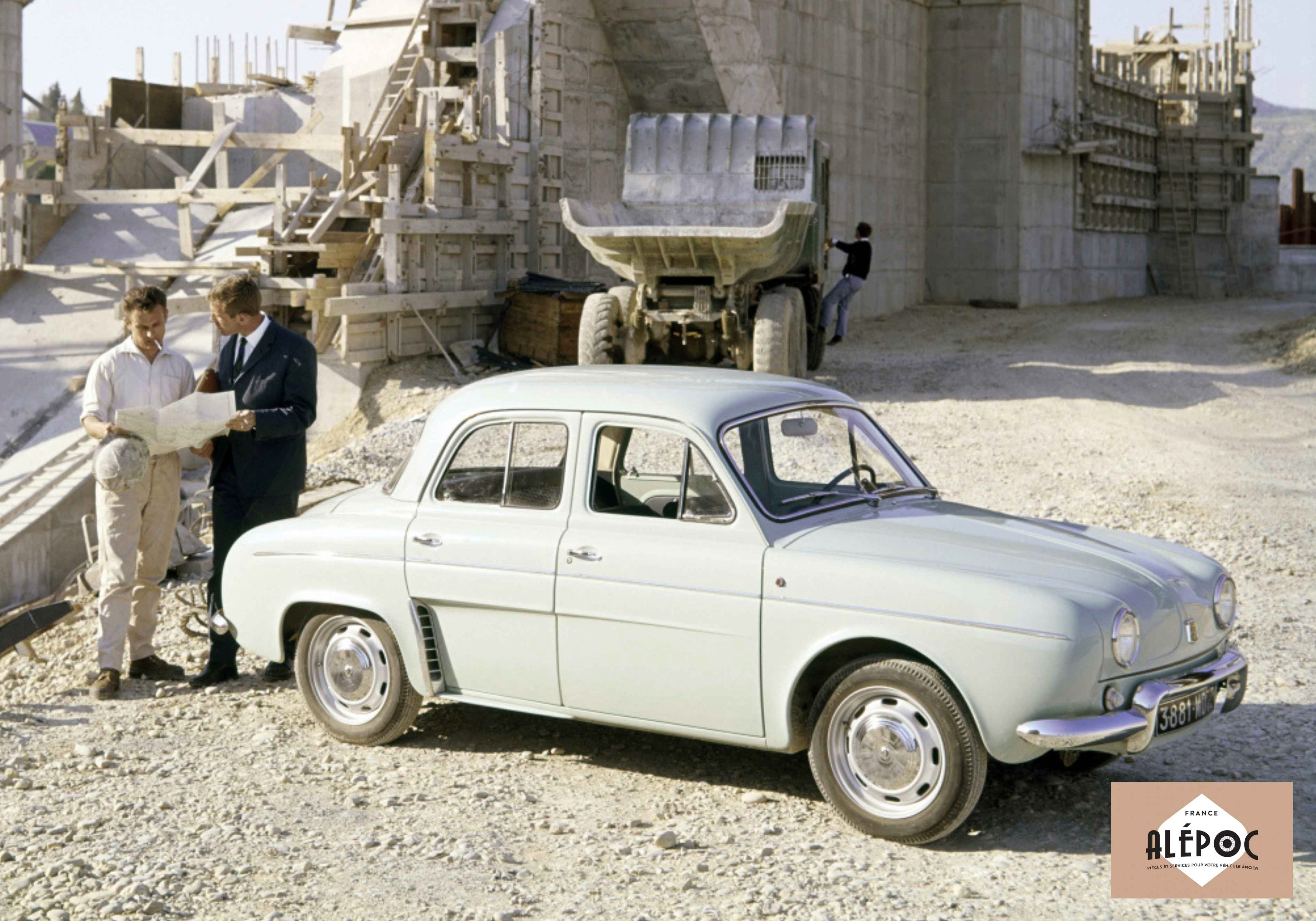
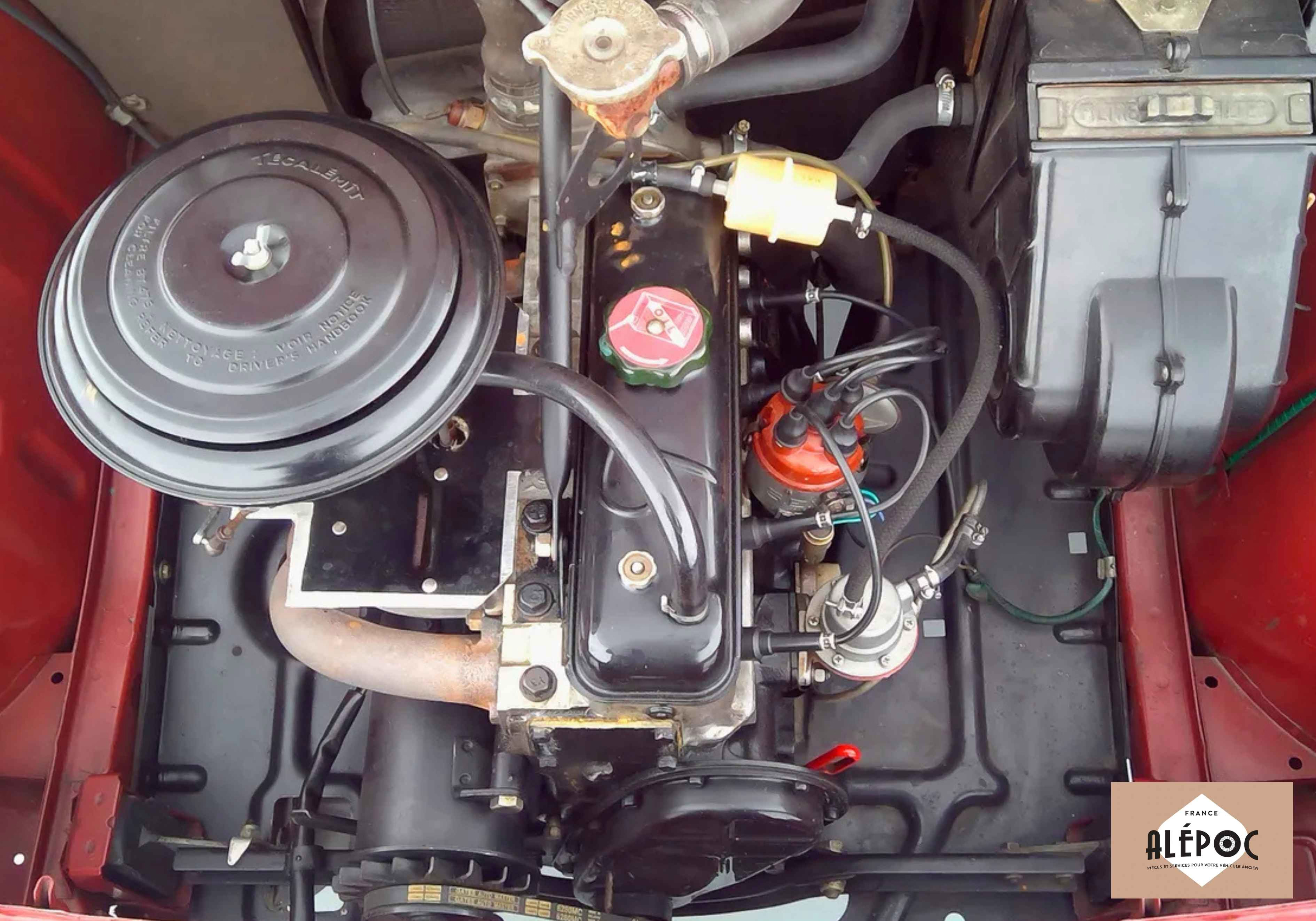
The Dauphine features a self-supporting steel body with bolted fenders, independent suspension on all four wheels with coil springs, telescopic hydraulic shock absorbers, and a 845 cc Ventoux engine producing 26 hp at 4,200 rpm. Simple, sturdy, and economical, it is easy to maintain thanks to We have a wide selection of replacement parts available on our website.
The interior space is much more generous than that of the 4CV, thanks to its design as well as its large front trunk, whose lid opens against the direction of travel to maximize space.
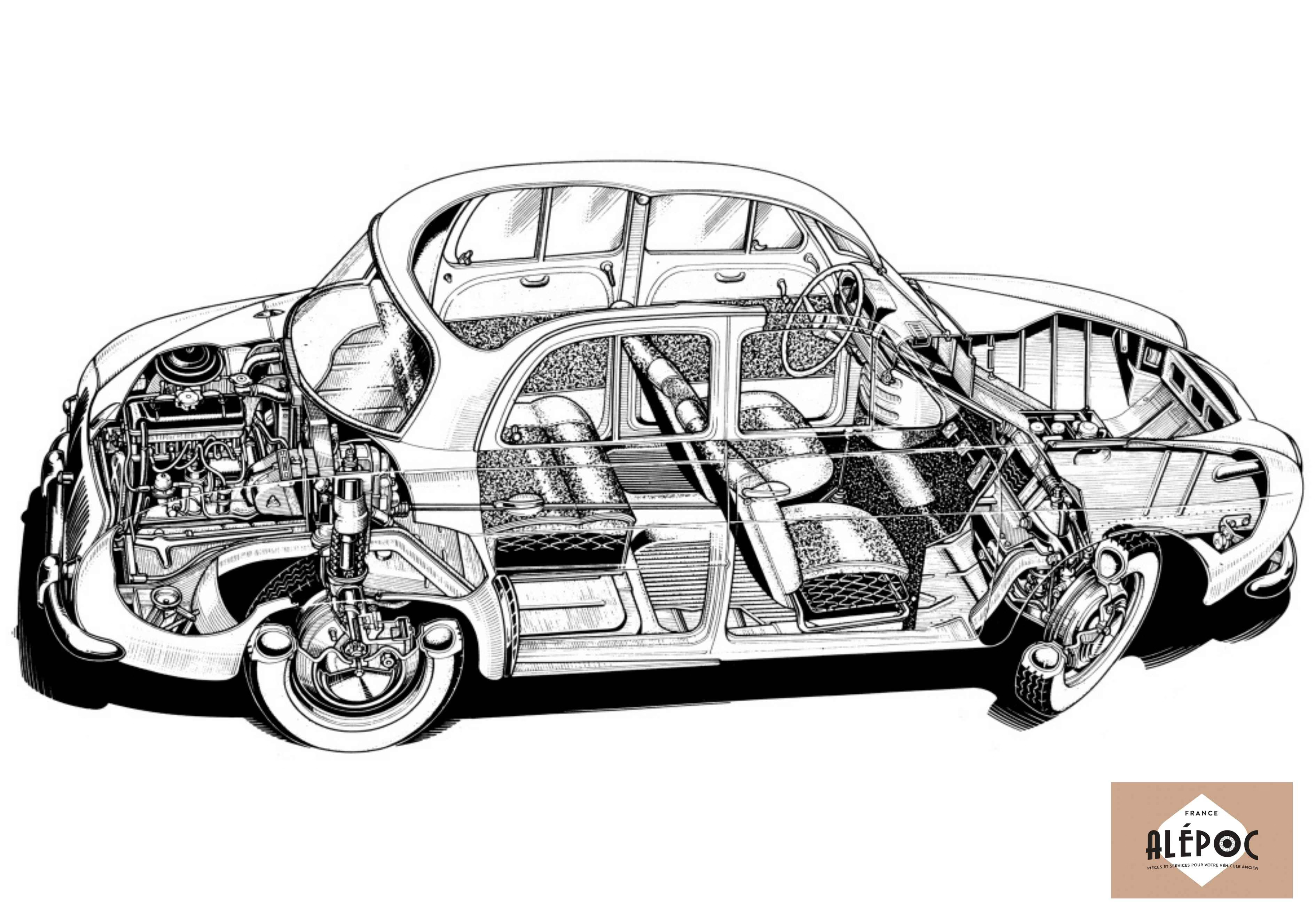
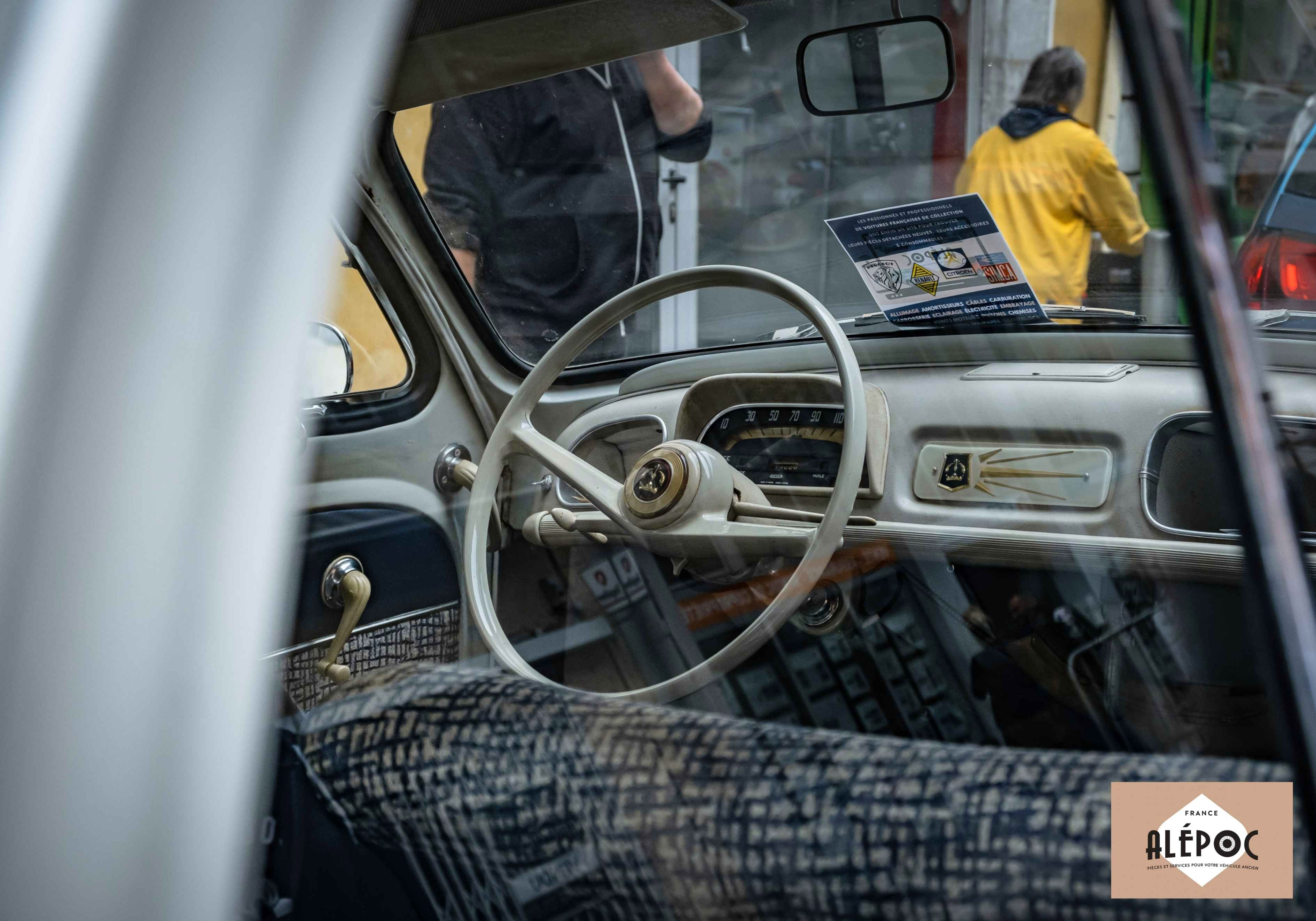
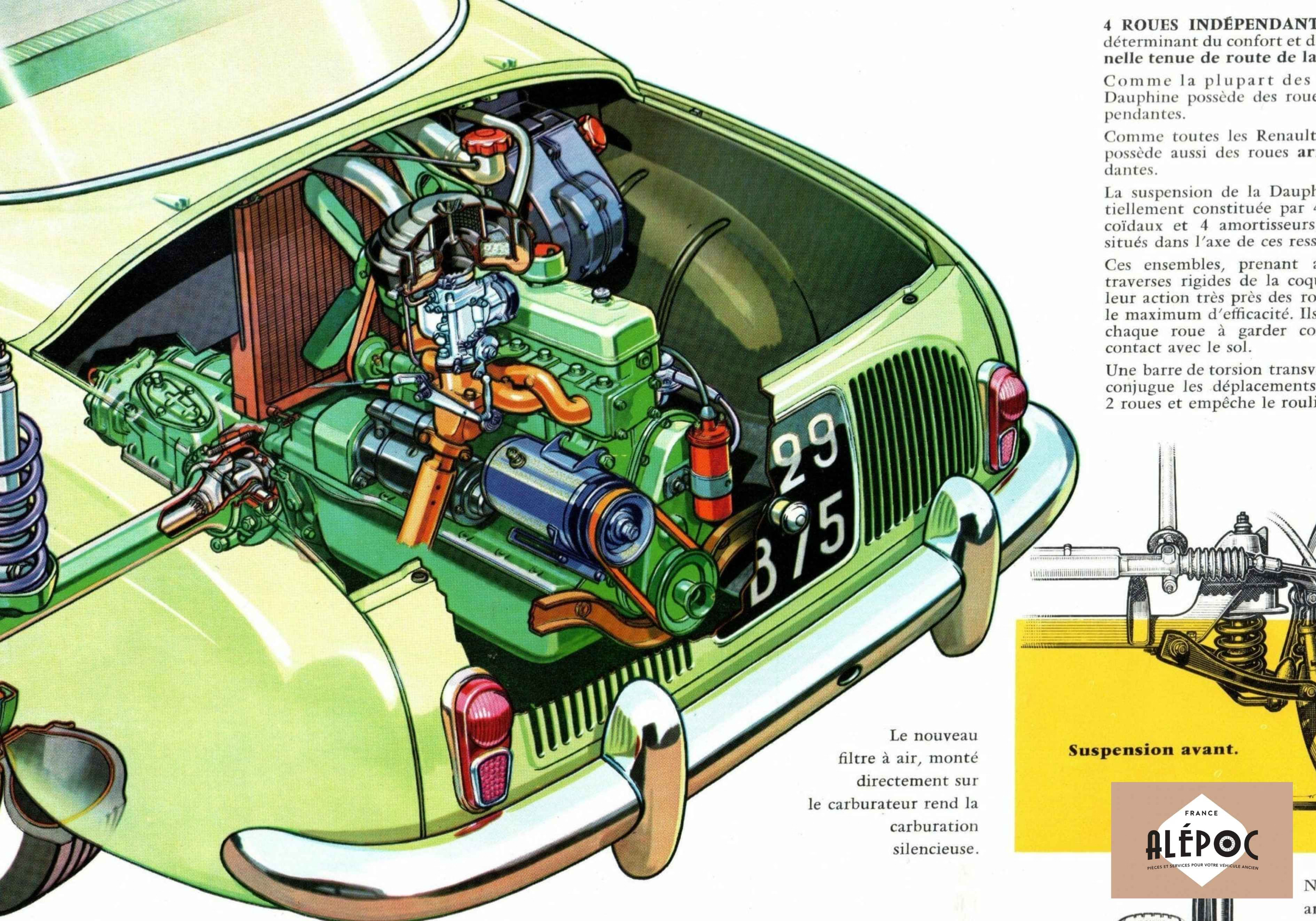
The only two options available at launch are the sunroof and the Ferlec clutch. This is an innovation. An electromagnetic system allowed the driver to shift gears without using the clutch pedal, thanks to a switch located at the base of the gearshift lever.
Check out our parts for replacing the clutch
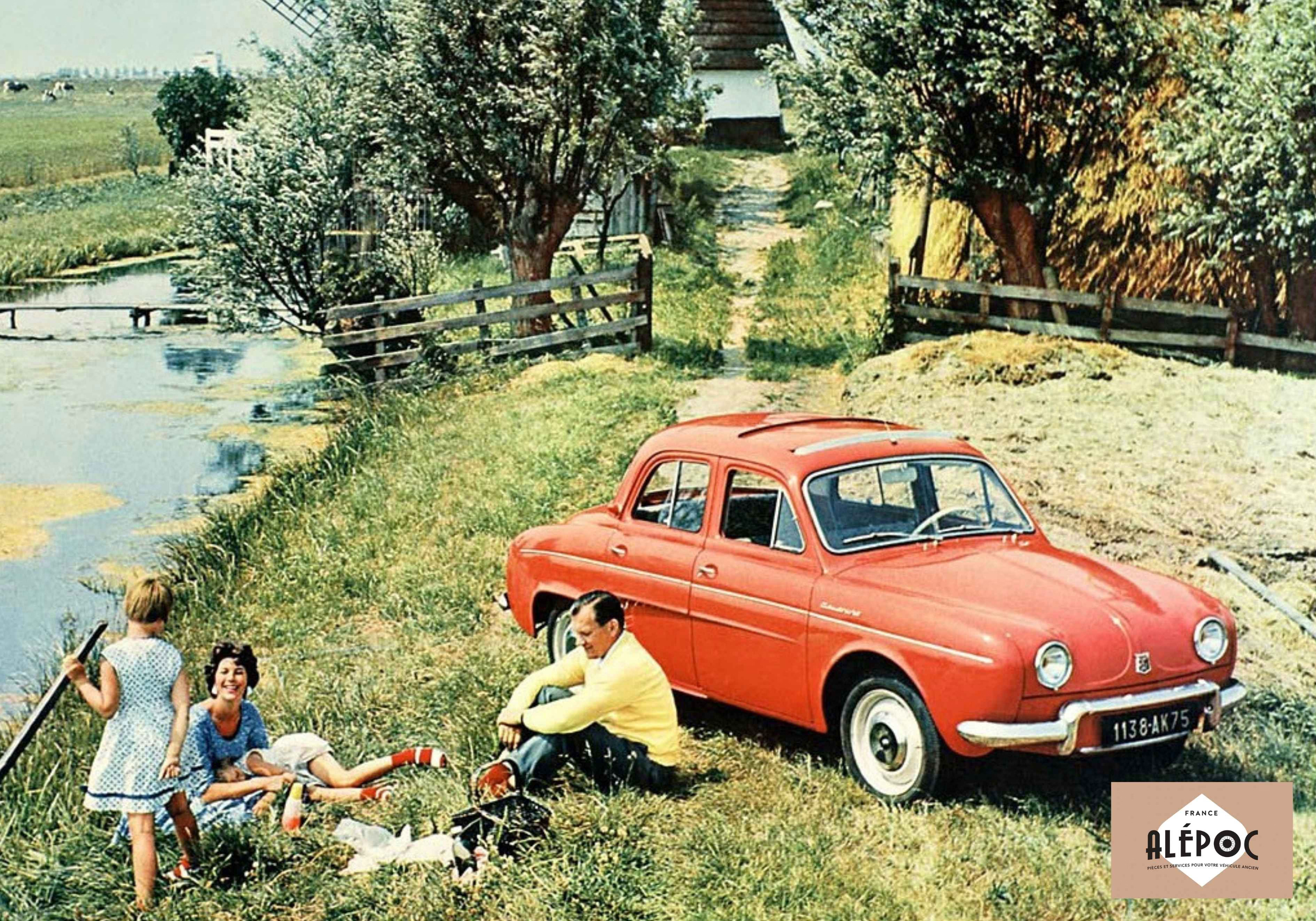
Customers can also choose from a wide range of colors exterior and interior fabrics, thanks to the artist's work Paule Marrot who wanted to add a touch of cheerfulness to the car: Montijo red, Bahamas yellow, Hoggar blue, Réjane white. She was also the one who designed the hood emblem that would adorn all Dauphine models.
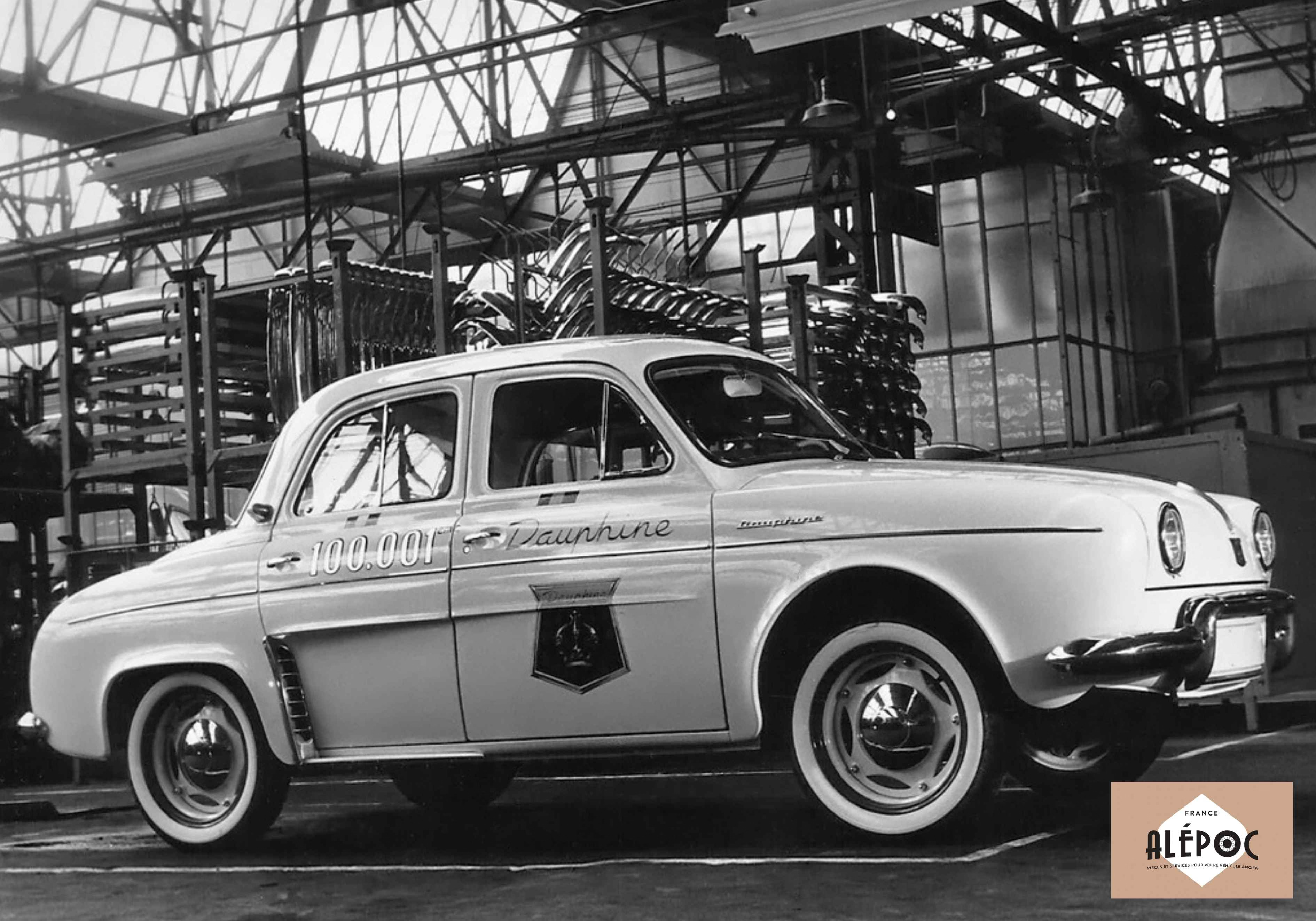
Success is immediate. Production rates at the Flins plant—renamed the “Pierre Lefaucheux Plant” in honor of the late CEO—rose from 350 to 600 vehicles per day. On February 22, 1960, the one-millionth Dauphine rolled off the assembly line.
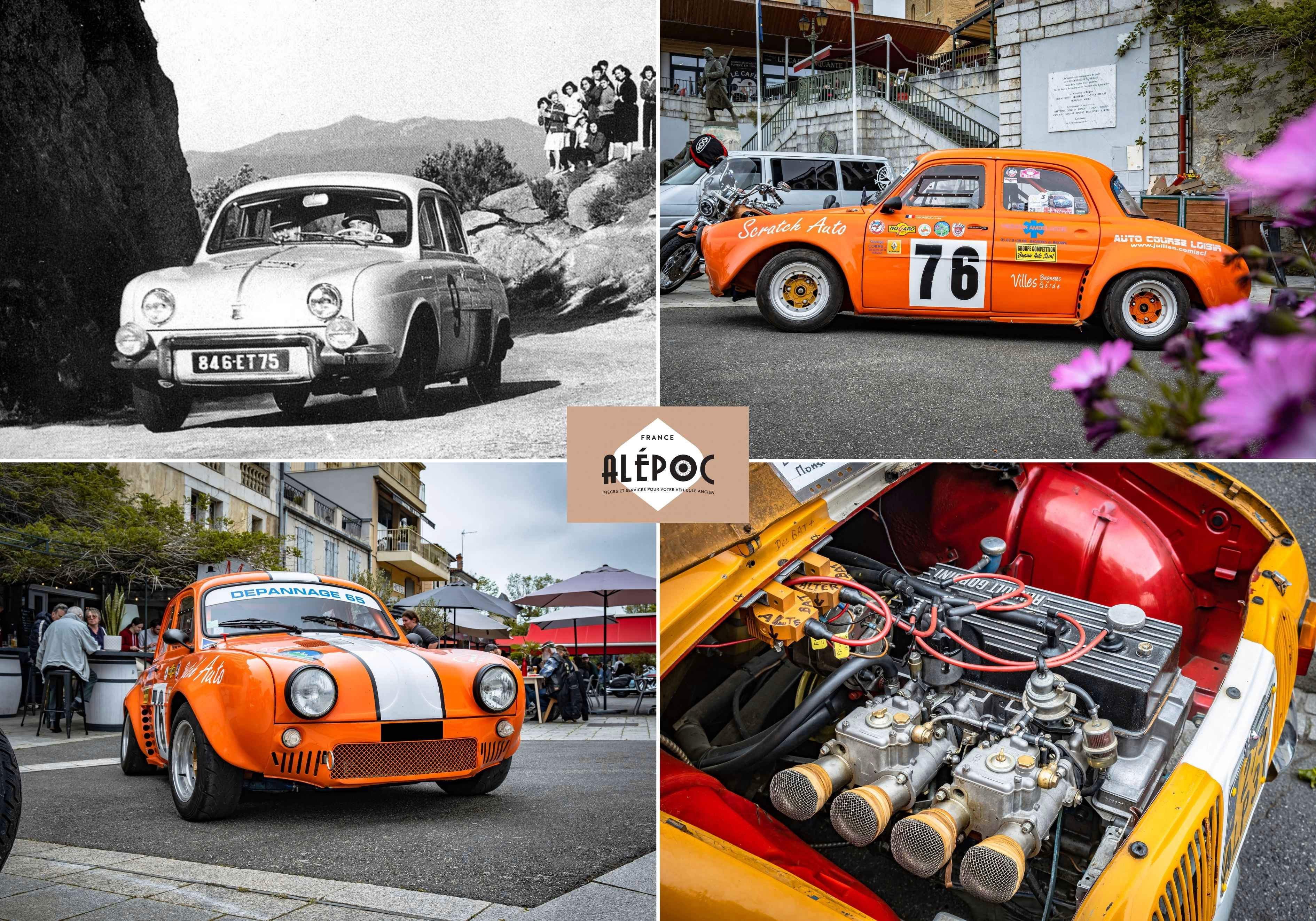
On the racetrack, the car made a name for itself right from the start. In April 1956, four Dauphines took the top four spots in their class at the A Thousand Miles. A first victory that signals a promising start to a successful athletic career: victory at the Tour of Corsica 1956 (with an all-female crew), 1958, and 1962, victory at the 1958 Monte Carlo Rally and many other victories in his weight class.
Changes to the Dauphine
Throughout its history, the Dauphine has evolved and been refined without ever straying from its core principles. It is this ability to evolve smoothly that allows it to remain competitive in the face of increasingly fierce competition.
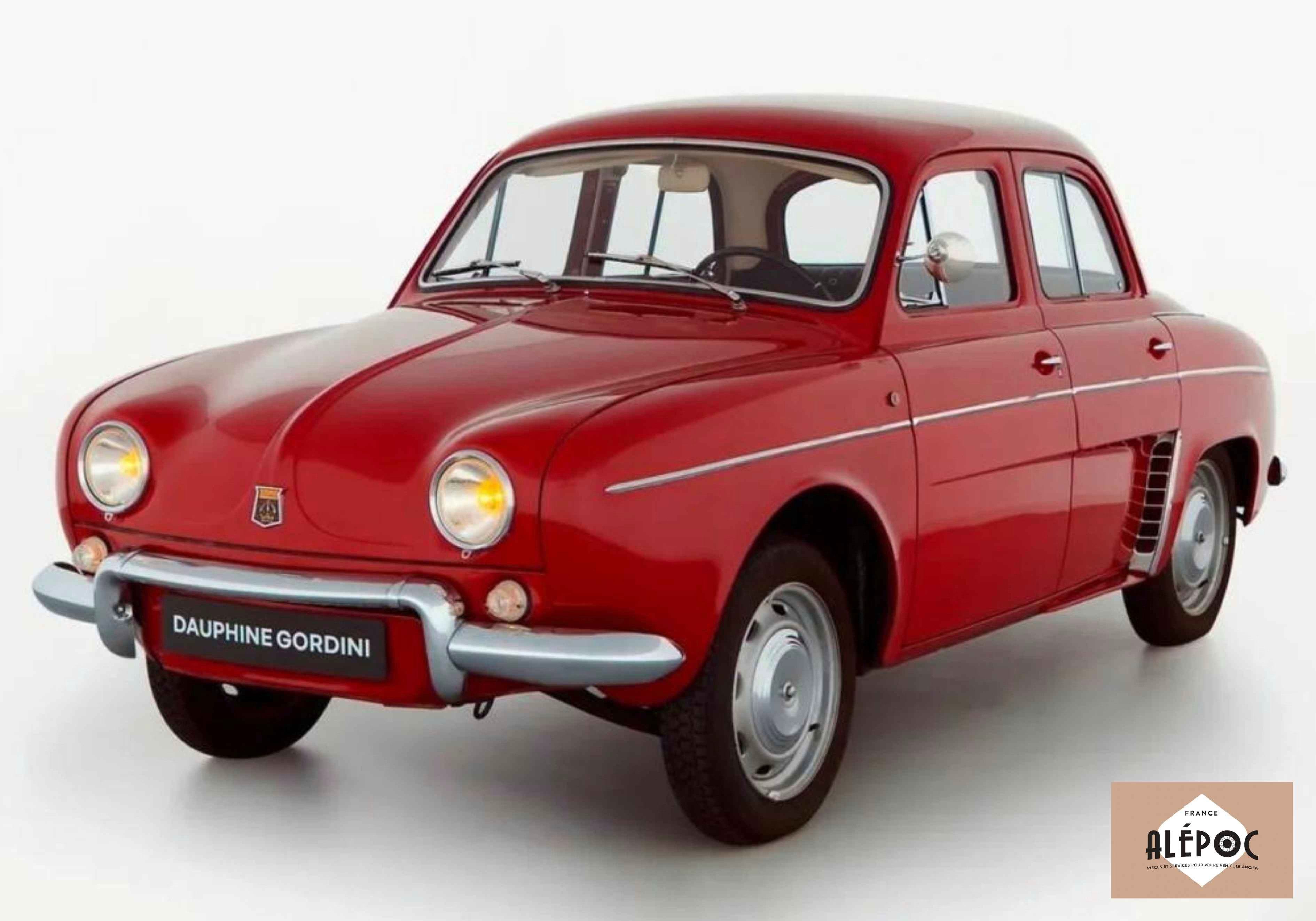
The Dauphine Gordini (1957)
To give its sedan a sporty look, Renault contact Amédée Gordini at just the right time: the engine wizard is going through a rough patch following his breakup with Simca In 1951, his workshop on Boulevard Victor was on the verge of closing. Fernand Picard suggested that he develop a high-performance Dauphine for the 1957 Paris Motor Show. The specifications were tight: achieve 35 to 37 hp with a price increase limited to 100,000–120,000 old francs.
Gordini reworked the cylinder head with V-shaped combustion chambers, set the valves at a 7° angle, strengthened their return springs, and installed a Solex 32 PIBT inverted carburetor with an automatic choke. He added a fourth gear to the transmission.
Discover our fuel system parts
Result: 37 hp at 5,000 rpm instead of 26 hp, and a top speed of 130 km/h. In 1960, the power output increased further to 40 hp. The Gordini pioneered a concept that is still very much alive today: the small, sporty, and fuel-efficient car.
The Aérostable Pendant (1958)
It is a comfort innovation discreet but effective. It features rubber pads of varying flexibility at the front and air-filled cushions at the rear. The Dauphine Aérostable glides more smoothly over speed bumps and offers significantly improved comfort, to the point that Renault makes it a major selling point.
Check out our shock absorbers for the Dauphine
L’Ondine (1961)
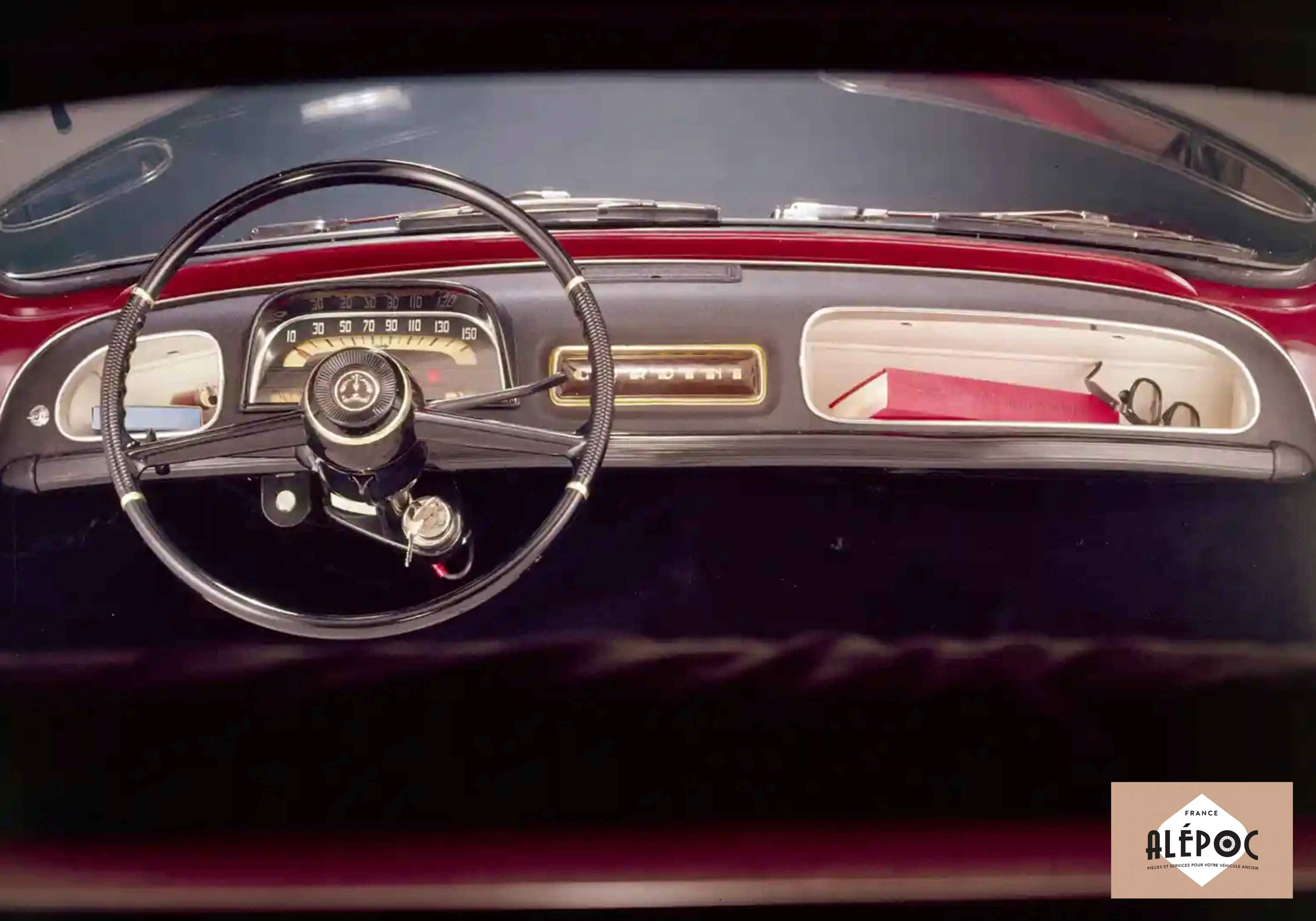
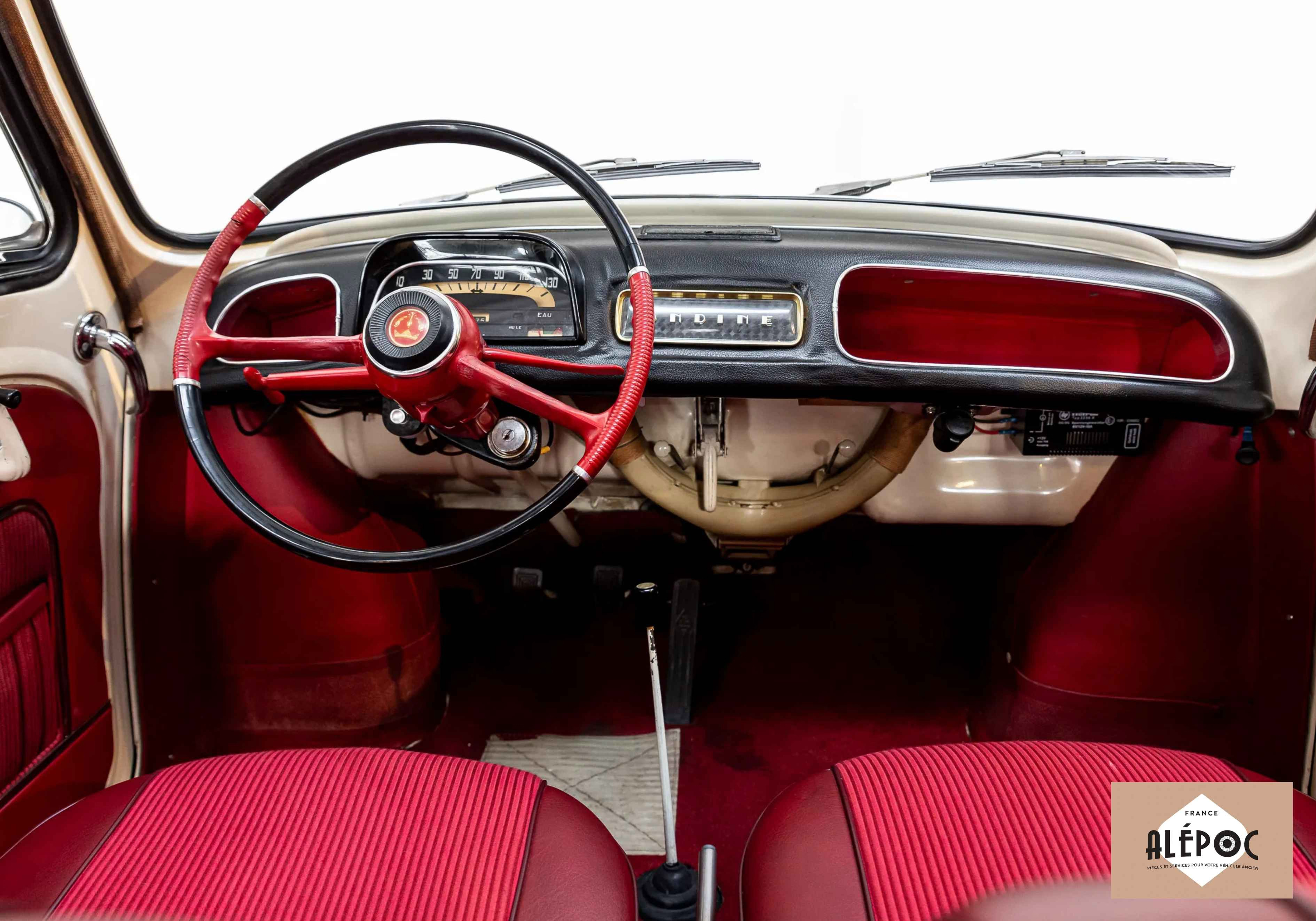
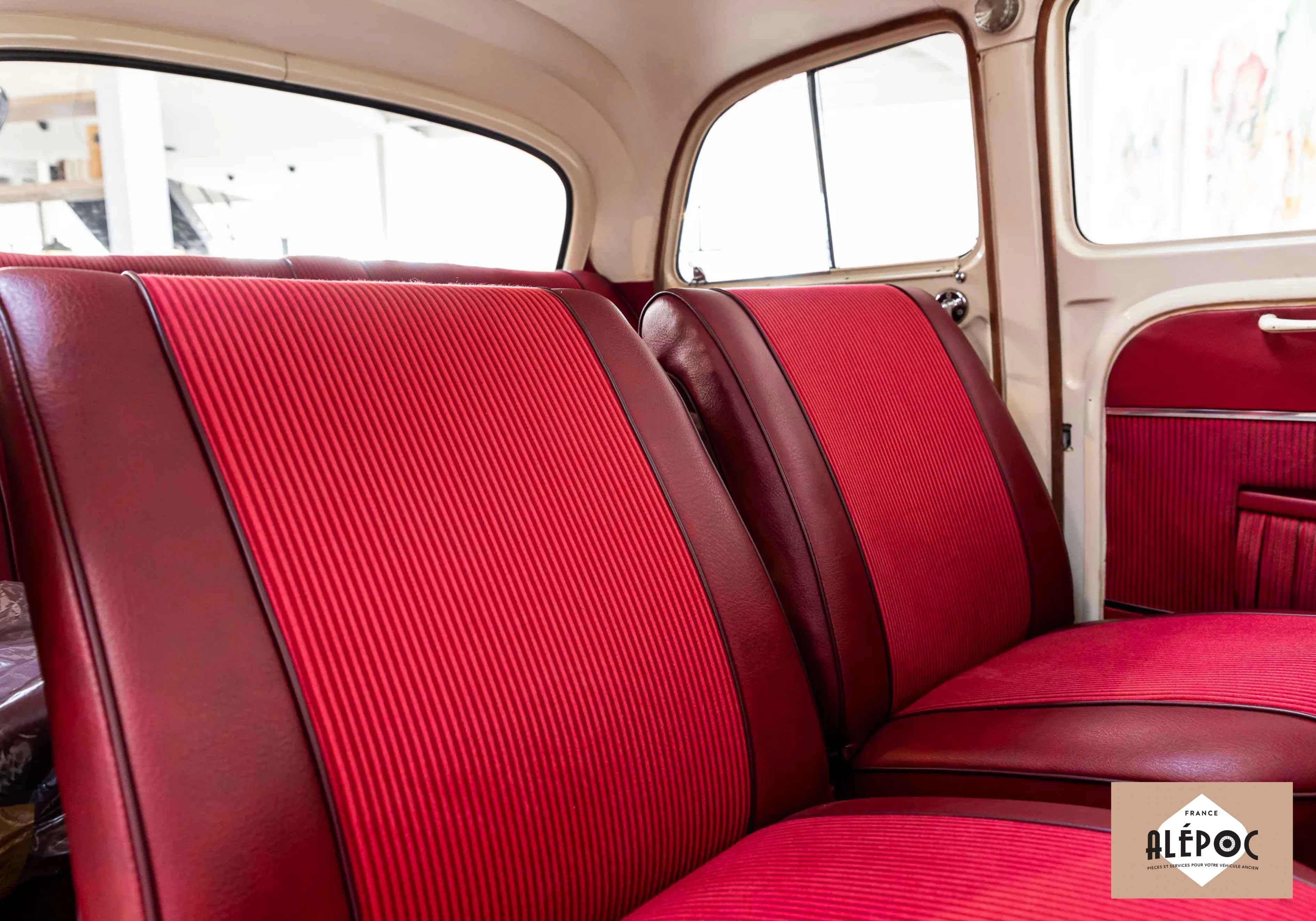
The luxury version of the line stands out for its more refined finishes, an upgraded dashboard, and the choice between the standard engine or the Gordini engine. The jewelry designer Van Cleef & Arpels features the monogram on the interior. It also comes with a black inverted-V steering wheel and a matching dashboard, designed for customers who wanted to stand out without paying the price of a luxury car.
La Dauphine 1093 (1961)
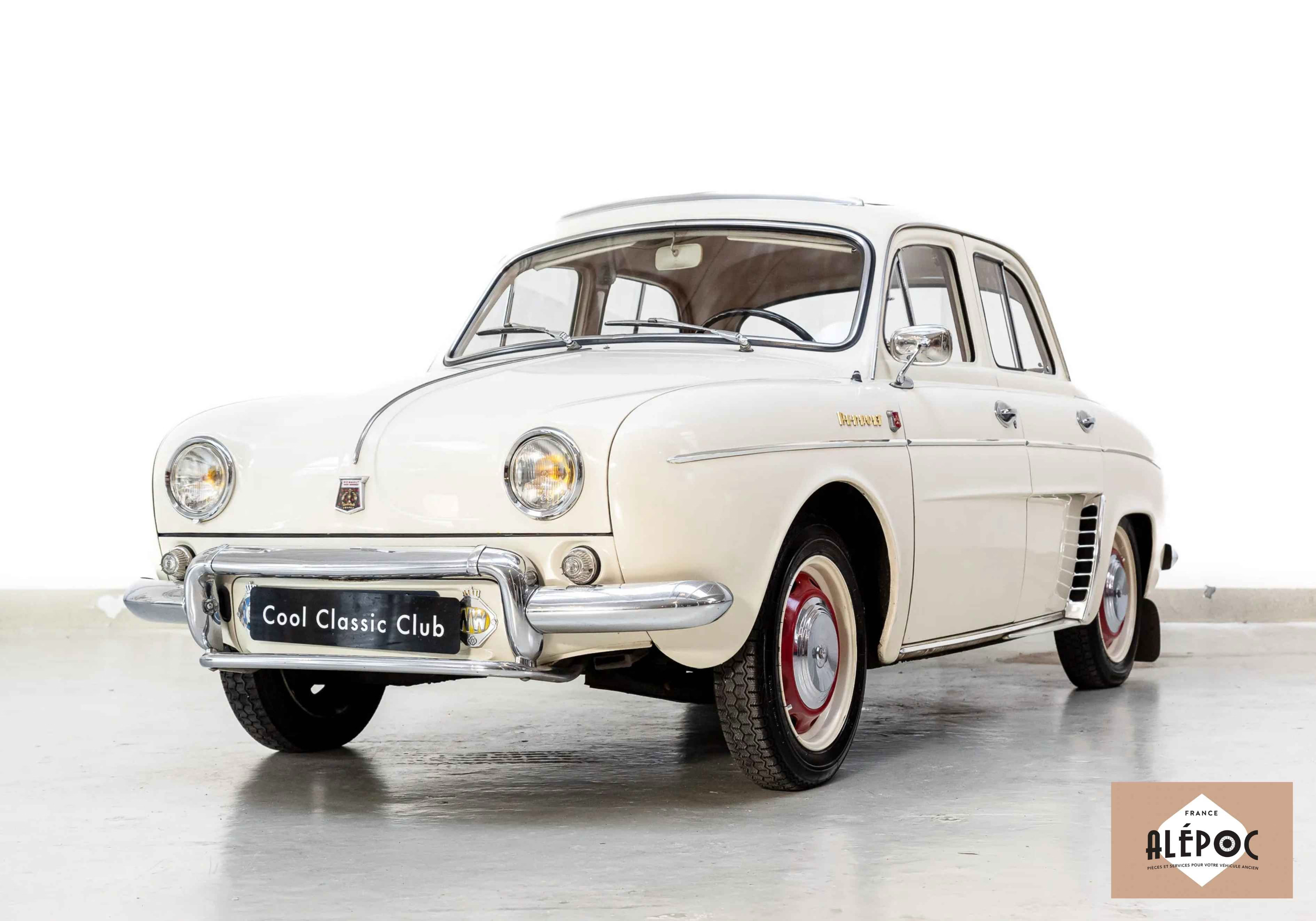
Unveiled in September 1961 at the Paris Motor Show, the Dauphine 1093 became the top of the line. It is the production version of the race cars entered by the Régie in the Touring Car class. At least 1,000 units were required for homologation.
This little French sports car is updating its Ventoux engine. It is equipped with an Italian-made Solex 32 PAIA3 twin-barrel carburetor, new Autobleu intake and exhaust manifolds, domed pistons raising the compression ratio to 9.2:1, exhaust valves with 7 mm rotors and stems, and a custom camshaft.
Discover our cooling components
The bottom line: 49 DIN hp and a 0-60 mph time of 15.5 seconds.
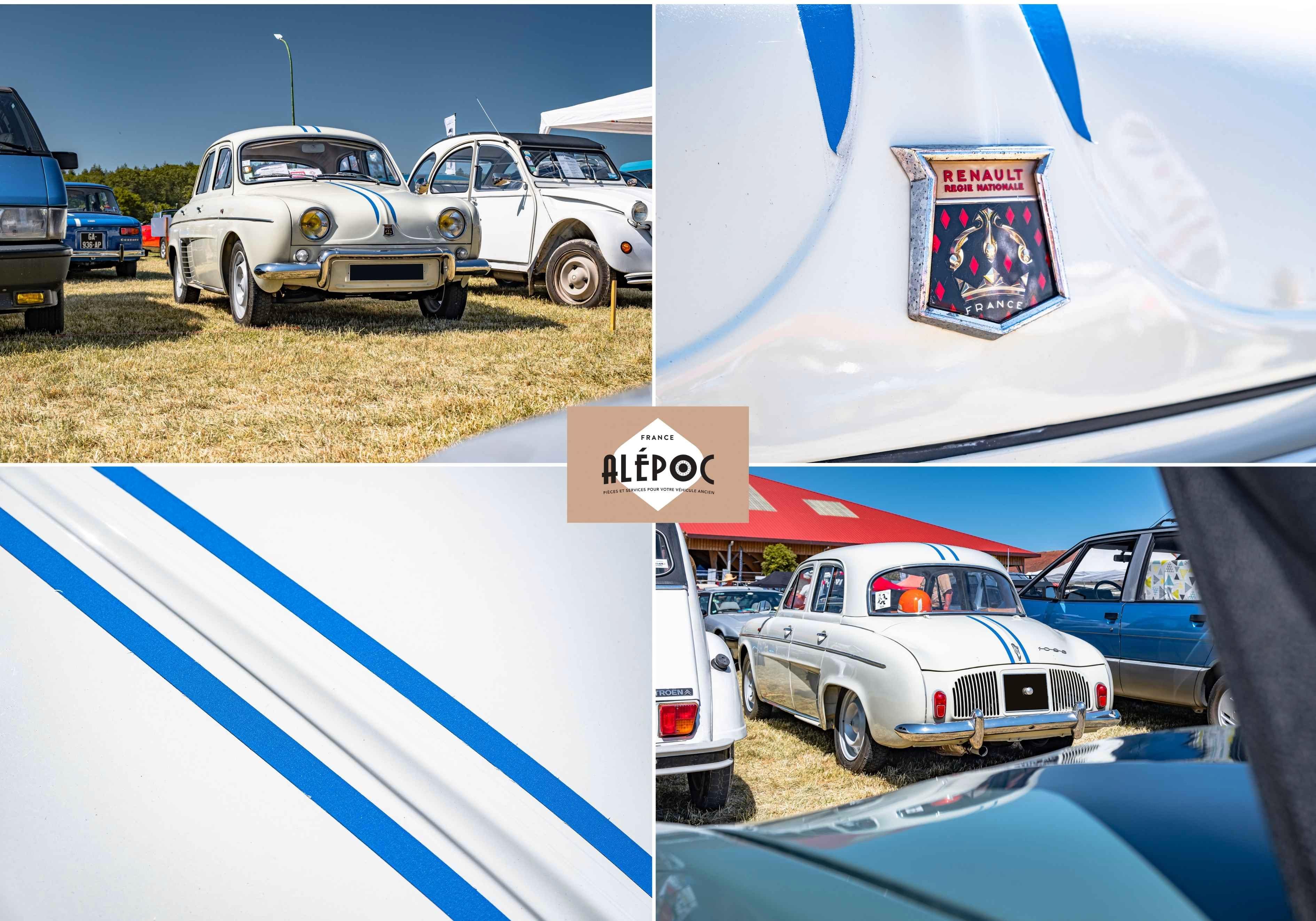
It can be recognized by its two blue stripes on the white body, its headlights, which are 180 mm wider (compared to 160 mm), and its tachometer in the left glove compartment. A very desirable French woman.
Internationally: from New York to Buenos Aires
The Dauphine was one of the very first French cars to attempt a genuine global conquest, with varying degrees of success depending on the country.
United States: The Dream and Disillusionment
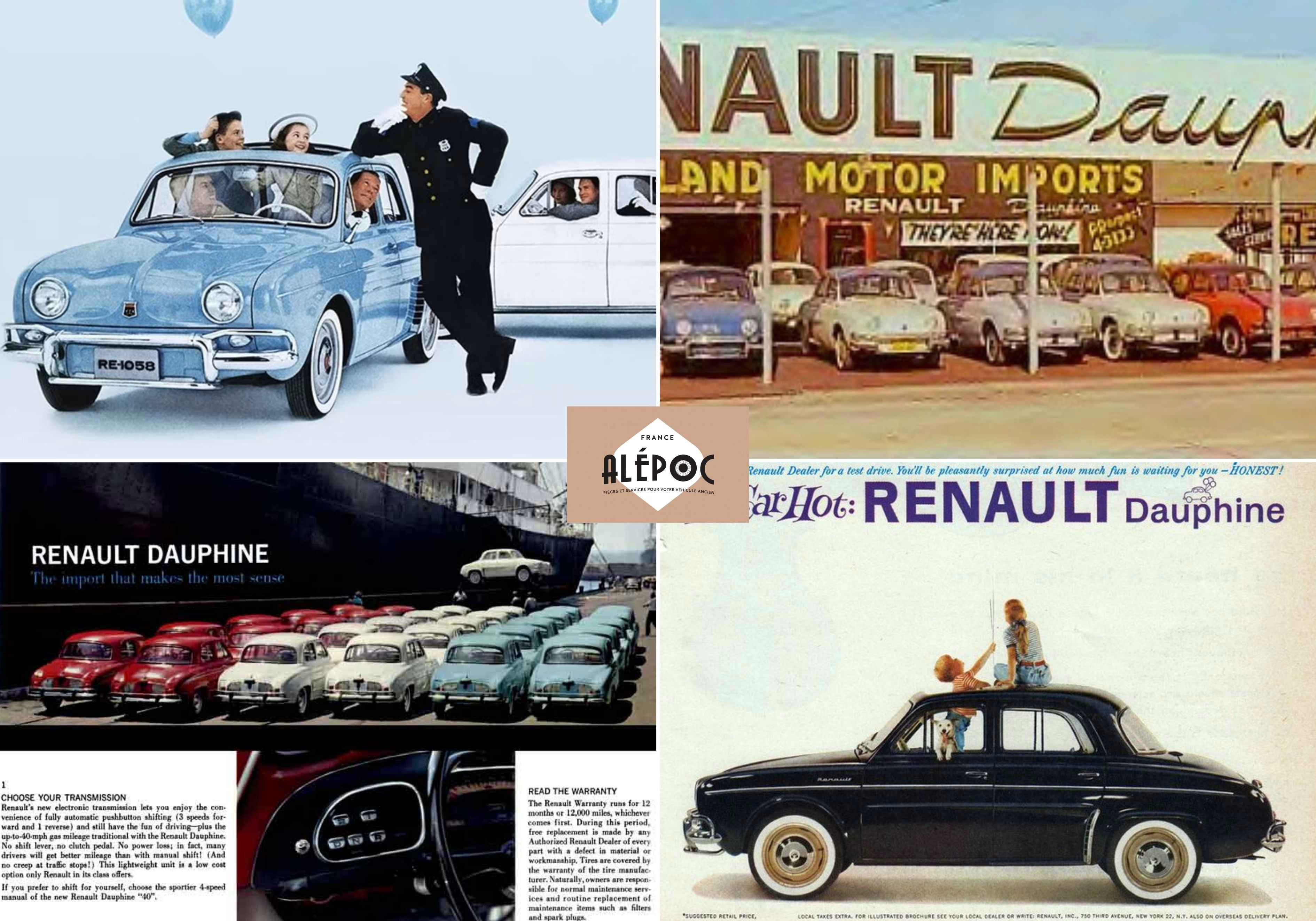
Following the relative success of the Renault The 4CV in the Land of Uncle Sam, Renault The adventure continues with the Dauphine. The car is manufactured in France with the necessary modifications : large headlight, additional chrome trim, extreme cold weather heating, protected fuel tank...
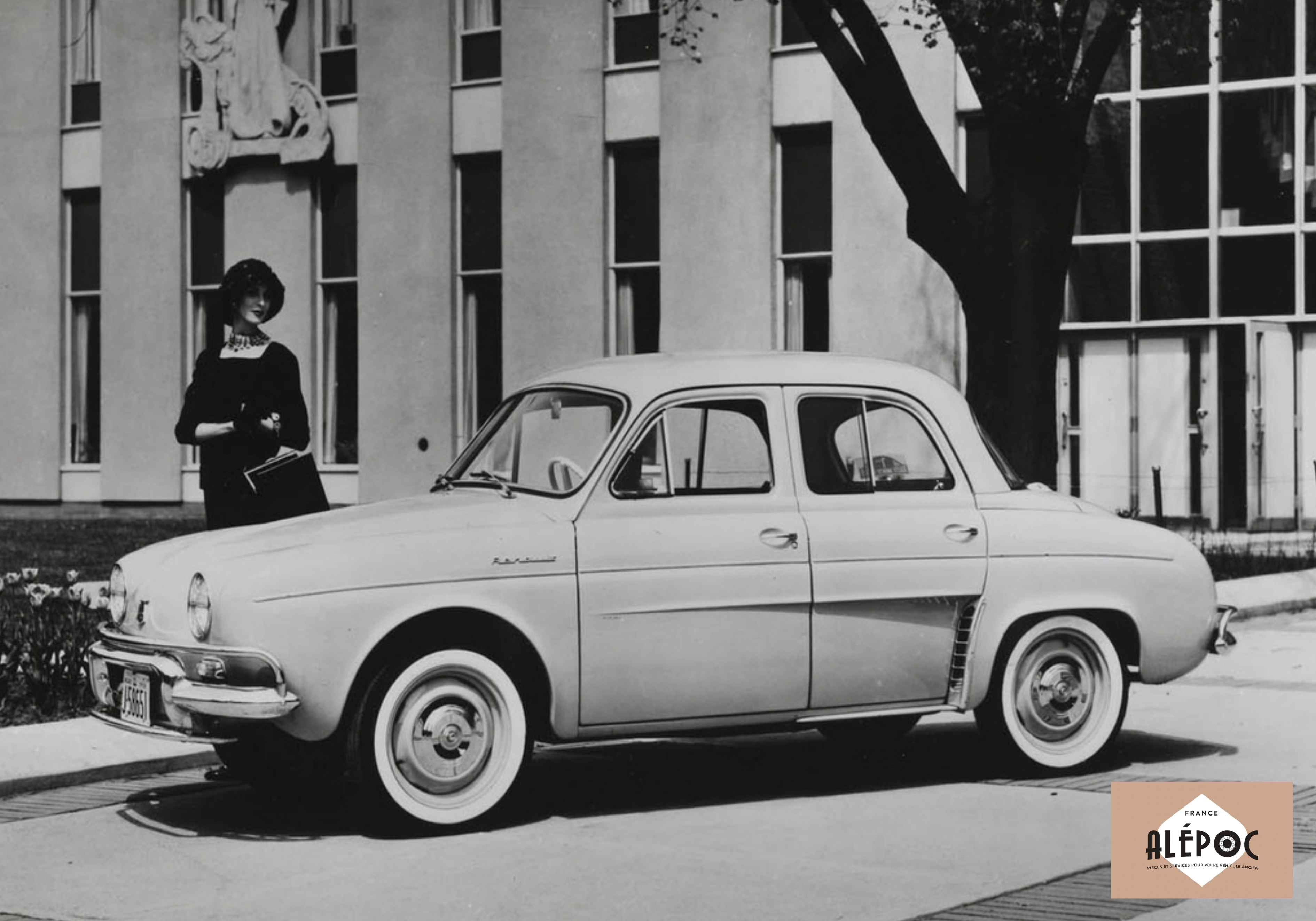
On May 22, 1957, Pierre Dreyfus officially unveiled the Dauphine in the brand-new new showroom Renault on Park Avenue in New York. The “Princess,” as Americans nicknamed it, was priced at $1,600, while the cheapest American model cost $2,000. It took the fashion magazines by storm. In November 1959, she even appeared on an inside page of Playboy. In 1959, Renault registered 90,536 Dauphines in the United States through 900 dealerships. In total, 410,000 Dauphines crossed the Atlantic.
The dream comes to an abrupt end. Repeated breakdowns in extreme cold, premature corrosion, poor-quality plastics and chrome, and above all the near-total lack of after-sales service caused sales to plummet in 1960. The image of Renault will leave a lasting mark on the United States for decades to come.
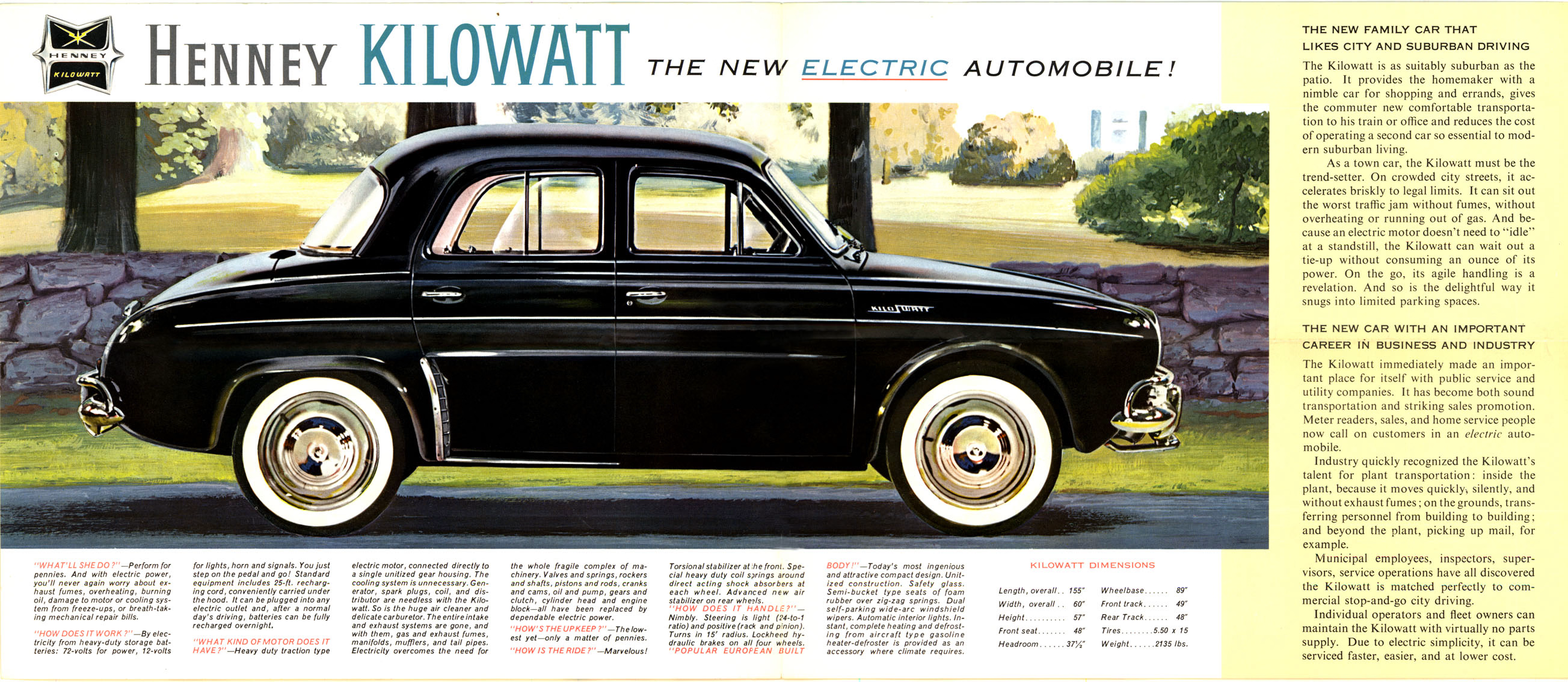
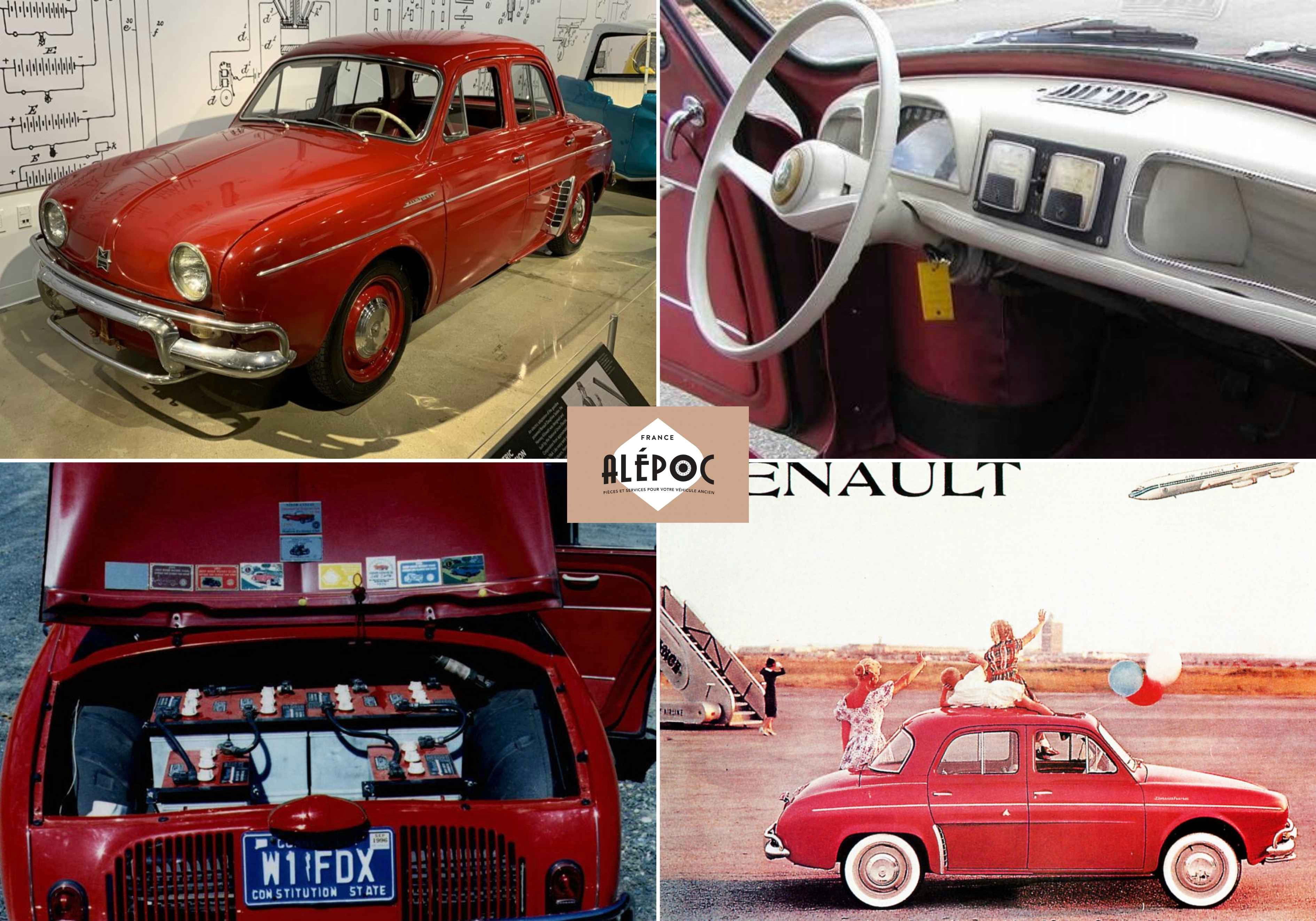
In the United States, she's even going to have a electric version under the name of Henney Kilowatt. The project was launched at the initiative of C. Russell Feldman, president of the National Union Electric Corporation (the American equivalent of EDF) and a battery manufacturer. He placed an order for 200 American Dauphine cars with the Régie Renault, without engines, in order to install a an electric motor and several 6V batteries. Only 32 models were built due to high costs and a very limited range of around 50 km.
La Dauphine Around the World
In the rest of the world, the Renault Dauphine will expand into international markets through agreements with local manufacturers.
In Italy, a cooperation agreement is signed between the Régie and Alfa Romeo in October 1958. The Dauphines were assembled at the Portello plant in Milan, alongside the Giulietta models, and marketed as “Dauphine Alfa Romeo.” We mentioned this to you in our article on French cars in Italy.
The agreement is falling apart. Renault is reluctant to stock Alfa Romeos at its dealerships, while the brand continues to export its “French” Dauphines to Italy. Fiat is also pressuring the Italian government to stifle this competitor.
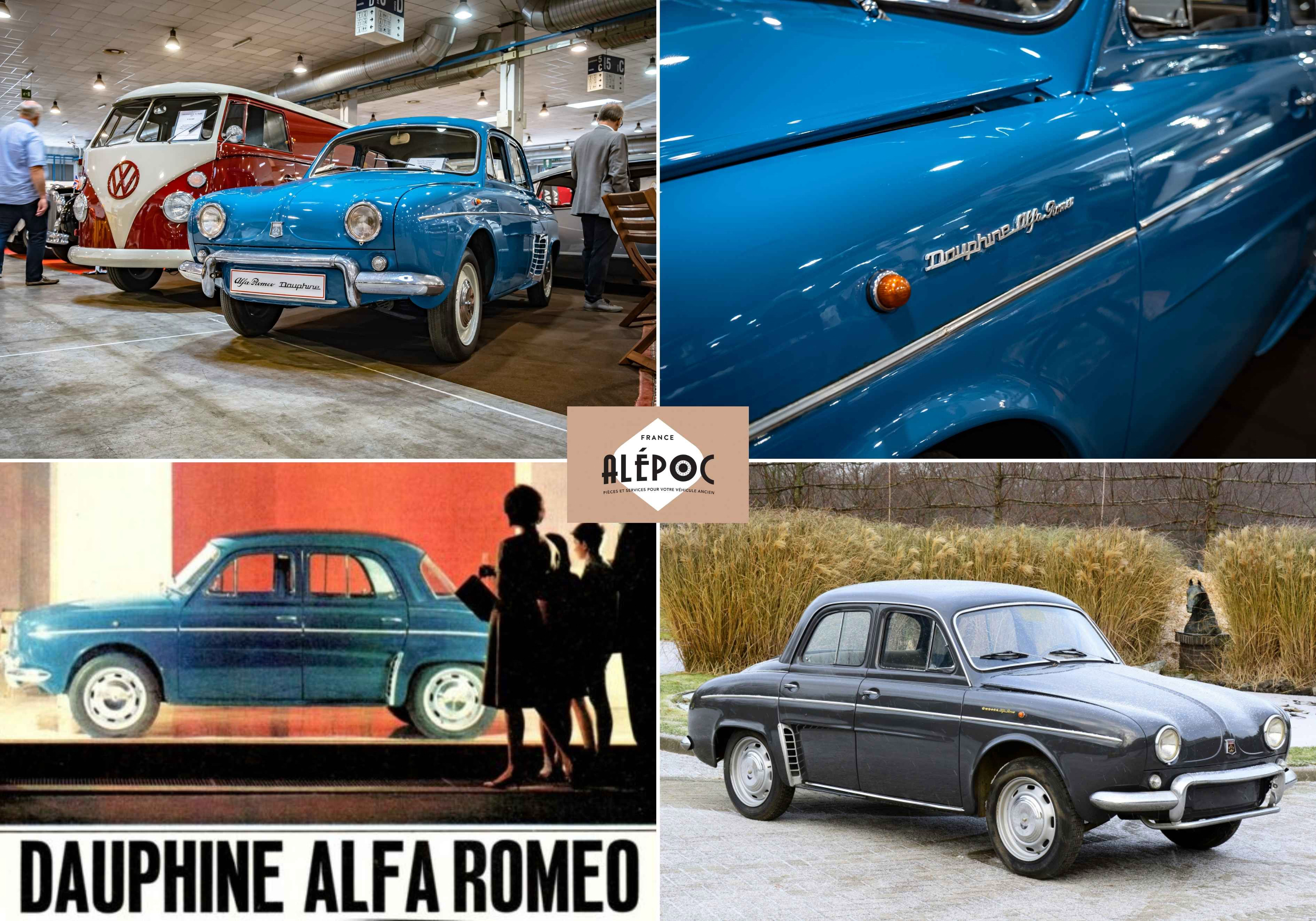
In Spain, the FASA subsidiary began producing the Dauphine in Valladolid in 1958, the Gordini in 1961, and the Ondine in 1962. In 1964, the Ondine adopted the Gordini’s four-speed transmission, unlike the French model, which retained three gears.
In Argentina, , Industrias Kaiser Argentina (IKA) and the Régie signed an agreement on November 27, 1959. The first Dauphine rolled off the assembly line in Santa Isabel on June 12, 1960. The base model was similar to the U.S. version, but the speedometer was in km/h and it had European headlights. The Gordini was produced there under the name Ika Gordini until September 25, 1968
In Brazil, the G.E.I.A. approves the draft Willys-Overland December 26, 1958. This American brand, which had never produced a passenger car at that time, launched its first Brazilian Dauphine on November 12, 1959. Some 19,000 units were produced by June 1962. A Brazilian Gordini followed, with models continuing through the Gordini IV in 1968, when Ford acquired Willys.
The End of a Reign
After a a record year in 1960 With 402,546 units produced, the Dauphine began to decline. Competition was intensifying, the Citroën Ami 6 and the Simca 1000 are attracting a new customer base, and the car’s flaws—a tendency to oversteer due to its rear-engine layout, susceptibility to rust, and instability in strong winds—are coming under increasing criticism.
In 1963, the Ondine and the 1093 were discontinued. The product line is being streamlined : In 1964, the standard Dauphine was replaced by the four-speed “Export” version. In 1965, only the Gordini remained in production. Production declined steadily, reaching 13,062 units in 1967. December 1967 marked the end of production in France.
The final tally is staggering: 2,123,396 units produced over the course of an eleven-year career, making the Dauphine the first French car in history To surpass the two-million-unit mark. Her legacy is immense: she paved the way for the export business of Renault, invented the concept of the "supercharged" small car with the Gordini, and proved that a This popular French car was able to make its mark on every continent. Seventy years after its launch, the Dauphine remains a living symbol of the golden age of French mass-market cars. Happy anniversary.
Discover our full range of replacement parts to keep your Dauphine running
Check out our other articles on Renault :

 English
 Français