Shopping Cart
 Français

 English

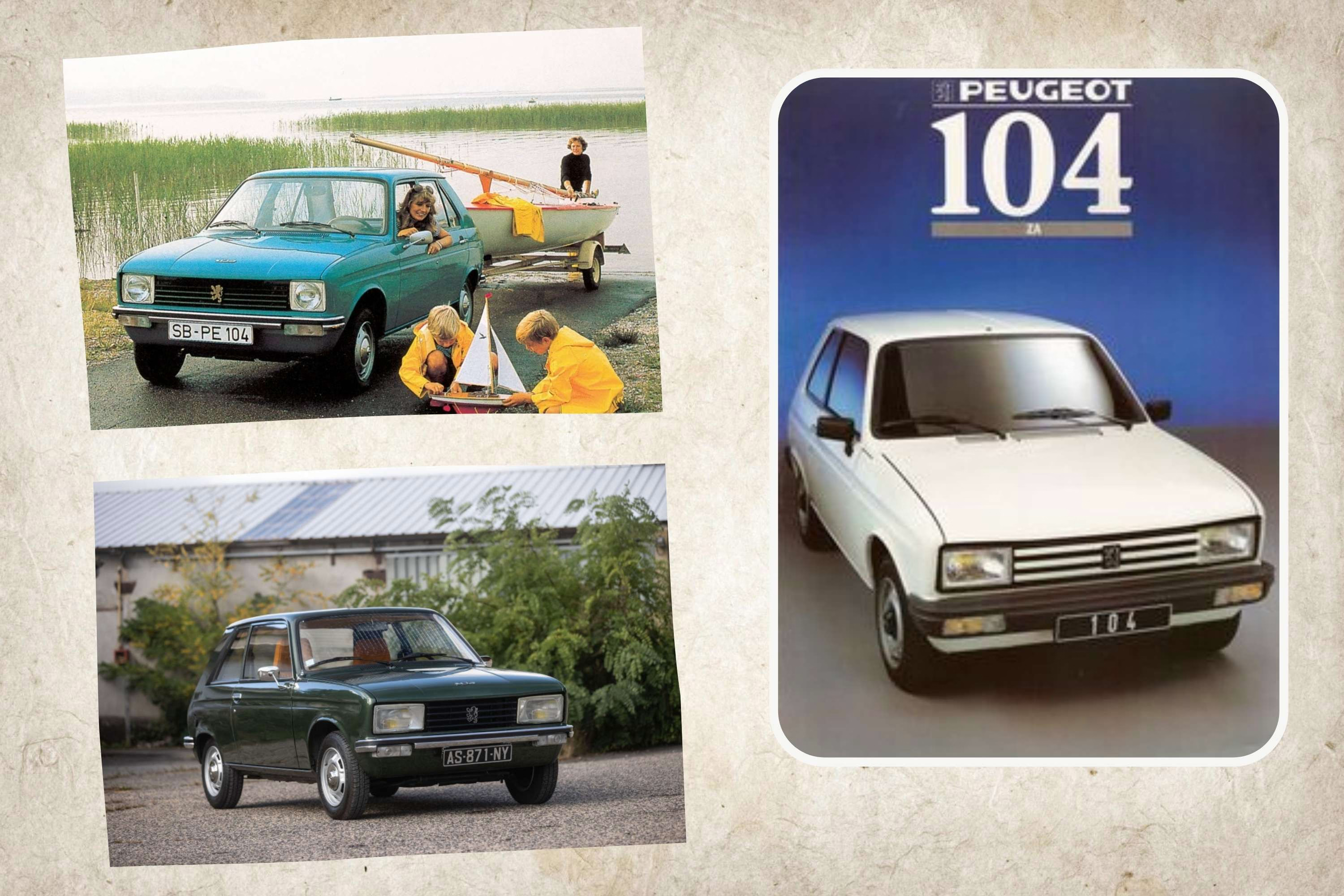
On October 4, 1972, a young lion cub was spotted for the first time in the French capital. Witnesses pinpointed its location, reportedly at the Palais de Chaillot in Paris. Faces light up as it passes by; has it come to visit the Eiffel Tower? No, we are not watching a wildlife documentary on ARTE. Under the neo-classical roof of the palace, the little revolution from Sochaux is being presented, the... Peugeot 104. Under the eyes of European dealers lies the smallest Peugeot of its time. On the doors of its unique bodywork, it proudly displays its advertising decals featuring a 104 "in a caliper chanting 'the shortest 4-door in Europe.' Another advertisement, on the other hand, displays" "Everything Peugeot "in 3.58 m."
A number that will follow her until the end of her career. The cub is ready; it makes its public appearance the next day at the Paris Auto Show. A look back at its story.
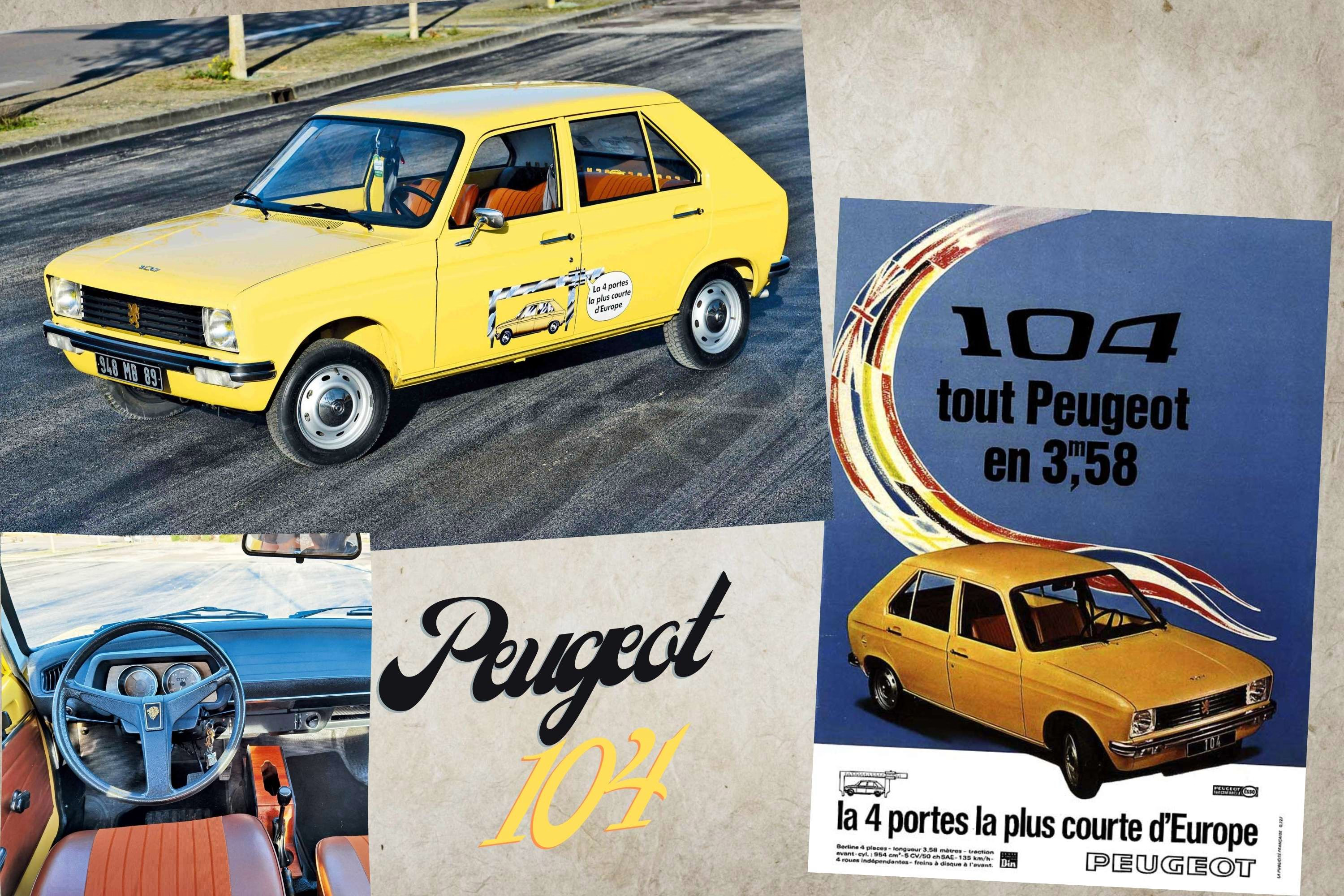
In the design offices of Sochaux, a certain revolution has been implemented since the middle of the last decade. Previously accustomed to classic sedans intended for a certain segment of the population, Peugeot begins to apprehend new segments. The Peugeot 204 arrives in 1965 and beneath its traditionally appearing bodywork – you shouldn't disrupt habits too much – hides a Traction architecture unprecedented for the manufacturer. This first front-wheel drive will pave the way for new cars, including the 304, which will be an evolution of the 204, and this new 104. The targeted city car segment perfectly aligns with this front-wheel drive architecture, allowing for better space efficiency to the benefit of interior space. Certainly, the turning radius is not as good as with a rear-wheel drive, but this design allows for an great versatility of use for the city dweller of the 1970s. Moreover, the lion is not mistaken, as its rival with the diamond launches its new vision of the city car in the same year with the Renault R5 (read: 50 years of the R5, it doesn't lack flair). The little Renault will slightly overshadow the 104, which nevertheless has many advantages to offer.
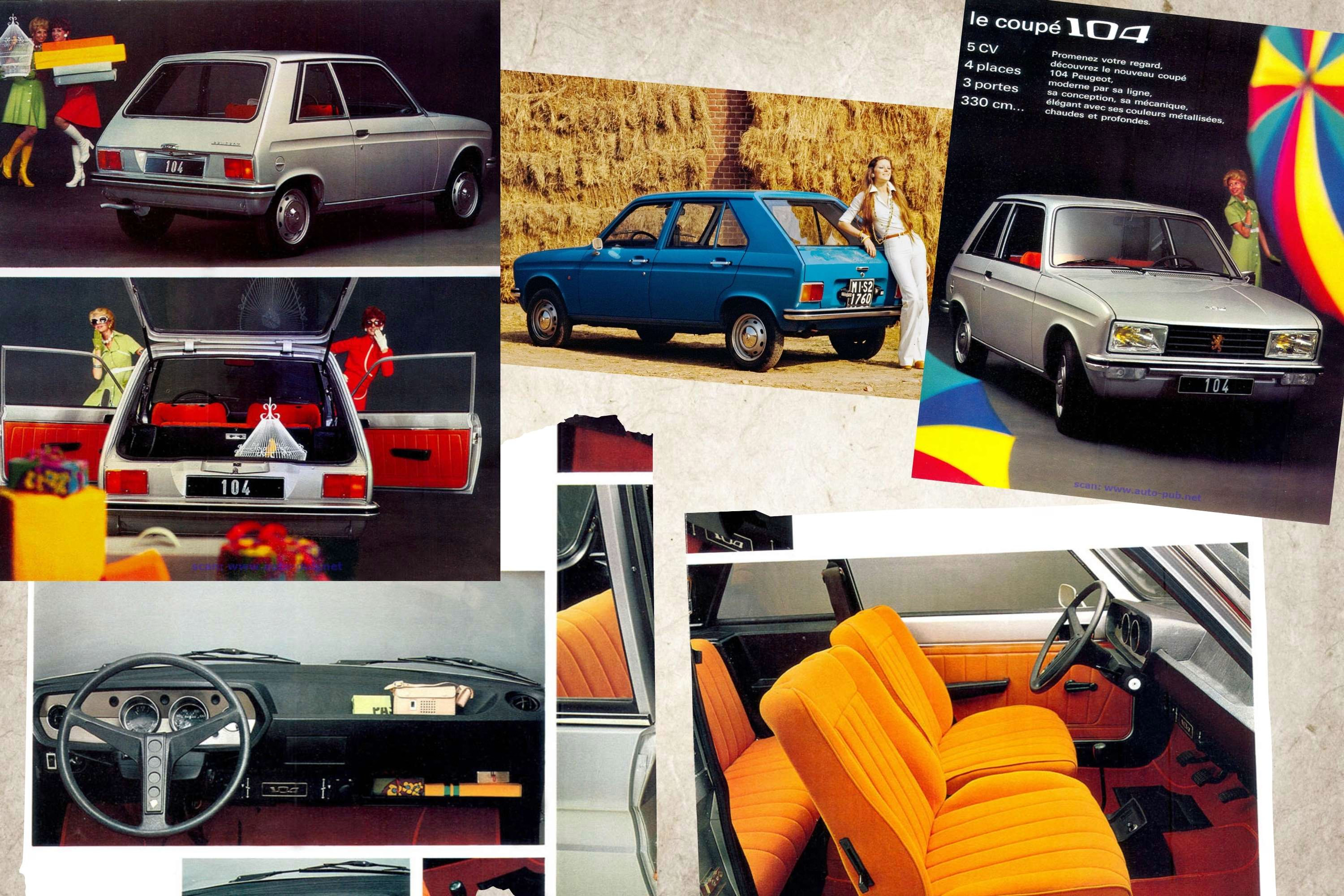
His style, signed by Paolo Martin, is well-executed and in tune with the times. The brand has the right intuition to quickly offer a 2-door coupe variant with a hatchback from 1974. A double choice that will only be possible in 1980 for its rival. A variation that made me contradict myself a bit earlier, as the 104 was not just 3.58 meters long since this coupe version is 3.30 meters! A ridiculous size that highlights its first advantage, its ability to dodge traffic jams by being able to weave through anywhere. The streets of our historic city centers welcome it with open arms.
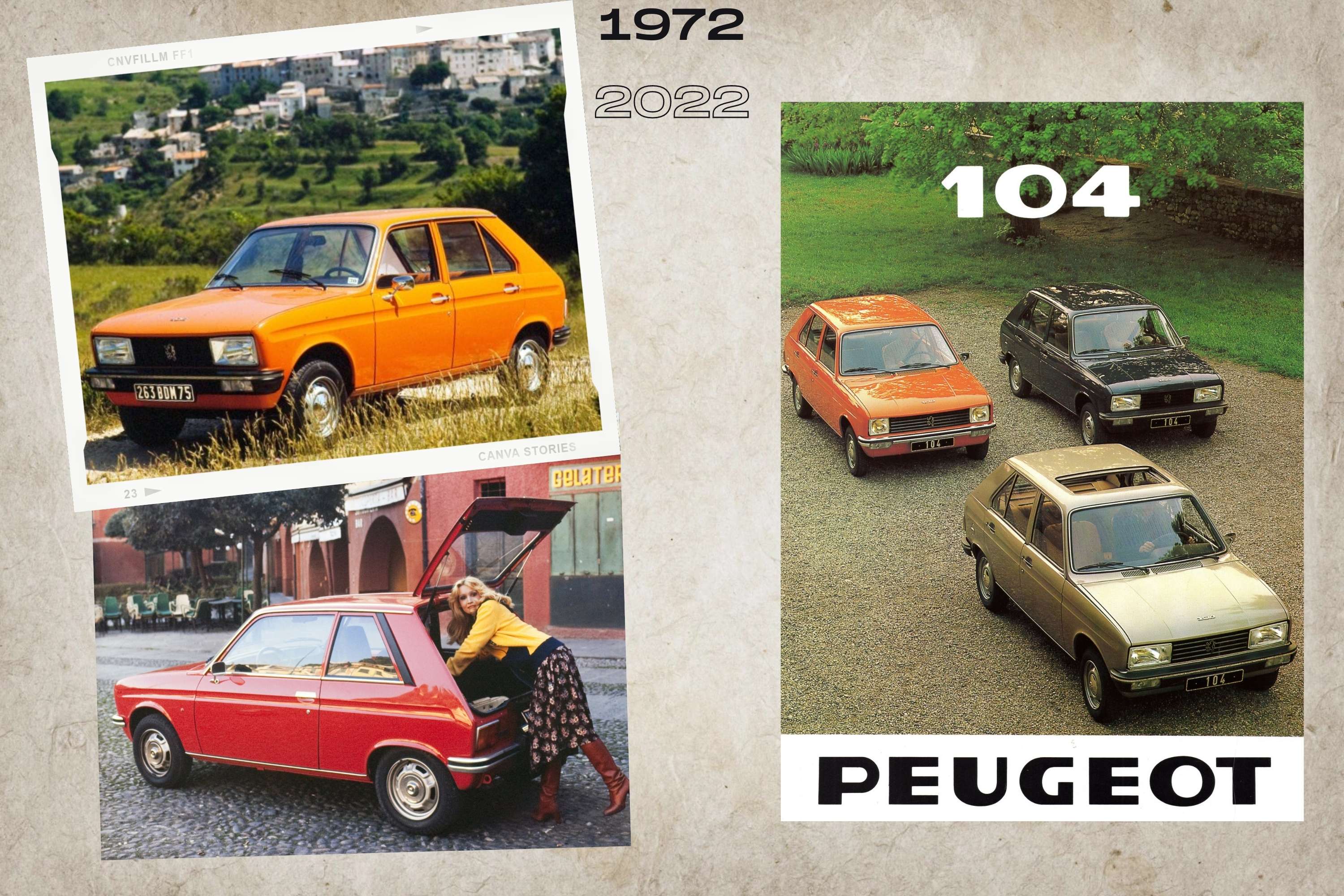
Under the hood... Wait, stop! What if I told you that behind its hood, there is a bit of RenaultSacrilege for some! For those who didn't faint and run away, I will present you with a modern mechanism. In 1969, Renault and Peugeot agree to produce common mechanical parts. They choose Douvrin (not for its climate) but to set up an engine manufacturing plant that is expected to produce more than 6,000 units per day. The venture of The French Mechanical Company was born and took shape with the appearance of the "Engine X". First introduced on the 104, this inline 4-cylinder engine has a modern architecture. Made of aluminum with rocker arms and an overhead camshaft, it is chain-driven and transversely mounted at the front. It is recognizable by its 72° backward tilt and its gearbox located underneath. The primary gear transmission emits a whistle that is recognizable by everyone.
It will initially appear with a 954 cc engine delivering 45 horsepower. The 104 will only be equipped with this engine, which will evolve into two other displacements by increasing the bore and stroke.
A fairly quiet engine that highlights the overall comfort of the 104. Its small size ironically offers excellent space for four people, and its softly tuned suspensions ensure real driving comfort. The chassis is also well designed. with exemplary handling that allows the Peugeot 104 to venture outside urban areas. The Peugeot 104 honor the tradition Peugeot With its road qualities, it will do even more justice in 1975 with the appearance of the spiced-up version. ZS.
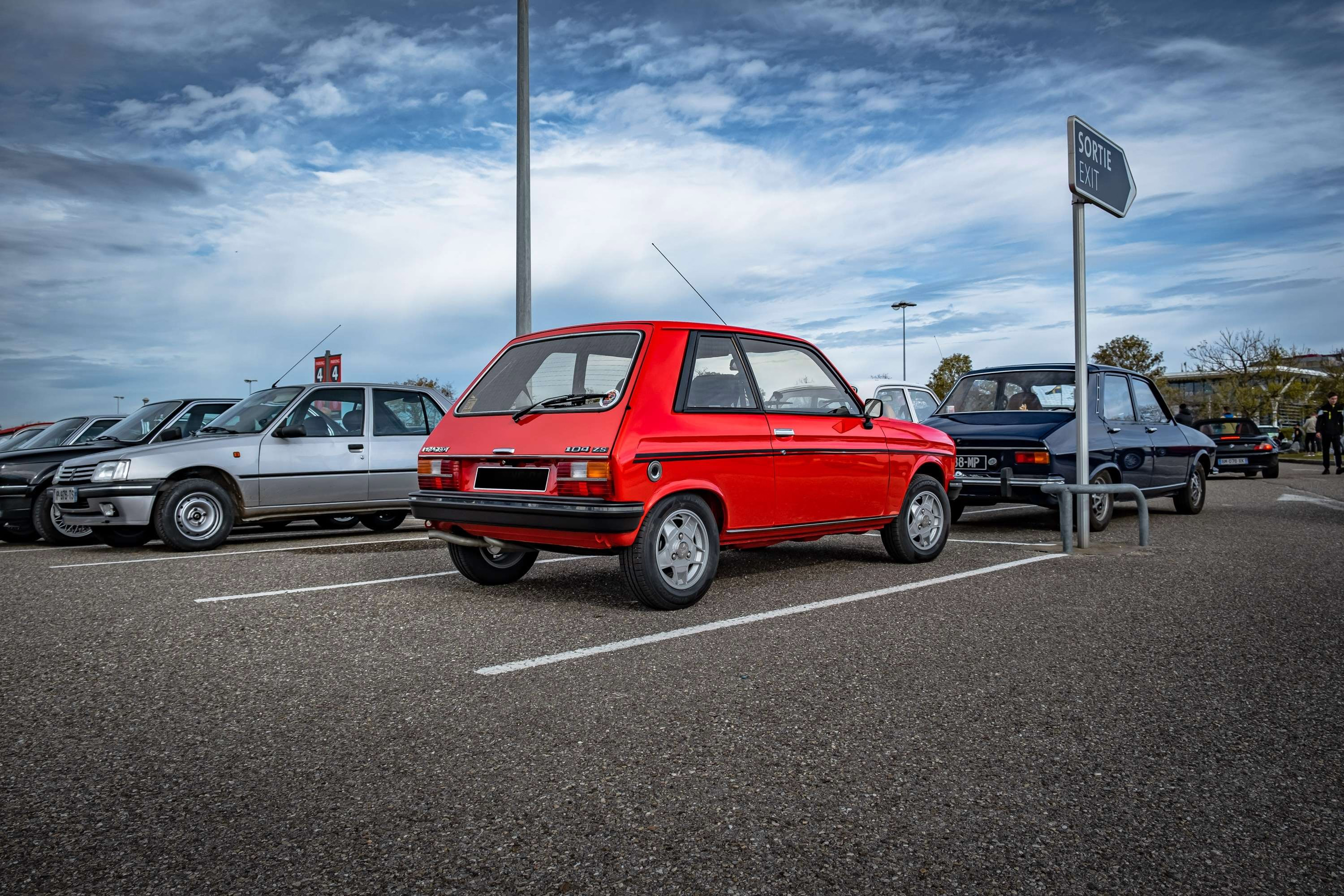
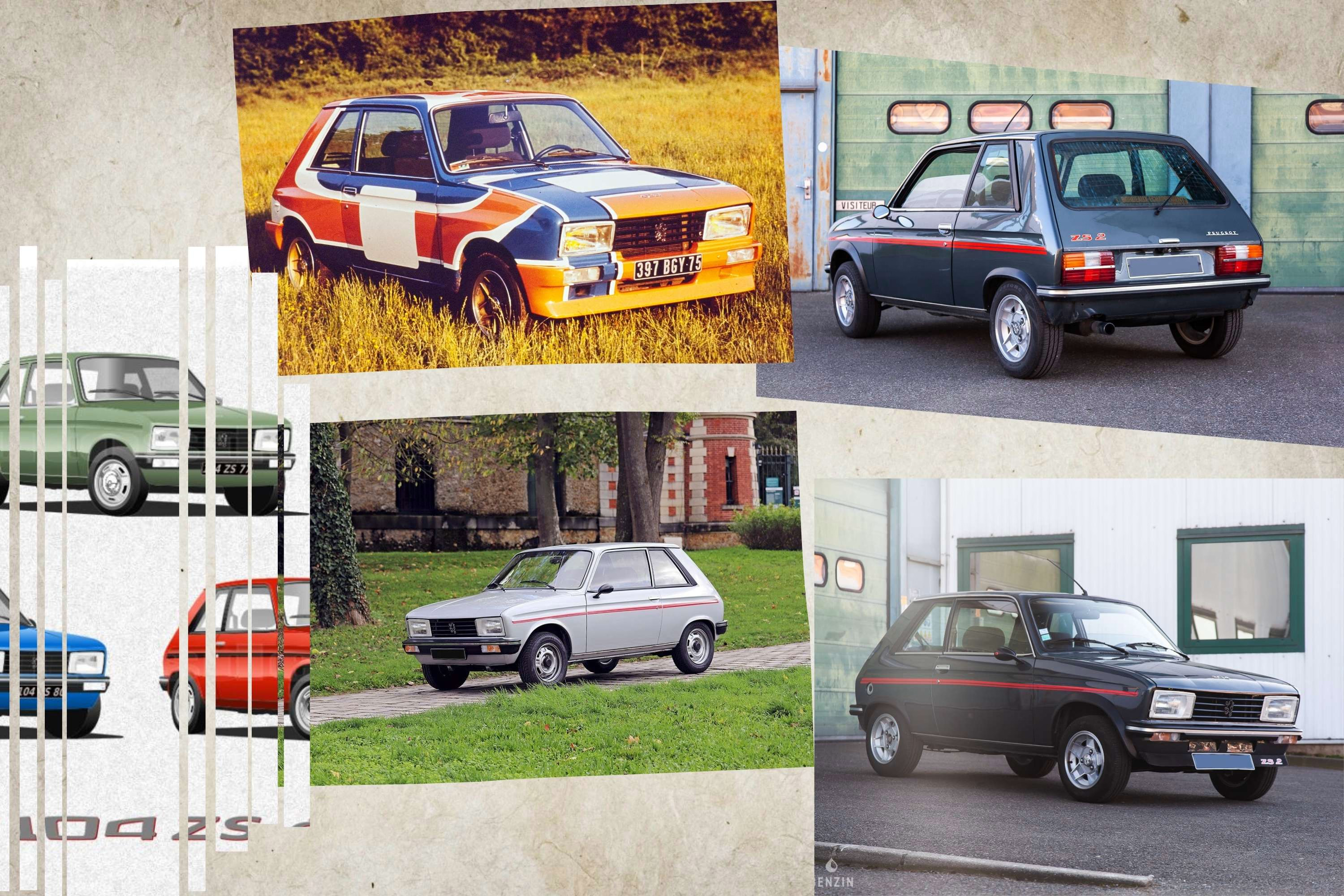
Peugeot is not accustomed to sports cars, but the recent victories of the 504 in rallies are pushing him to develop a sports department. A small team that will eventually give birth to the 104 ZS. Young people love motorsports, so we need to appeal to them! This is a first foray into the world of small sports cars that lays the foundation for the future GTi success story. The centerpiece can be found under its hood, where the X Engine is featured in a 1124 cm3 and 66 hp variant. It feels a bit lacking below 3000 rpm, but beyond that, it effortlessly revs up to 7000 rpm. The low weight of 855 kg helps compensate for the modest power, allowing the ZS to reach up to 155 km/h. On the chassis side, it was important not to disrupt the usual practices of the brand too much. Peugeot and despite the larger anti-roll bars and shortened and stiffened springs, the car still experiences quite a bit of body roll. However, its sporty temperament is very much present, and with its three-spoke steering wheel, tachometer, unique seats, iodine headlights, and specific rims, it really stands out! The ancestor of the Peugeot The 205 GTI pleases and appeals to both young and old.
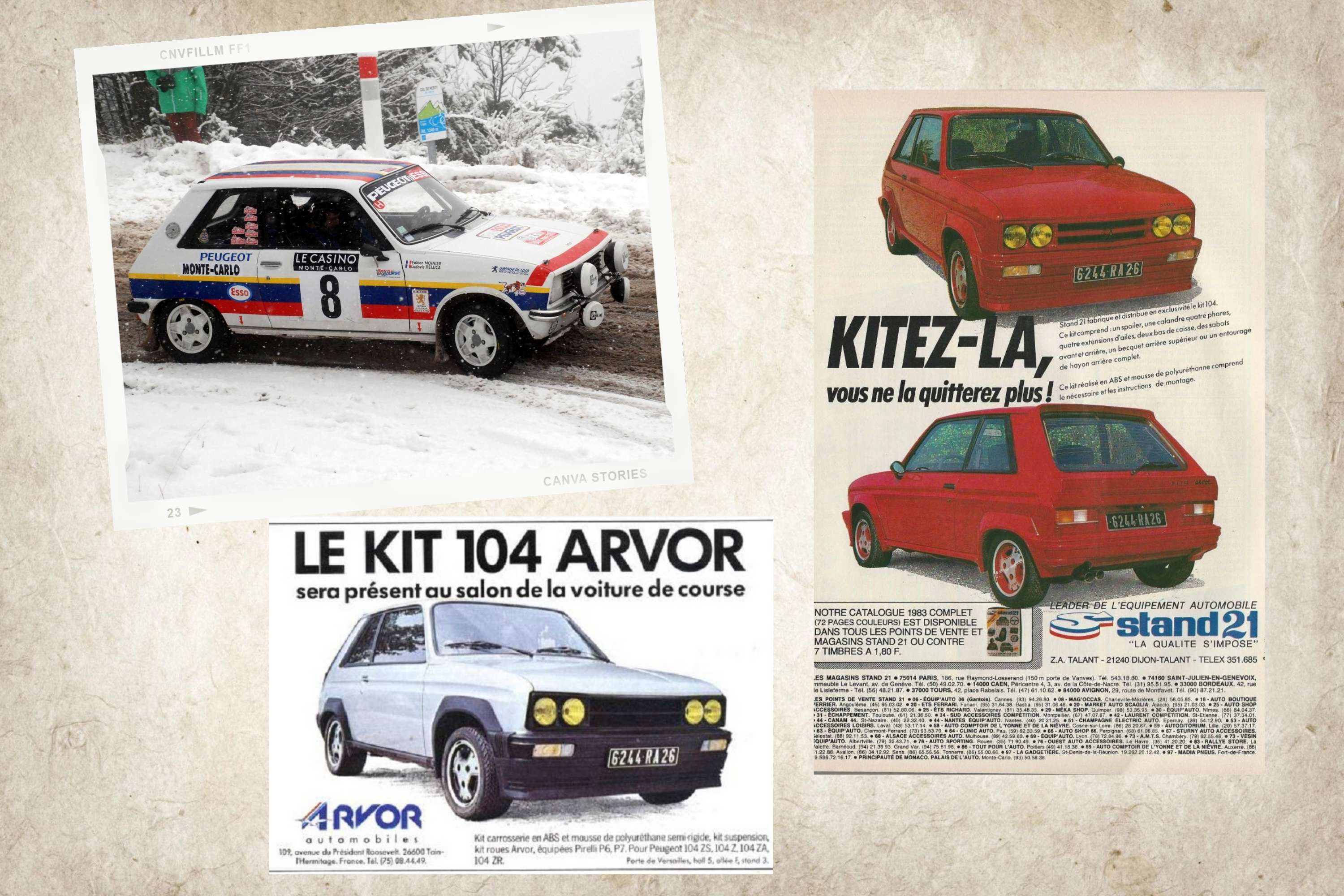
The sporting saga of the 104 doesn't stop there, as in 1979, it comes out... the Grail of the 104, the ZS2. This limited series of 1000 units is used to homologate the Group 2 rally version. Under the hood, we find the third evolution of the X Engine, increasing the displacement to 1360 cm3 for 93 hp, thanks to a new cylinder head, new carburetors, and camshafts. This time, the chassis is modified more extensively with reinforcements at several points. The suspension remains too soft, but kits offered by the tuner Arvor could remedy this. On the outside, the 104 enhances its sporty look with Vulcan gray paint, red stripes, Amil wheels in 165, a double air-intake front bumper, and streamlined mirrors. The ZS2 proudly displays a very eighties appearance, and the same goes for the interior with black fabric upholstery and an aluminum dashboard—if the Jaeger option was selected—equipped with gauges (oil pressure; water and oil temperature). With a price similar to that of the Peugeot 504, the Peugeot104 ZS2 appears elitist but it was essential for gaining sports notoriety. This notoriety was also achieved thanks to some successes in rallying in Group 2 with a class victory at the Antibes rally and at the 1976 Tour de Corse for the duo Mikkola-Todt. A rally spirit that will be found on the road with rally kits offered by Peugeot who modified either the bodywork or the engine.
The classic ZS continued to enhance the sports range with the adoption in 1980 of the 1360 cc engine, detuned to 72 hp, providing more torque at low revs. The S, a five-door sports version that appeared the previous year, would also benefit from this. They are distinguished by their red or gray side stripes, their Vitaloni Californian rearview mirrors and upholstery taken from the ZS2. In 1982, the ZS moved to the fifth dimension by adopting a 5-speed gearbox. The following year, the last evolution appeared with the same engine increased to 80 hp. The rest will be left to the 205 GTI and T16.
On the other side of the spectrum, the Peugeot 104 continues its peaceful city life with the adoption of a hatchback in 1977, at the same time as the 6CV engine. Very practical for loading crates of Armagnac. Some classic changes are to be noted with a new dashboard in 1980 and a new, slightly more angular front end in 1982.
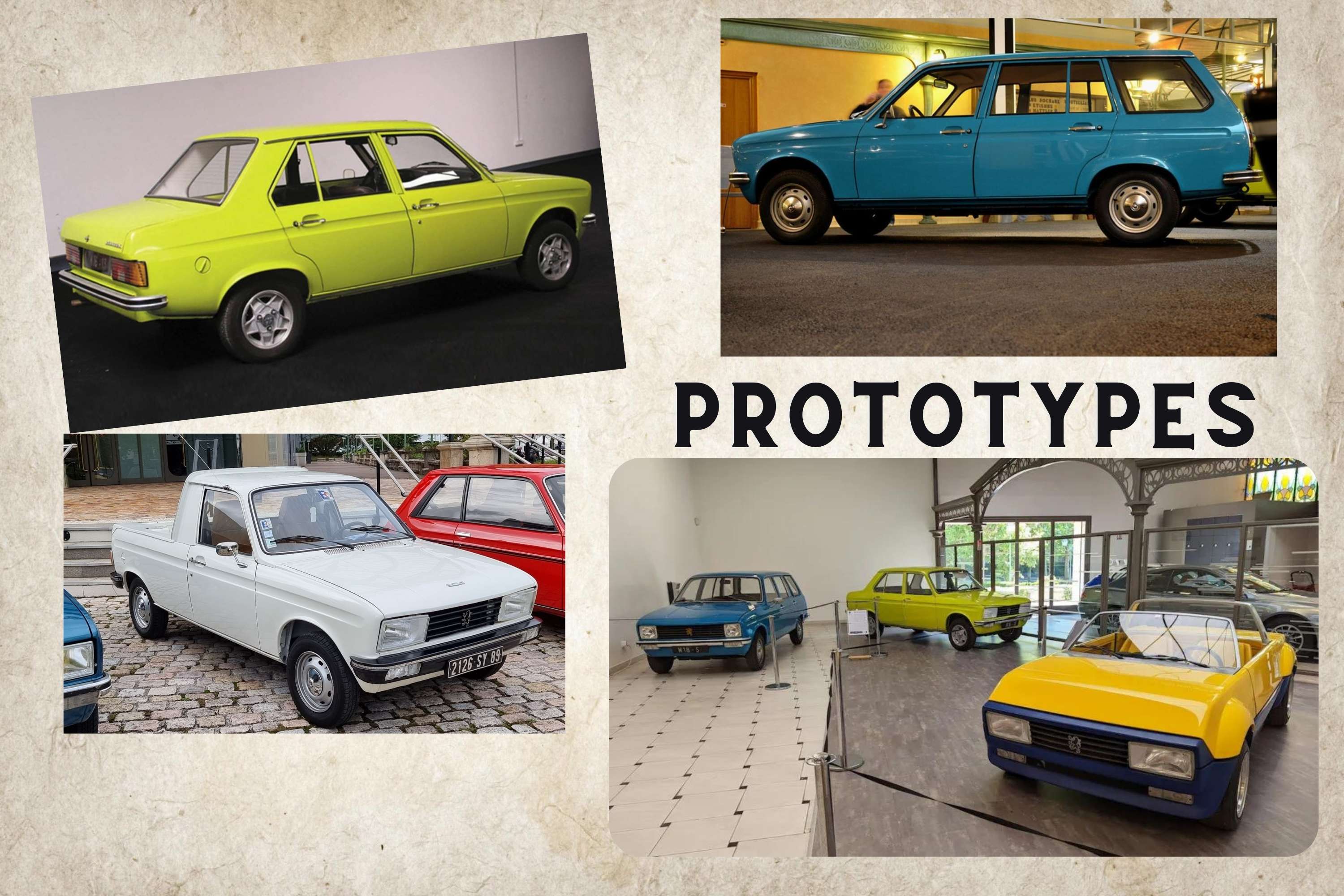
The little one Peugeot will therefore never have exceeded 3.58 meters. However, many proposals were made during his career. Sedan, station wagon, and even pickup versions were proposed, but the risk of cannibalization with the other models from the manufacturer led to the demise of these prototypes. Today, there remains only one example of the pickup, which has been restored by a private individual. The 104 could have combined all these concepts at once, with the striking concept 104 Pininfarina Peugette from 1976. A playful and modern car with a symmetrical design aimed at reducing manufacturing costs. With a price lower than the ZS, it could have been a hit but Peugeot had too traditional a vision to venture into such a market.
The 104 gradually makes way for the new iconic model, the 205, with a simplified range starting in 1983 and even a style that resembles it with a new three-bar grille in 1987. In 1988, it was time for retirement after 1,624,992 units were produced. The Peugeot 104 will therefore have been a marker of the renewal of the Lion brand and will leave its legacy within the group with the Talbot Samba and Citroën LNA / Visa that derive from it.
Finally, if you are passionate about several models of Peugeot ancient, find at Alépoc the mechanical parts Peugeot to continue aging peacefully.
Happy fiftieth birthday!