Peugeot and Pininfarina, it is a long love story that began with the 403. A successful first collaboration that led the Sochaux manufacturer to consult the coachbuilder for its other projects.
The Sochaux tradition
The 404 family is one of those projects, featuring for the first time coupe and convertible versions that diverge from the sedan's style. They have a hint of Ferrari that appeals. So when it came to developing its replacement, renewing the coupe and convertible made sense.
In a turbulent social context, the new sedan from Peugeot It was introduced in September 1968. The 504 does not innovate technically, still using the same rear-wheel-drive architecture and front longitudinal engine position. Grandma used to say, "The best soup is made in old pots!" However, stylistically speaking, there is a certain break. It is still a three-box sedan, but the treatment of the rear part differs with a sloping and truncated section.
Lineage 504 embrace the 1970s to become a success, selling more than 3.7 million copies. To establish its reputation, it needed image vehicles capable of conveying dreams (and not looking out of place in front of a Parisian palace). This thought process was undertaken right from the start of the design with the introduction in March 1969 of the variants coupe and convertible designed by Pininfarina.
The Italian touch of the 504
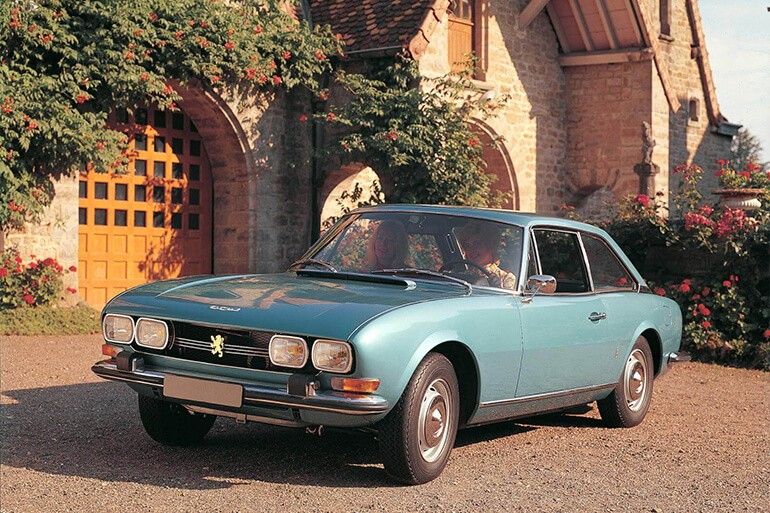
Of the name 504, they only share the foundations while being radically different in design. If the Exotic versions of the 403 and 404 have an obvious link with the sedan from which they are derived, here the style deviates to offer a Elegant and simple dress. Initially considered bland upon its release, the 504 coupe is now one of the most beautiful creations from Peugeot.
A balanced line that was made possible by shortening the wheelbase by 19 cm, something that could not be done for its predecessors.
A pure line, a very well-equipped interior that is both chic and sporty. The 504 is pleasing. in the upscale neighborhoods. Its target, the bourgeoisie who enjoy comfort and canapés (perhaps with foie gras from Gers).
Under the hood, there are modest engines derived from the sedan. The first model year offers only one engine, the 1.8 L 4-cylinder with 90 hp and a 4-speed manual transmission. Neither noble nor sporty, the 504 lacks a true engine to justify the 40% premium compared to the sedan.
The PRV V6 for the 504
The range evolves over the years to attract new customers, like the ZF automatic transmission In 1971, it became increasingly popular in certain markets. That same year, the new 2.0 L 4-cylinder engine with 104 hp was introduced. The year 1974 saw the introduction of an engine that seemed, on paper, to finally match the desired standard. It was the all-new V6 PRV 2.6 L (see our PRV parts), jointly developed with Renault and Volvo. However, its low power of 136 hp and its design stemming from a canceled V8 project mean that it never had the nobility or the sportiness of an Italian V6. Mamma Mia, what a sacrilege! The PRV V6 is rather rough and doesn't deliver much emotion, which confines the 504 to the grand tourer category. It's a real shame considering its outstanding handling.
Curious choice, the V6 replaced the 4-cylinder engines for a time while the oil crisis was raging. A desire to show that the 504 coupe was truly the top of the line, but it is above all the best way to stress out your banker who watches the company's accounts turn red. With high consumption at 20 L per 100 km and a hefty price, Peugeot shot itself in the foot and sales are weakening, prompting the manufacturer to reintroduce the version 2.0 L in 1977, with power increased to 106 hp. During this period, the V6 also adopted a K-Jetronic electronic injection (Ti version) providing enhanced performance (144 hp and 190 km/h in top speed) with reduced consumption, mainly thanks to the new 5-speed gearbox. This gearbox will be standardized for all engines in 1979.
The drawing does not age
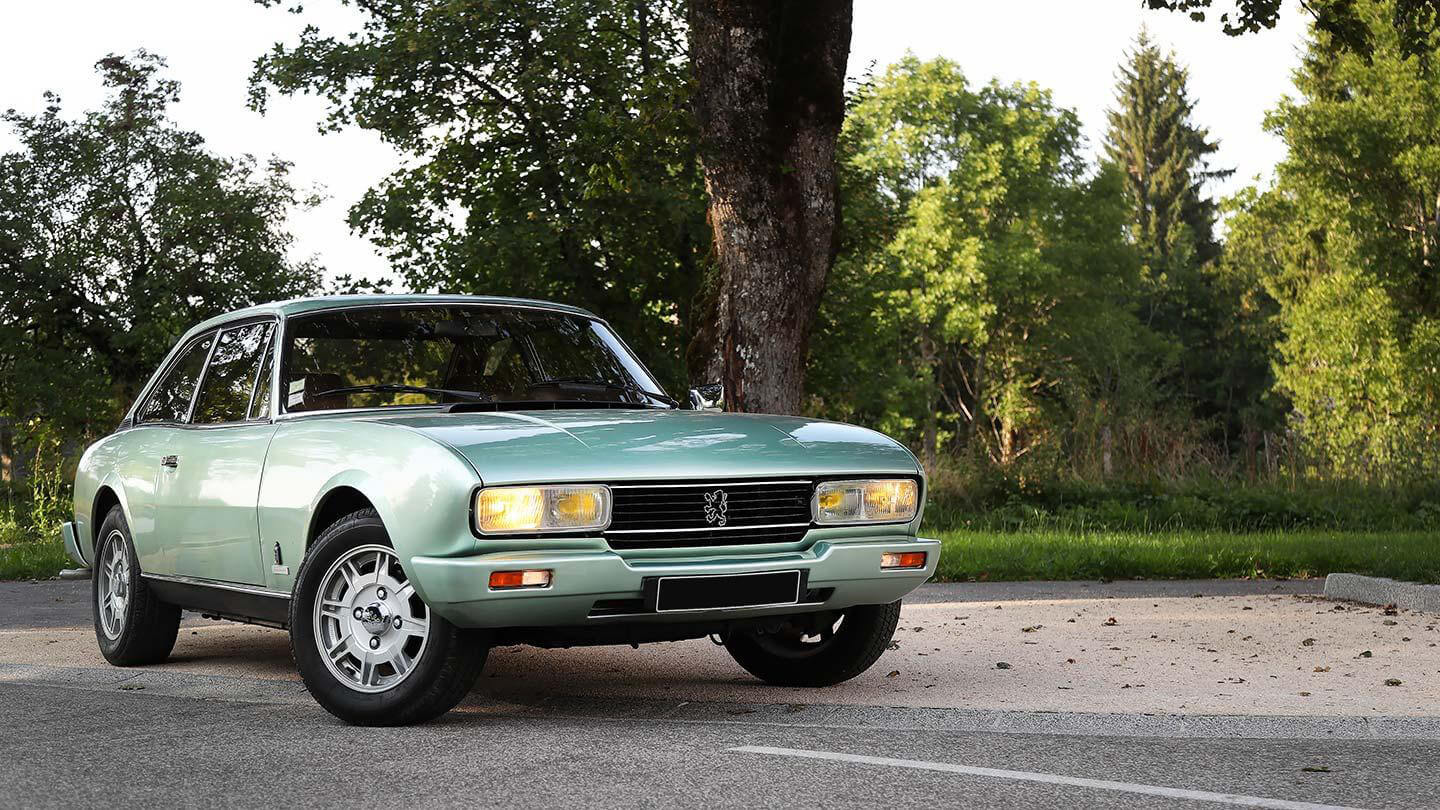
For the style part, the wonderful pencil stroke was able to to go through the 1970s without major changes. In 1974, the headlights and lights were merged into a single unit, and the grille also evolved with the removal of the bronzed lion and the chromed bars at the center. This grille would change one last time in 1979. The evolution of fashion led to the appearance of unattractive polyurethane bumpers, replacing the chromed ones in 1979. It has never been said that following fashion equates to having good taste... Fortunately, they were available in body color on metallic paints, which preserved the overall line.

The interior layout evolves several times over the course of its career with the appearance of the tachometer in 1970 and a Cap with five counters in 1981.
The convertible follows the main modifications with its own timelines. Thus, the automatic transmission is no longer available in 1972, and the V6 remains in the catalog for only three years, making it the rarest model, with only 977 units produced. The first person who finds a beautiful V6 convertible at a reasonable price, has earned (all our gratitude)! It's an excellent game to play with the family that offers a change from Monopoly.
The 504 and Jean Todt
The reputation for robustness of the Peugeot was already well-established and the 504 truly made an impression, particularly in African countries with its participation in numerous rallies. We remember the victory in 1978 of the Nicolas-Lefebvre team at the formidable Safari Rally and the double win at the Bandama Rally with Jean Todt. Today, she remains quite present at the start of historical competitions. We have a crazy desire to do like Jeannot! Maybe soon...
At the end of a 14-year career, in 1983, the 504 coupe and convertible were sold at 22,975 copies. A mixed result, likely due to questionable positioning. It would have deserved a spicier version. That same year, they left a gap in the lineup that would not be filled, after the discontinuation of the 505 coupe and convertible, until the timeless 406 coupe also designed by Pininfarina. The first version with claw-shaped lights is the purest and most sought after in terms of style, but the V6 version remains a holy grail for a pleasure car. It's not for nothing that Peugeot was brilliantly inspired by its iconic line for the E-Legend concept. The 504 coupe still has many good years ahead of it.
 English
 Français