
Shopping Cart
 English
 Français
The Type H " Citroën "

Summer is coming to an end, and you’re back home. Your old car is in the garage, and you can still hear the engine cooling down. But you’re itching to hit the road again—for a long time, on roads all over the world—and in a French car, since we know you’re a bit of a patriot. So the Type H “ Citroën ” is perfect for you!
It’s not a TUB

Let’s start with a bit of a debate… but it’s really just a matter of being precise. Just like “mob” or “frigidaire,” people have used a specific name to refer to something similar.
In the case of our good old Type H Citroën, it’s been labeled a “TUB” or “Tube.” Fair enough, but the “ Citroën ” TUB actually did exist! Released in 1939, it used the Traction 7’s engine, and its design bore no resemblance to that of the Type H. A workhorse, it carried a payload of 850 kg and was soon joined by the TUC, powered by the Traction 11 engine.
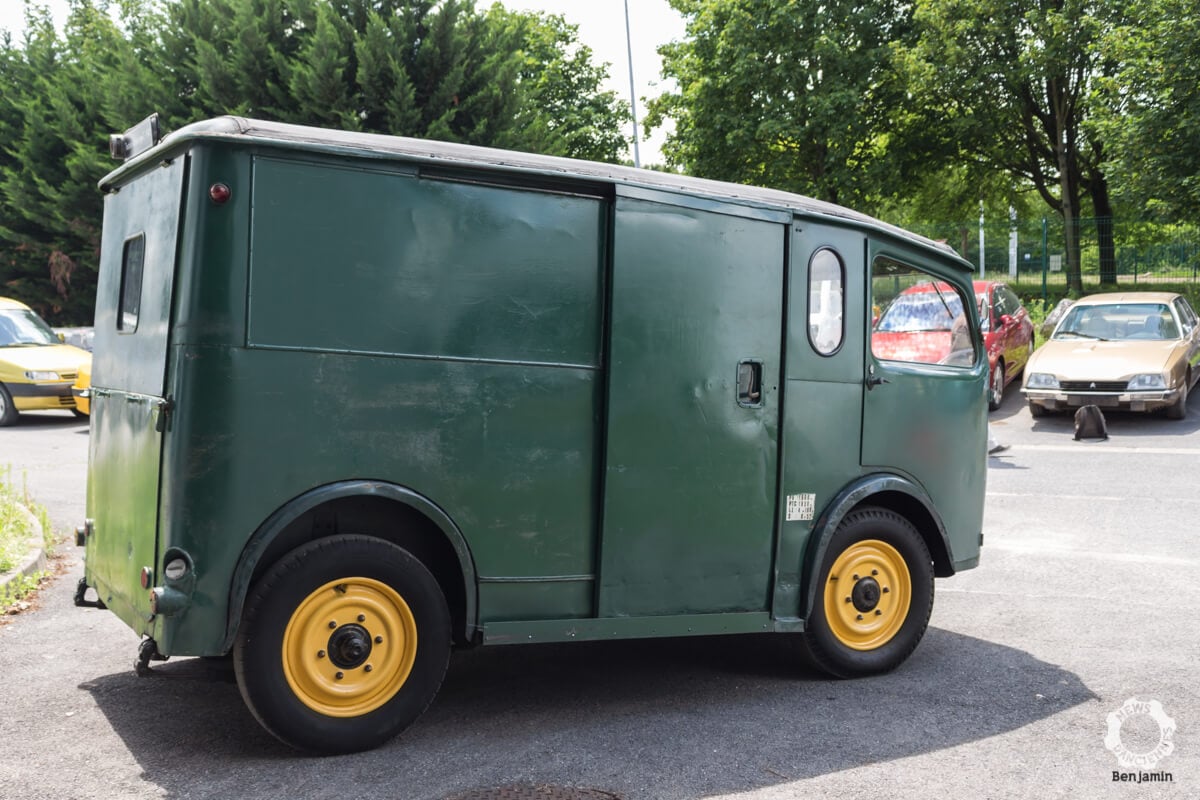
Except that production of both vehicles was halted by the war, and neither sold more than 2,000 units. Seen that way, it’s actually surprising that the name stuck.
But let’s get back to our French van as we set off to the ends of the earth.
The Successful Career of the Citroën Type H

After the war, Citroën studied two utility vehicles with similar designs. These were Projects G and H… and they would give the utility vehicles their names. The G never made it onto the roads. Smaller than the H, it was powered by a 2CV engine—a bit underpowered, in other words.
The Type H, on the other hand, featured the 1,638 cm³ engine… from the TUB! In fact, there were numerous borrowings from the Traction Avant, since the front suspension was that of a 15, and the steering wheels, mirrors, and door handles also came from the “queen of the road.” As for its shape, it wasn’t a design choice that gave it corrugated sheet metal. In fact, these panels are much stiffer—a real advantage for a monocoque utility vehicle. Released in 1948, the Type H “ Citroën ” was an instant hit. The fact that it’s a front-wheel-drive utility vehicle frees up a large cargo area in the rear and, above all, provides a low, flat floor.
The powertrain was always a bit underpowered, especially given the Type H’s imposing size. In 1953, the Traction 11 engine was installed under the hood, and two years later, the “D” version—with reverse rotation—was introduced. In 1960, it was even equipped with a Perkins diesel engine.
At the same time, a few changes were made to the lights, windows, and turn signals, and an optional sliding door was added on the left side. The most noticeable of these changes came in 1964 when the windshield became a single piece. The instrument panel was now borrowed from the Ami 6, while the diesel engine became French-made: it was supplied by Indenor. The previous year had seen the introduction of the 9cv gasoline engine.
In 1970, the Type H “ Citroën ” could handle even heavier loads, carrying 1000, or even 1,600 kg, while the Indenor 8cv engine was introduced.

The upgrades ended here… but not the career of the Type H “ Citroën.” It was produced in Aulnay until 1981, with a total of 473,289 units manufactured!
This workhorse would then go down in history. Its distinctive body panels make it instantly recognizable, and it became an icon. The TV show *Louis la Brocante* turned it into a star of the small screen, while collectors saved more and more of these decommissioned vehicles.
Its career as a classic car received another boost in the 2010s. Food trucks were all the rage, and for that vintage look, nothing beat a Type H. Converted into fully equipped kitchens and appearing at markets and on the sidewalks of major French and European cities, it found a second life… which sent demand and its resale value skyrocketing!

Restoring a Type H “ Citroën ”
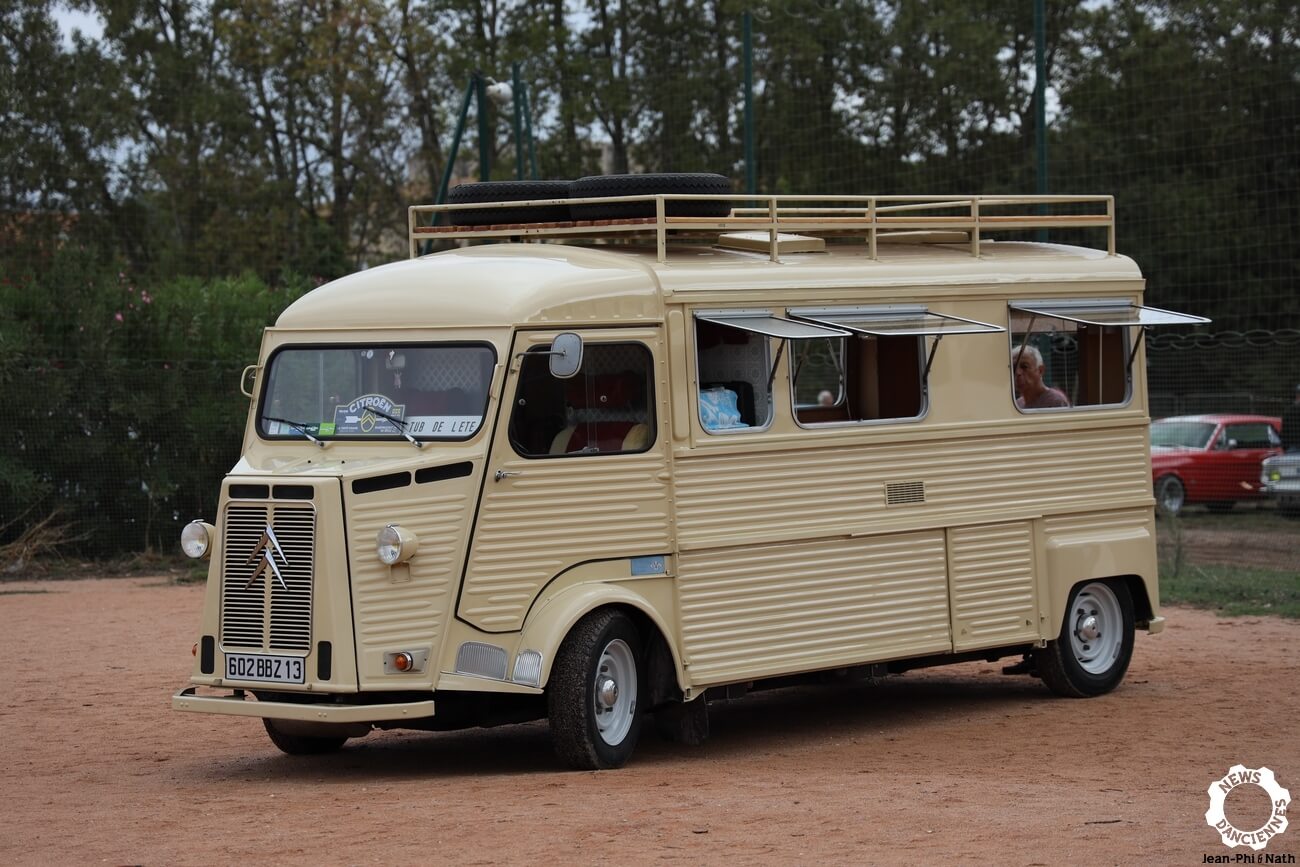
Although production numbers remained low, restoring a Type H “ Citroën ” isn’t necessarily a headache. While finding specific parts for a particular model year can be challenging, there are plenty of specialists who deal in these kinds of parts. Mechanically speaking, Alepoc has everything you need! Since the “Tub” shares its mechanical components with many other Volkswagen models, we have plenty of parts in stock— you can browse them here. And if you don’t find what you’re looking for, we can search for THE part you’re missing on your behalf!
What if you want to hit the road? Granted, the Type H hasn’t been modified as extensively as the VW Combis, so you’ll need to think carefully about your interior layout. The diesel engines are practically indestructible and will take you to the ends of the earth if you maintain them properly. As for the interior, break out the circular saw and customize it however you like. If you don’t feel up to the task, professional interior designers will be happy to help you out.
Did you extend your summer in a Type H “ Citroën ”? Send us your photos!
Published on
10-09-2021