
Shopping Cart
 English
 Français
The Billancourt Engine: The Little " Renault " That Has Stood the Test of Time
We’ve already told you about the Cléon-Fonte engine— you can read about it here. When people talk about the “ Renault ” engine, that’s the first one that comes to mind. However, that would be to overlook the engine that preceded it under the hood (often at the rear) of the company’s cars: the Billancourt. And yet, the latter was produced for even longer than the Cléon: 38 years versus 34!

The Billancourt Engine: The 4CV’s Strong Point
In 1947, the first new post-war “ Renault ” was unveiled. It was the Renault 4CV, and this time it was truly new. Smaller than the brand’s previous models and more popular, it also featured a new engine: the famous Billancourt engine.
It was an inline-four engine designed by Fernand Picard, who headed Renault ’s engine division during the war. The engine was ready in 1942 and powered the first prototypes (which were, of course, kept secret) as early as the following year.
This first version had a displacement of 760 cm³ with a stroke of 80 mm and a bore of 55 mm. One of its distinctive features was its timing system driven by a cascade of gears, and it was notable for its “older” design with three bearings. Its name, like that of the later Cléon models, simply comes from the factory that produced it.
It produced 17 ch SAE—a modest amount of power for a small car. But this was only the first version. By 1950, its power had increased to 21 ch (still SAE) in the 4CV Grand Luxe, though production remained limited.
Constant Evolution
Also in 1950, the 760 cm³ engine was phased out. It was replaced by a 747 cm³ engine with a bore reduced to 54.5 mm. In fact, this foreshadowed the first sports version. Indeed, the class for the smallest cars was limited to 750 cm³! This sporty variant would be called the Ventoux engine and would be found in the 4CV 1063 models after major modifications. As for the “base” 747 cm³ engine, it could produce 24 or 35 ch SAE.

In 1956, a new car appeared in the lineup: the Dauphine. While it did use a Billancourt engine, its displacement had increased to 845 cm³ with a bore of 58 mm. Power output started at 30 ch but could go much higher, as this version would become one of the most widely produced!
It’s worth noting a major technical advancement here, as all versions of the Billancourt engine could now be fitted with thin main bearings (since the connecting rods remained identical).
The following year, the Billancourt engine found its way under the hood of the Juvaquatre station wagon, which was renamed the Dauphinoise. This was a significant change, as it marked the first time the engine had been mounted in the front of one of the brand’s cars. Two years later, it powered the legendary Estafette, thereby becoming the first engine mounted in a front-wheel-drive Renault!
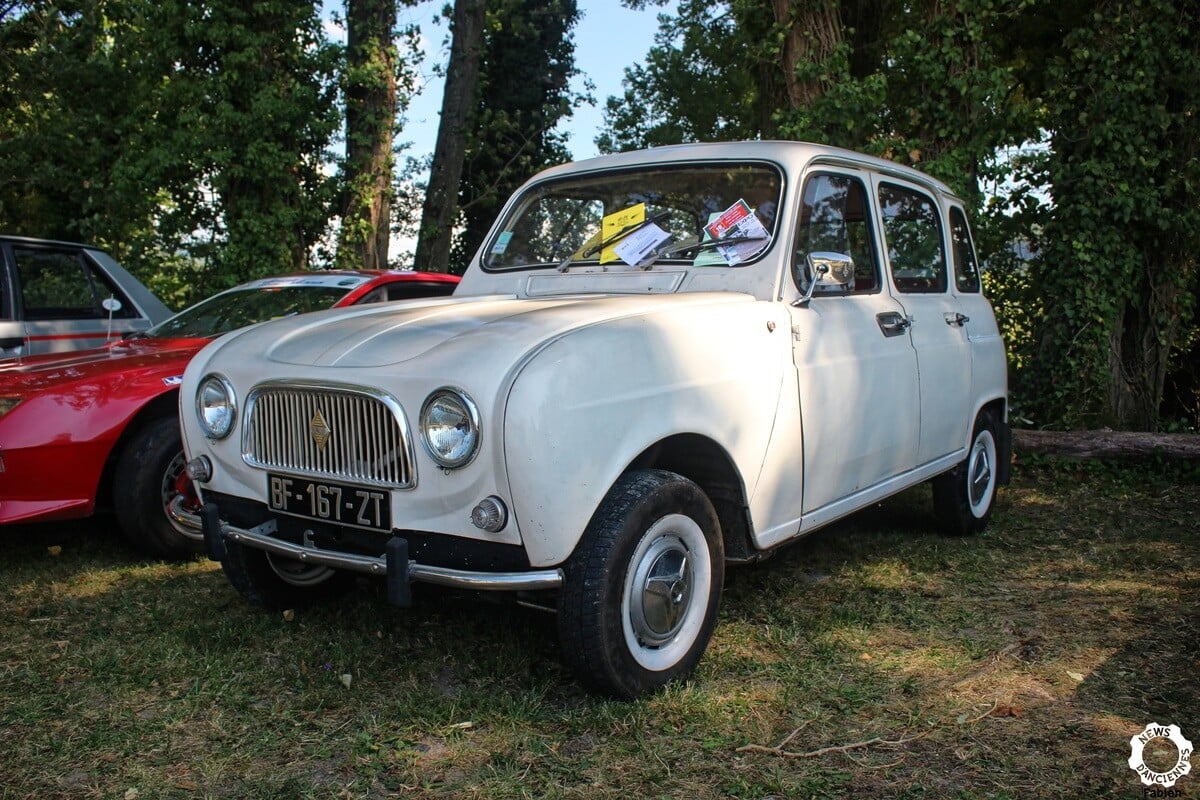
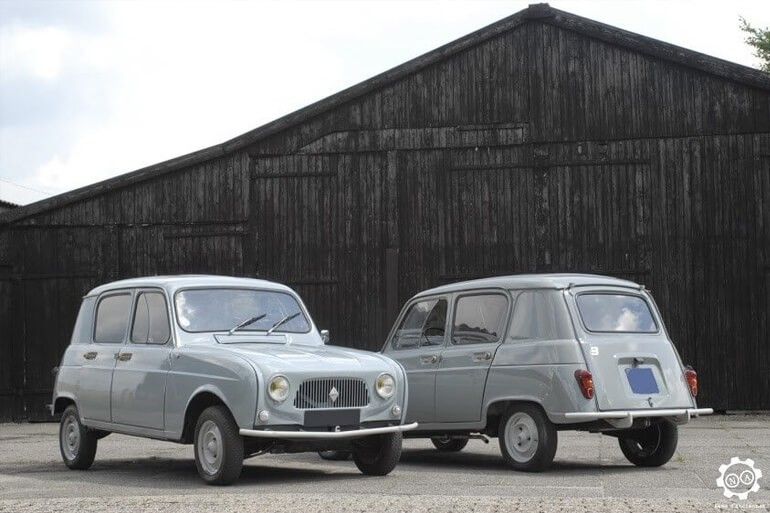
The year 1961 saw the arrival of the Renault 4, which was equipped with the 845 cm³ version of the engine—also mounted in the front and also in a front-wheel-drive configuration. The little-known R3 “ Renault ” was equipped with the smallest Billancourt engine ever produced: 603 cm³ to stay within the 3cv tax bracket. However, the car was a commercial flop and production was discontinued the very next year.

In 1962, the Billancourt engine received a boost with the arrival of the Cléon. The Cléon replaced it under the hood of the Floride S and powered the Renault 8.
Nevertheless, the Billancourt wasn’t shelved. It continued to power the smaller Renault models.
Thus, the Renault 4 and its derivative, theRenault 6, were equipped with the Billancourt engine. It was only their later iterations that were fitted with the Cléon-Fonte engine. In contrast, the Renault s 8, 10, and 12 were equipped with Cléon engines. It even underwent an evolution in 1965 when the timing gears were replaced by a more conventional chain.
In 1971, the Billancourt engine was increased to 782 cm³ with a bore of 55.8 mm. It powered the Renault 4 with 27 ch, and the following year, a 36 ch version was installed under the hood of the all-new Renault 5 L. This would be the engine’s final iteration.

In 1977, the 782 cm³ engine was replaced under the hood of the Renault 5L by the 845 cm³ engine. In fact, it was this final version that remained in production until 1985. The Renault 4 models adopted the Cléon engine, and the Renault 5 models were the last to feature it.
As you can see, many Renault s were equipped with the Billancourt engine! It therefore makes sense that our catalog includes numerous parts for the Billancourt engine, regardless of its version. Here are the main models that were equipped with it and the links to find their parts:
- Our parts for the Renault 4CV
Published on
05-02-2021