Shopping Cart
 English
 Français
Peugeot 70th Anniversary of the 403rd Airborne Division: The " Peugeot " of traditions
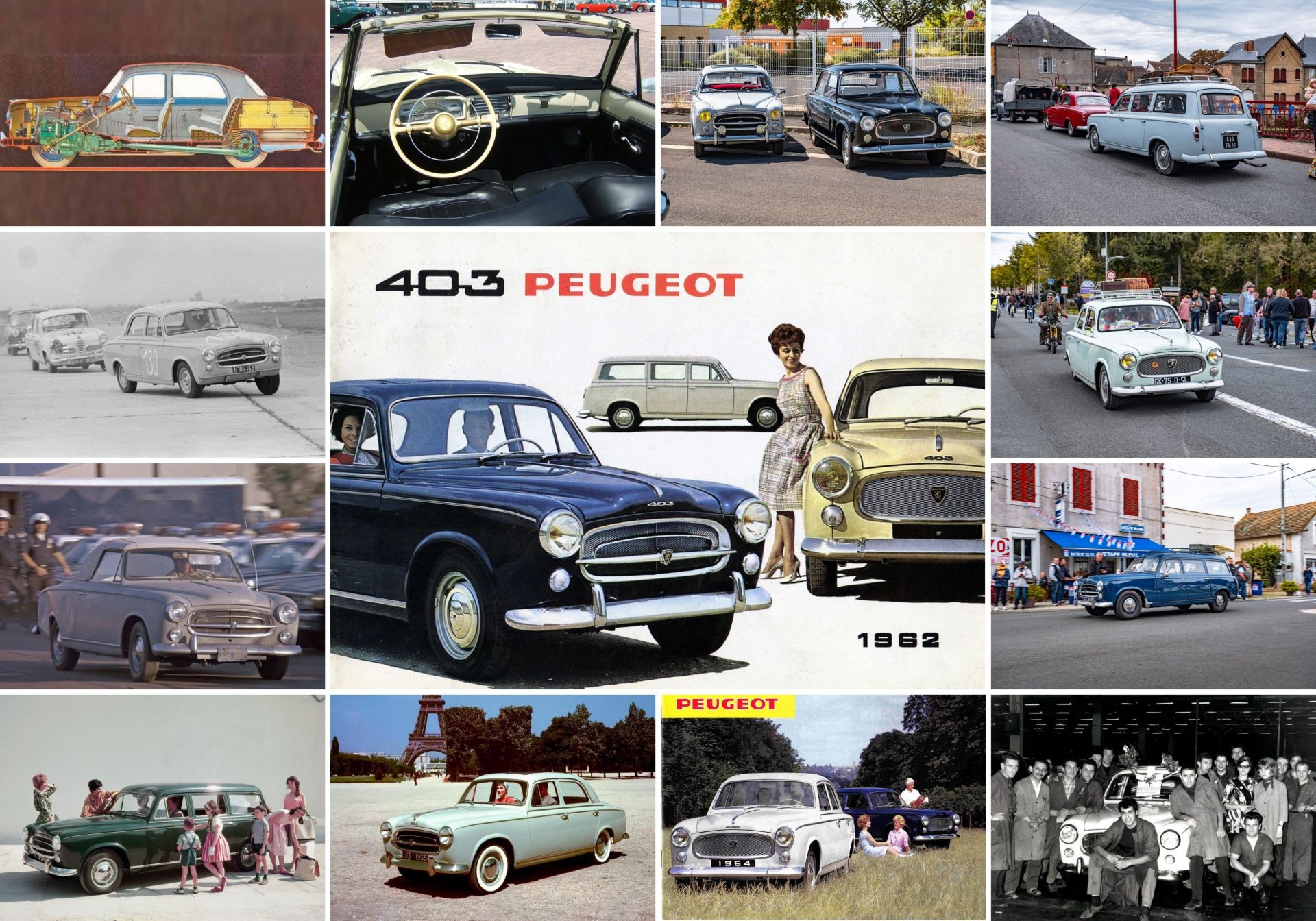
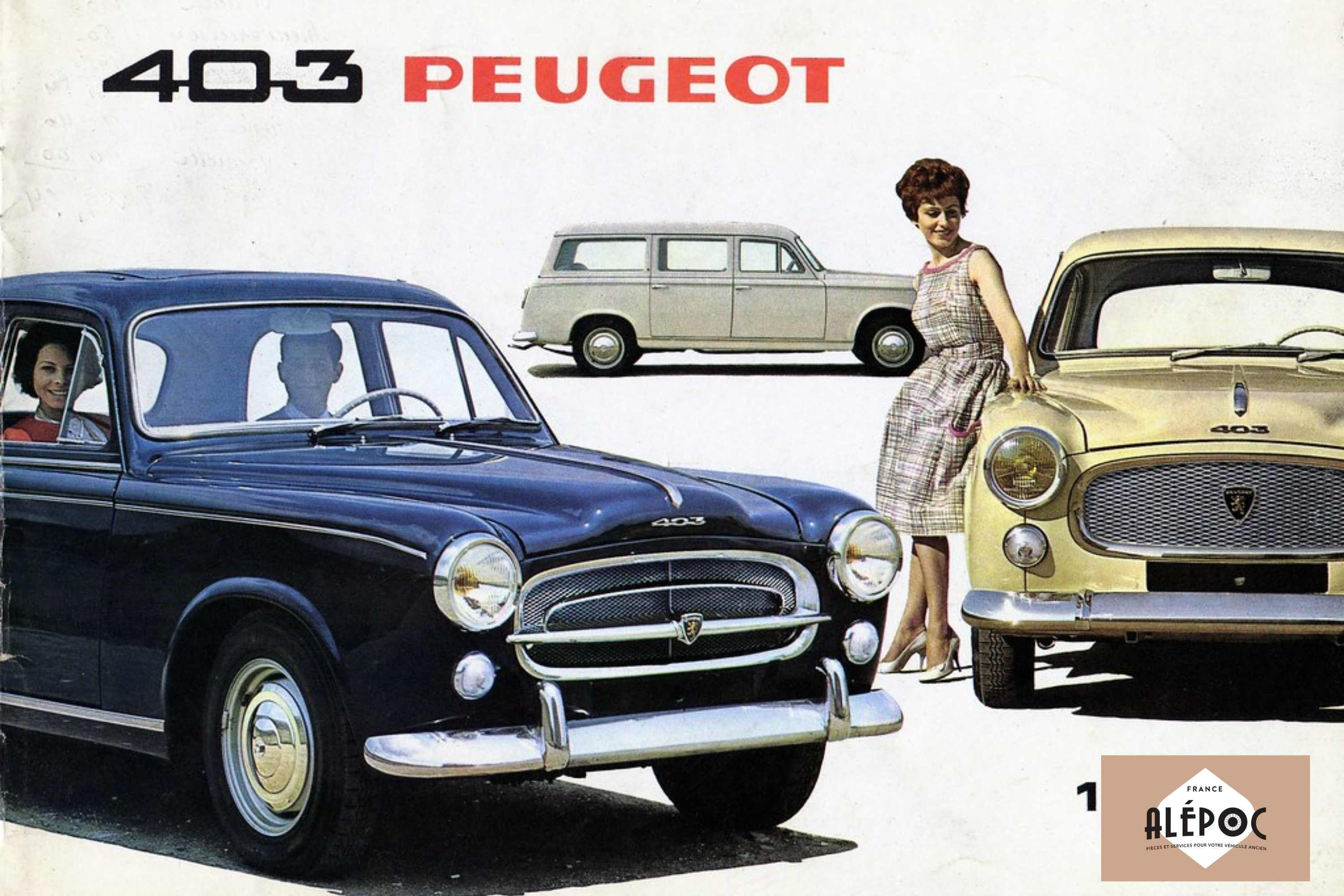
At the end of the war, Peugeot adopts a single-product approach that encourages the brand, with each new car, not to stray too far from the design language established by its predecessor. It is with caution and meticulous care that Peugeot takes on the replacement of the Peugeot 203, which is still popular today. In 1955, the Peugeot 403 features a more modern design, offering a more inviting car while ensuring proven and reliable technical solutions. A look back at its history for his 70th birthday.
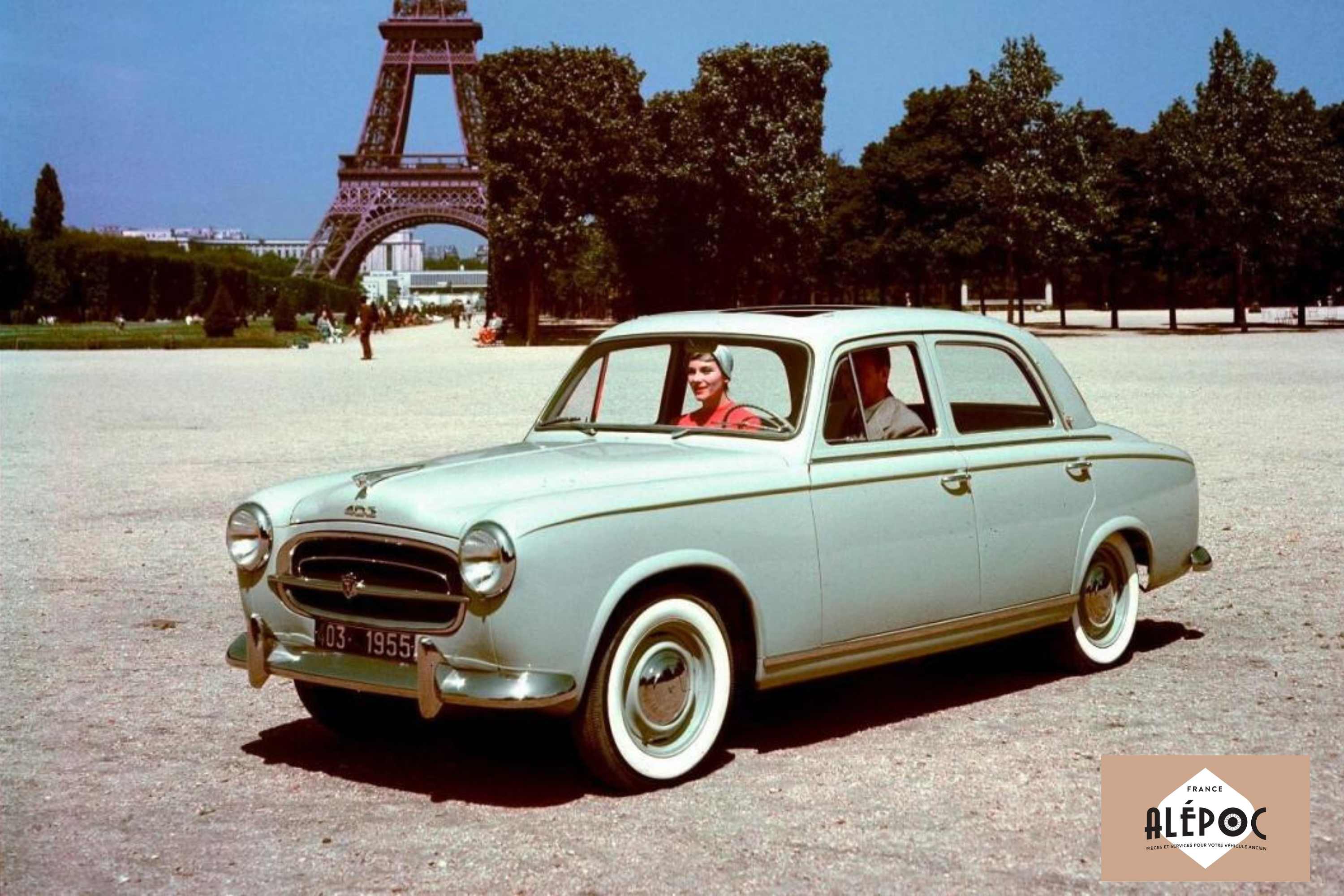
The origins of the Peugeot 403: Evolving Without Revolutionizing
It was in 1950 that engineer Dufresne, encouraged by the management of Peugeot, is beginning to lay out the basic design of an upcoming sedan. It will be an 8 HP, a mid-size car that combines fuel efficiency, elegance, aerodynamics, and speed to meet the needs of a wide range of drivers.
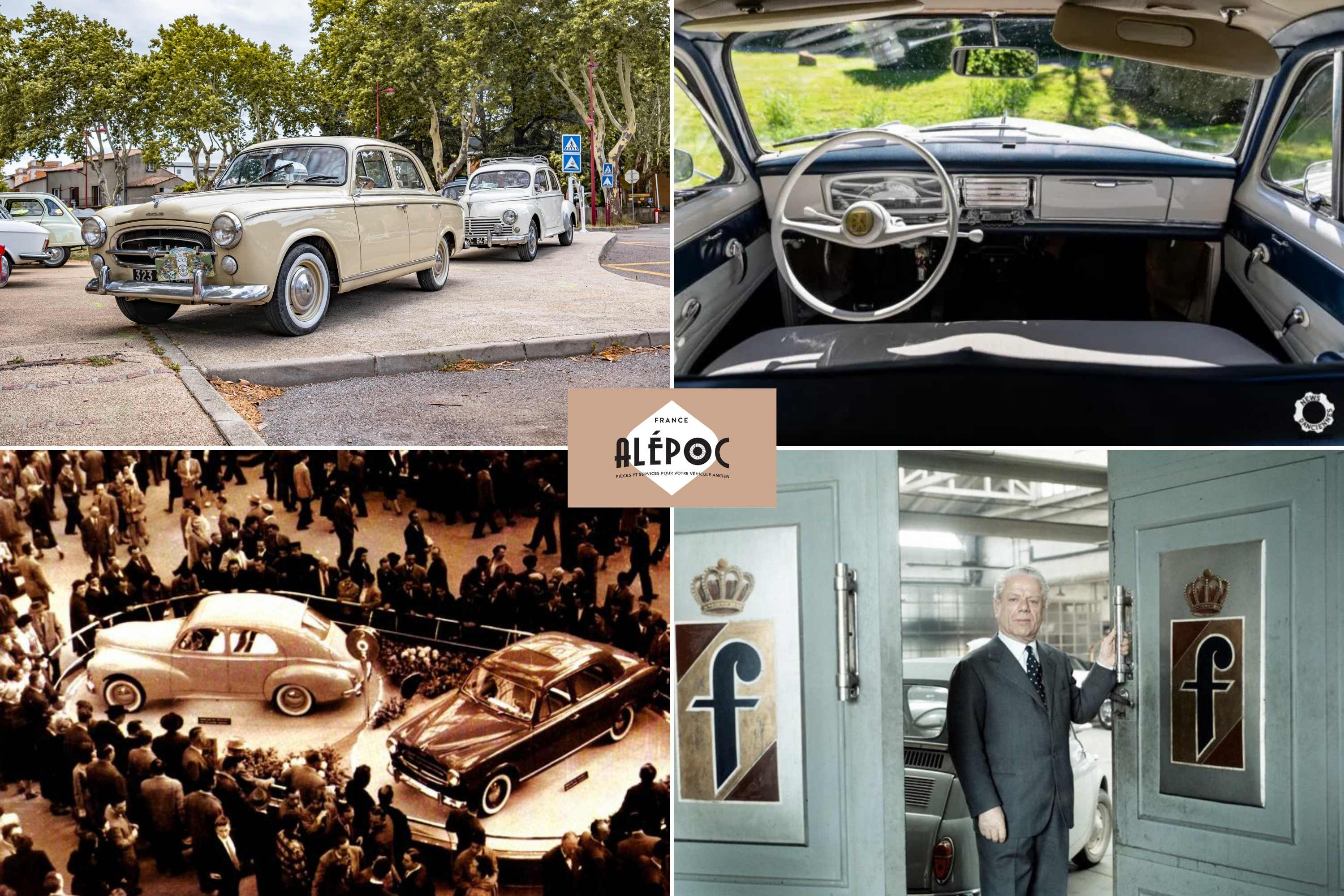
To accessorize this new car, Peugeot — who has a special relationship with Pinin Farina — after several decades — eventually ended up collaborating with him on the 403.
The goal isn't to revolutionize the genre: we want to an elegant car, no fuss.
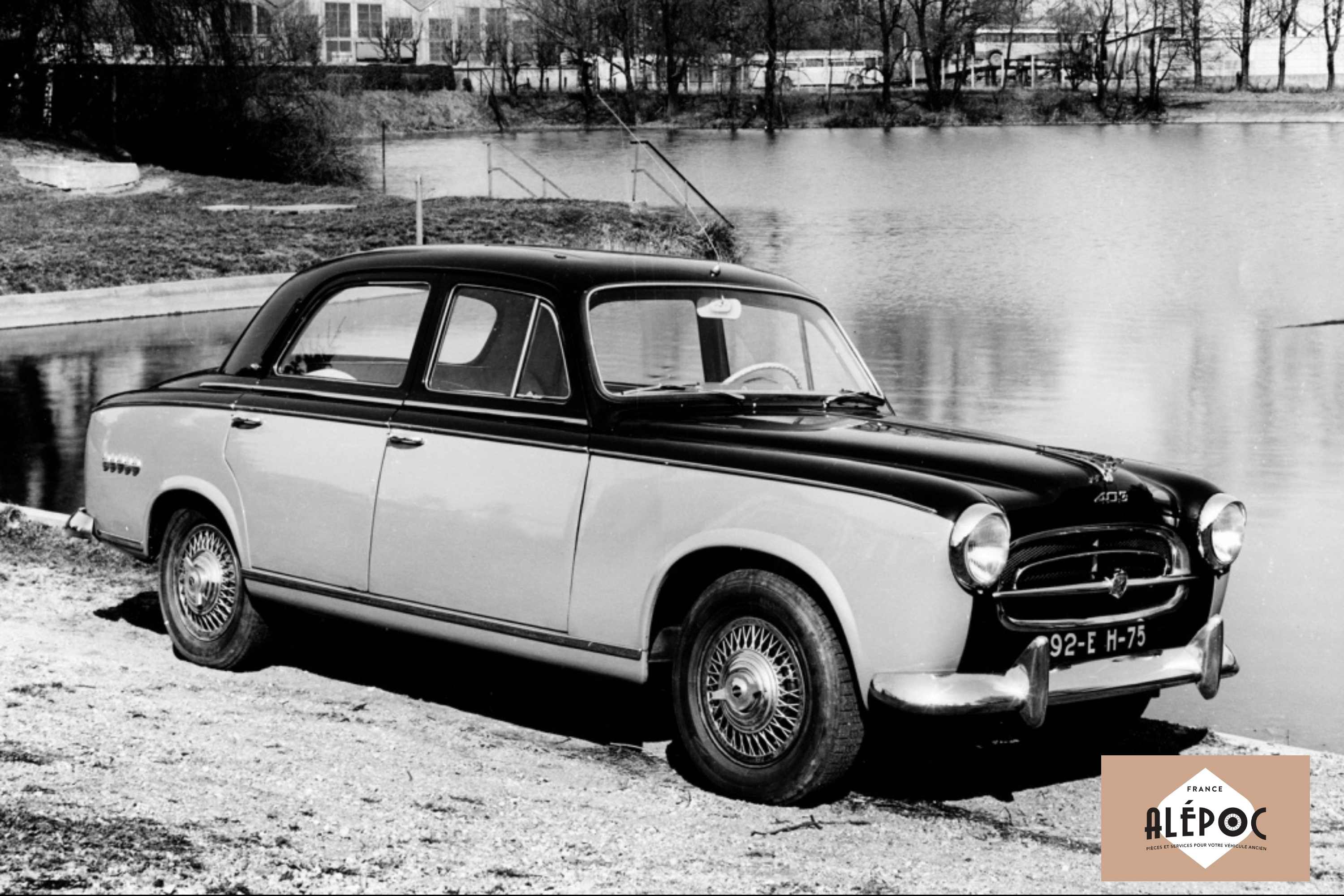
Its modernity stems from its Ponton Line, which incorporates the fenders and inevitably makes the 203 look dated. The lines are fine, smooth, and clean, particularly on the very first versions, which lacked turn signals and chrome trim.
This design will also be found, albeit in a different form, on the Fiat 1400 and Austin A40.
Thanks to this new design, the Peugeot The 403 is becoming more spacious. With just 7 cm more width, it gains 17 cm of interior space.
The glass surfaces are also getting larger, and the windshield is curved—a first for a Peugeot — as a gift improved visibility and a drag coefficient of 0.33.
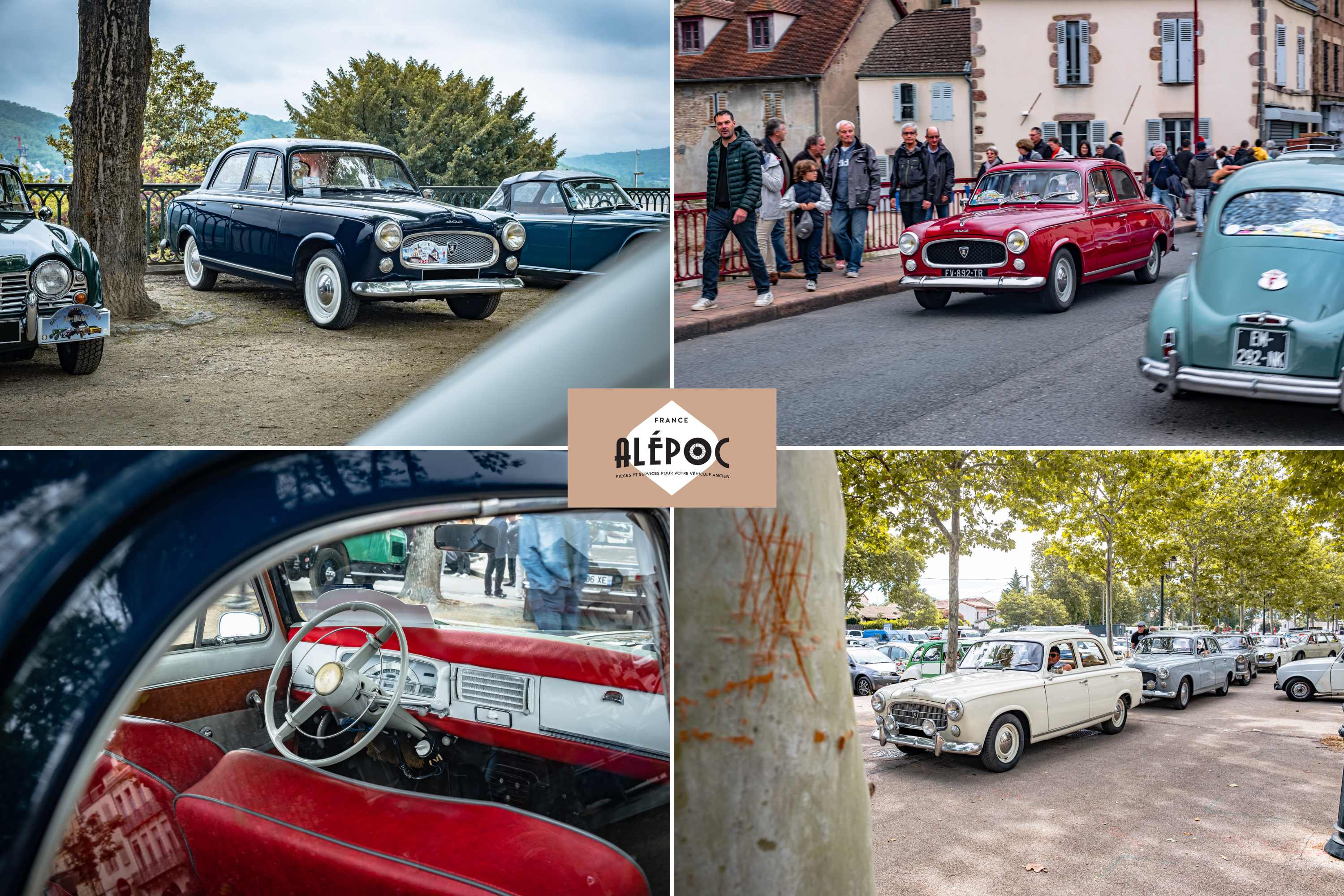
Inside, you’ll find a sleek dashboard, symmetrical, featuring a new impact-absorbing bumper. The seats in this 5- or 6-seater are upholstered in gray fabric, and passengers can enjoy the standard sunroof on the initial Luxe models—a true hallmark of the brand.
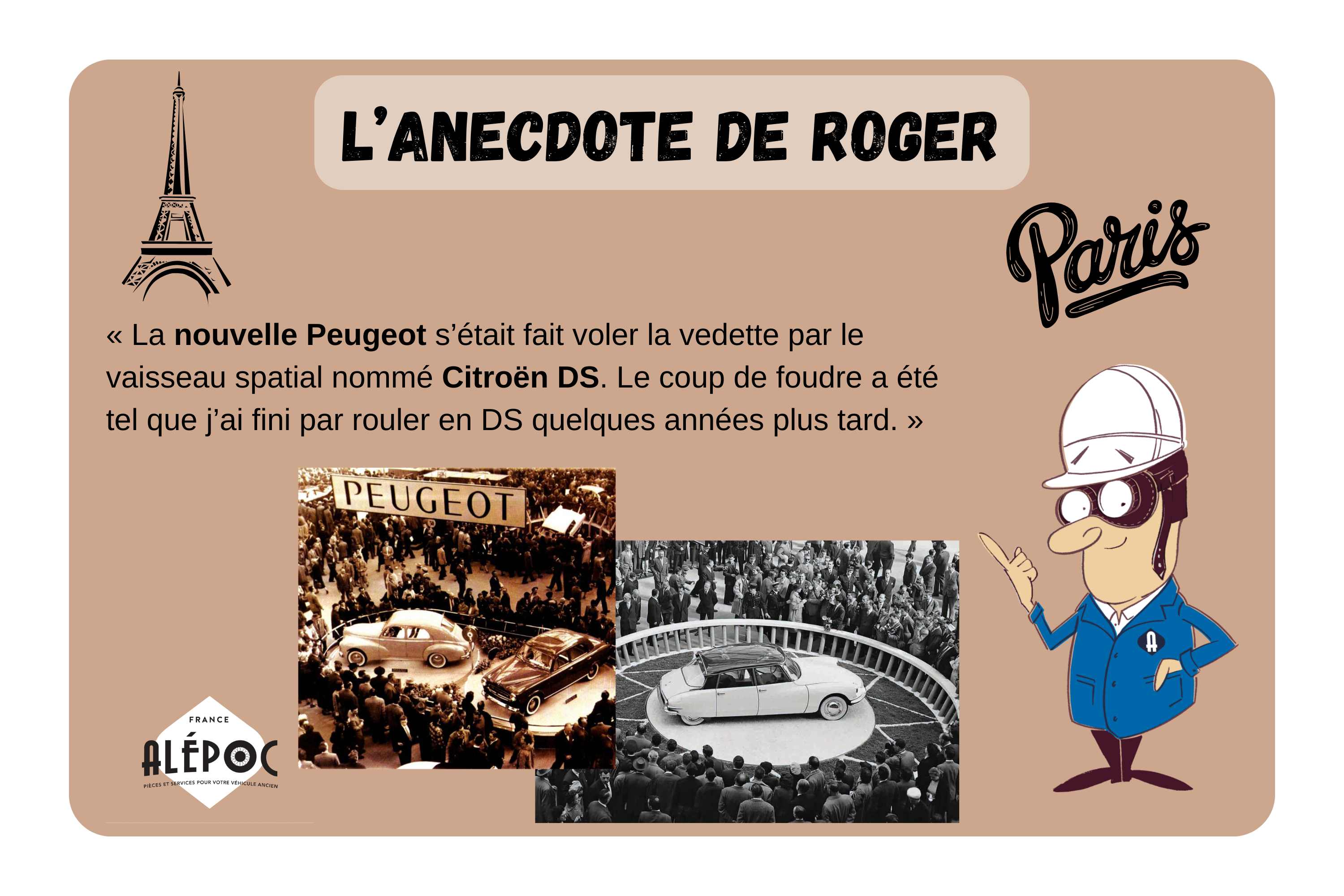
It is unveiled with great fanfare to dealers and the press in April 1955, at the Chaillot Palace and then at the Dauphine Pavilion in the Bois de Boulogne. Its apparent traditional styling, combined with welcome improvements to certain shortcomings of the 203, earned it a favorable reception from the public when it was unveiled at the 1955 Paris Motor Show.
A new style, a proven technique
No bluster, no outrageous stunts: a Peugeot must be reliable and robust to satisfy its customers.
Unlike the Citroën DS, which is very innovative—despite the setbacks it has faced—the Peugeot The 403 builds on the fundamentals of the 203, improving upon them slightly.
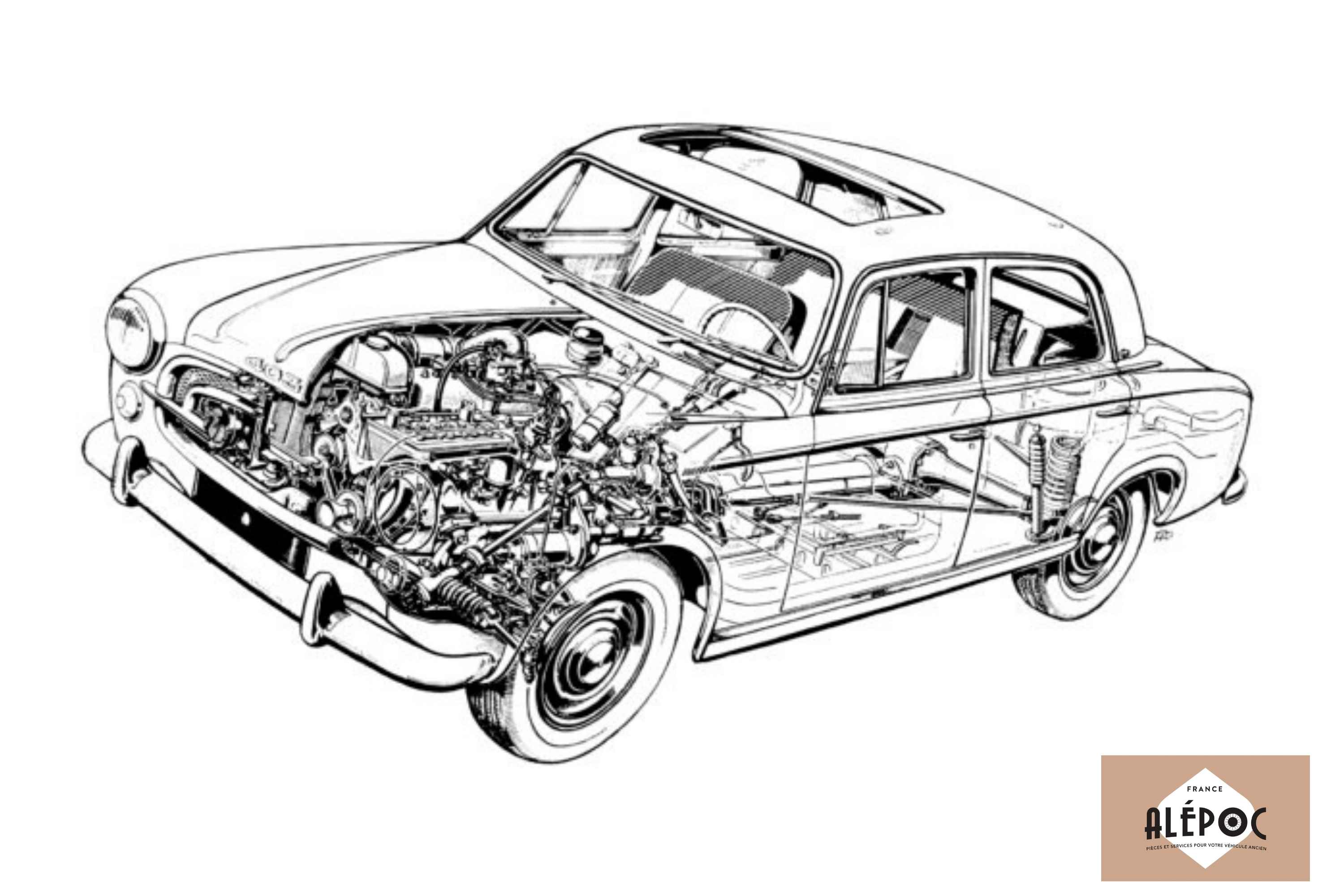
It features a clever blend of modernity and rustic charm. The self-supporting steel hull and the independent front suspension are inconsistent with the rear-wheel drive system featuring a worm gear differential and rear friction shock absorbers.
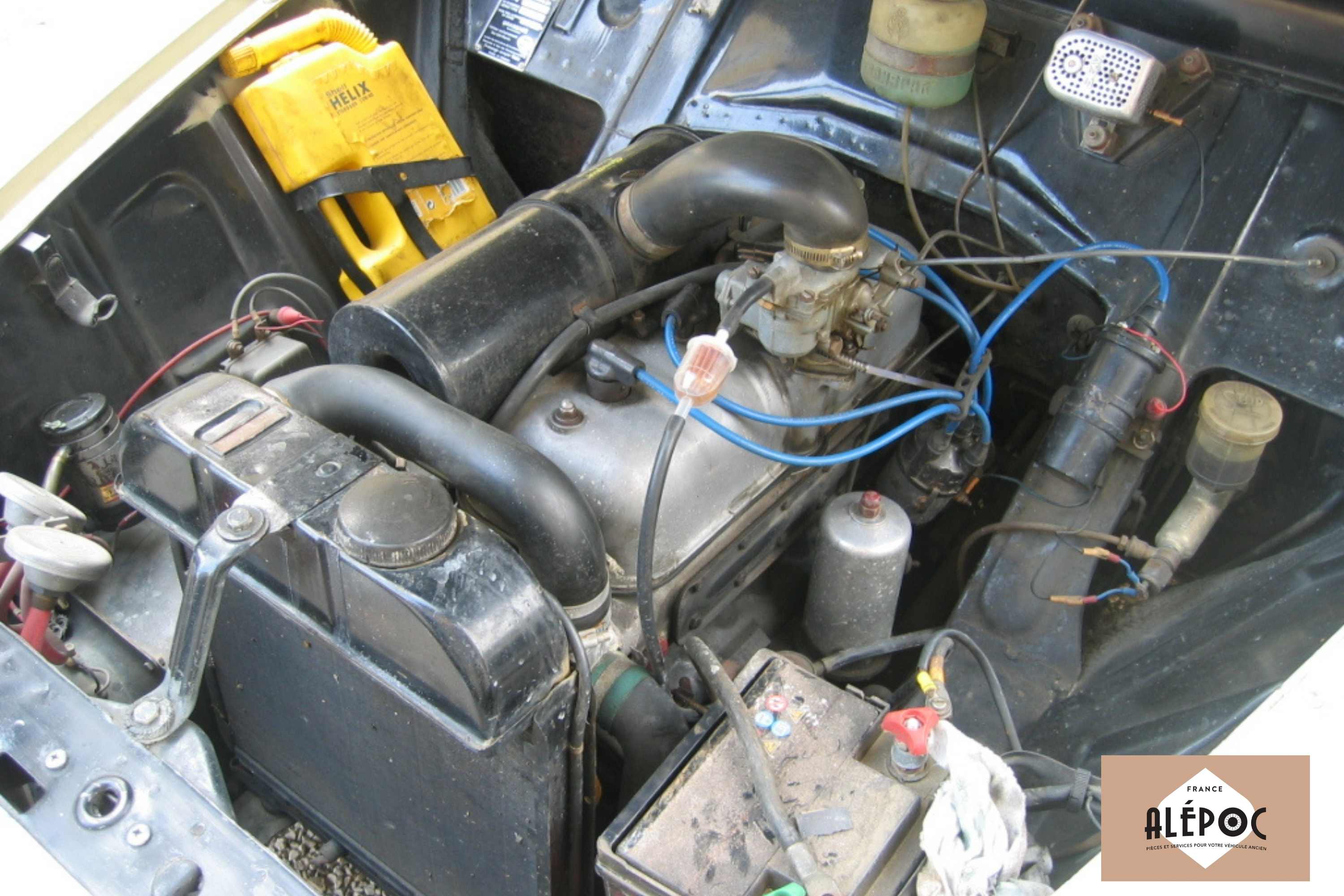
Under the hood is the 203 engine block with an Alpax (aluminum alloy) cylinder head, bored out to 1,468 cc by increasing the bore from 75 mm to 80 mm. The engine now produces 58 hp. Maintenance is now made easier by the mechanical parts available on our website.
To bring it to a stop, it relies on Lockheed hydraulic drum brakes, which You can find replacement parts on our website for maintenance.
One new clutch "The more progressive version," says Dentel, "is equipped with a new 4-speed synchronized transmission, with a overdrive fourth gear, in the purest tradition" Peugeot.
To ensure near-perfect performance and optimal reliability, the prototypes will be put through their paces on Europe’s most demanding roads.
Building on this proven design, the Peugeot 403 will change very little throughout its entire career.
The evolution of the Peugeot 403
A diverse range
Throughout her life, the Peugeot 403 will undergo a gradual evolution. The changes will focus more on the finishing touches than on the mechanical aspects.
As early as 1956, a less expensive version was introduced, with the sunroof and rear armrest removed.
That same year, the Luxe version addressed the few flaws noted by the press, including the addition of dual windshield washer nozzles, a vanity mirror, a chrome warning ring, and a push-button starter.
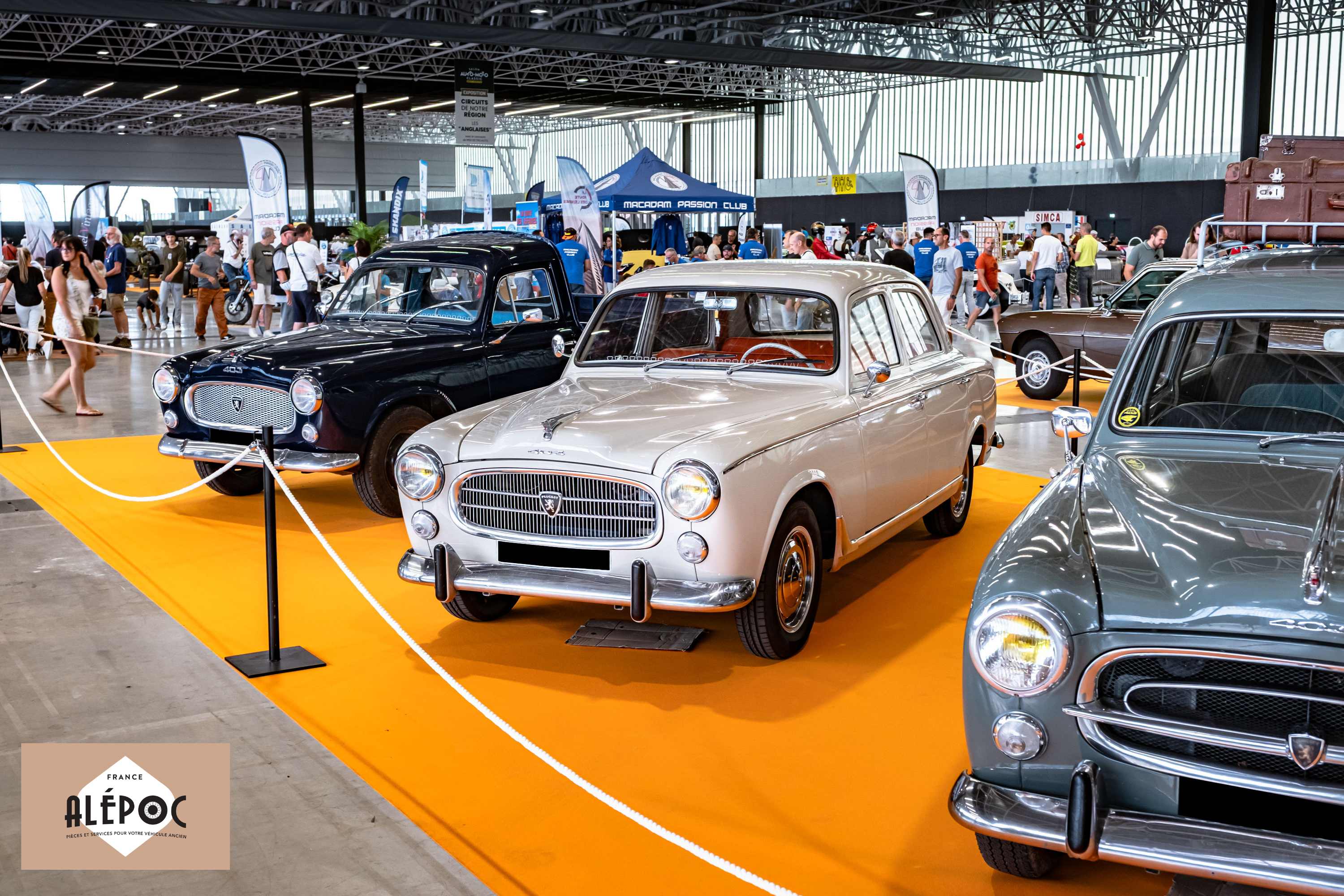
In May 1956, two new colors have been added to the gray, black, and blue from the initial launch: Île-de-France blue and light green.
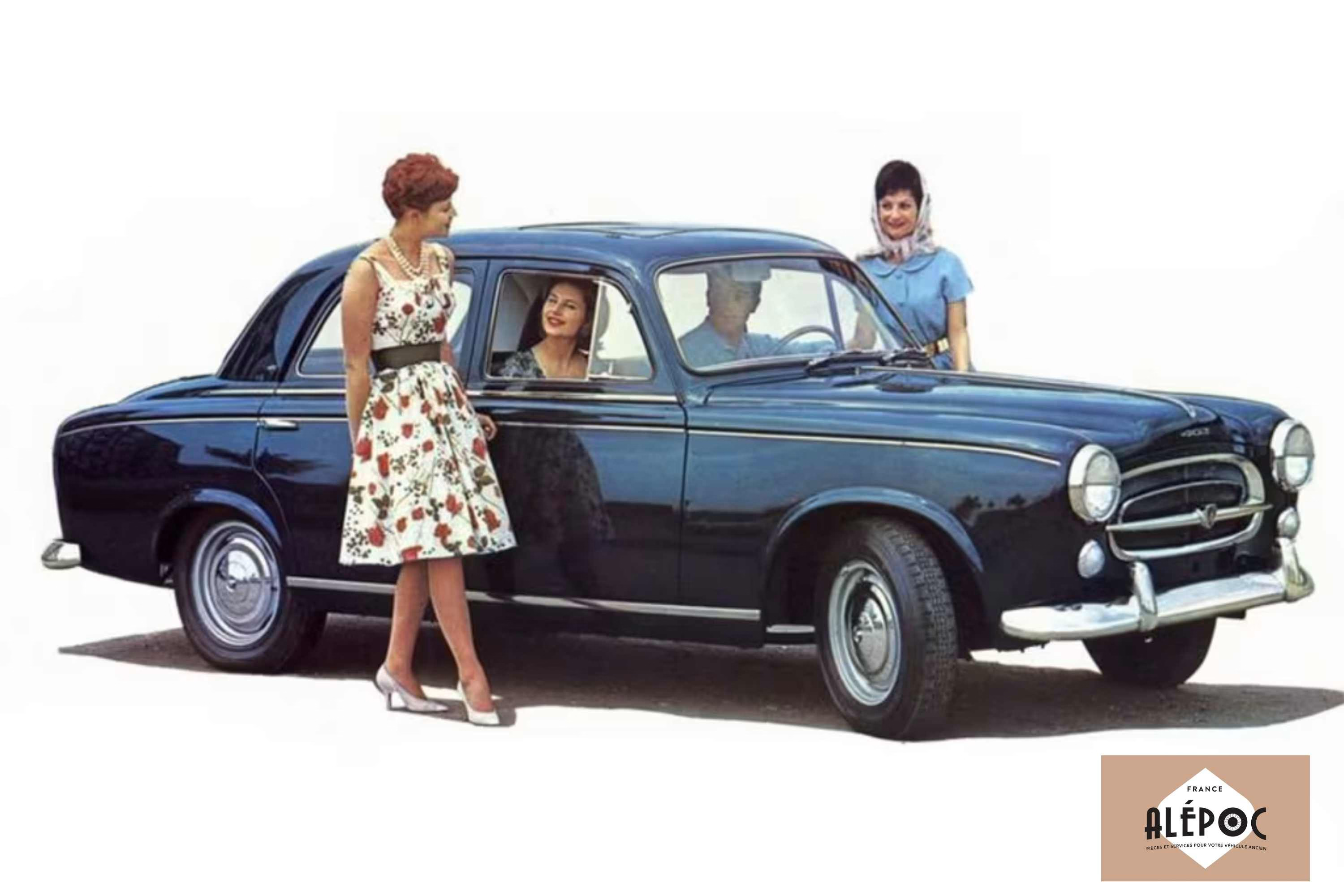
As the year draws to a close, the lineup is expanding with new variations. It has become a tradition for the brand to offer multiple versions of the same model. In response to the consistently strong demand for the Peugeot 203 and given the 403's growing success, the entire lineup has been delayed to avoid extending delivery times.
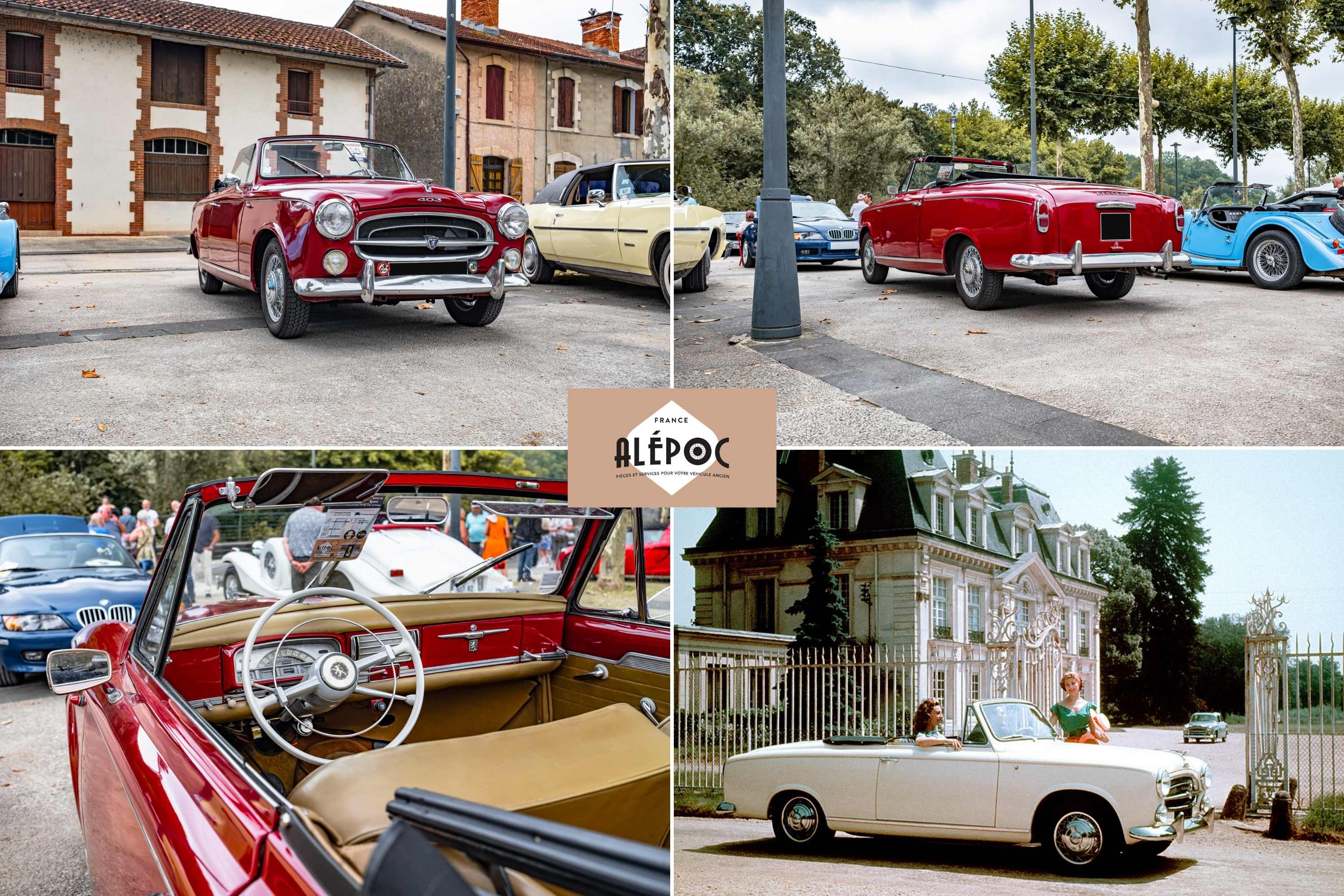
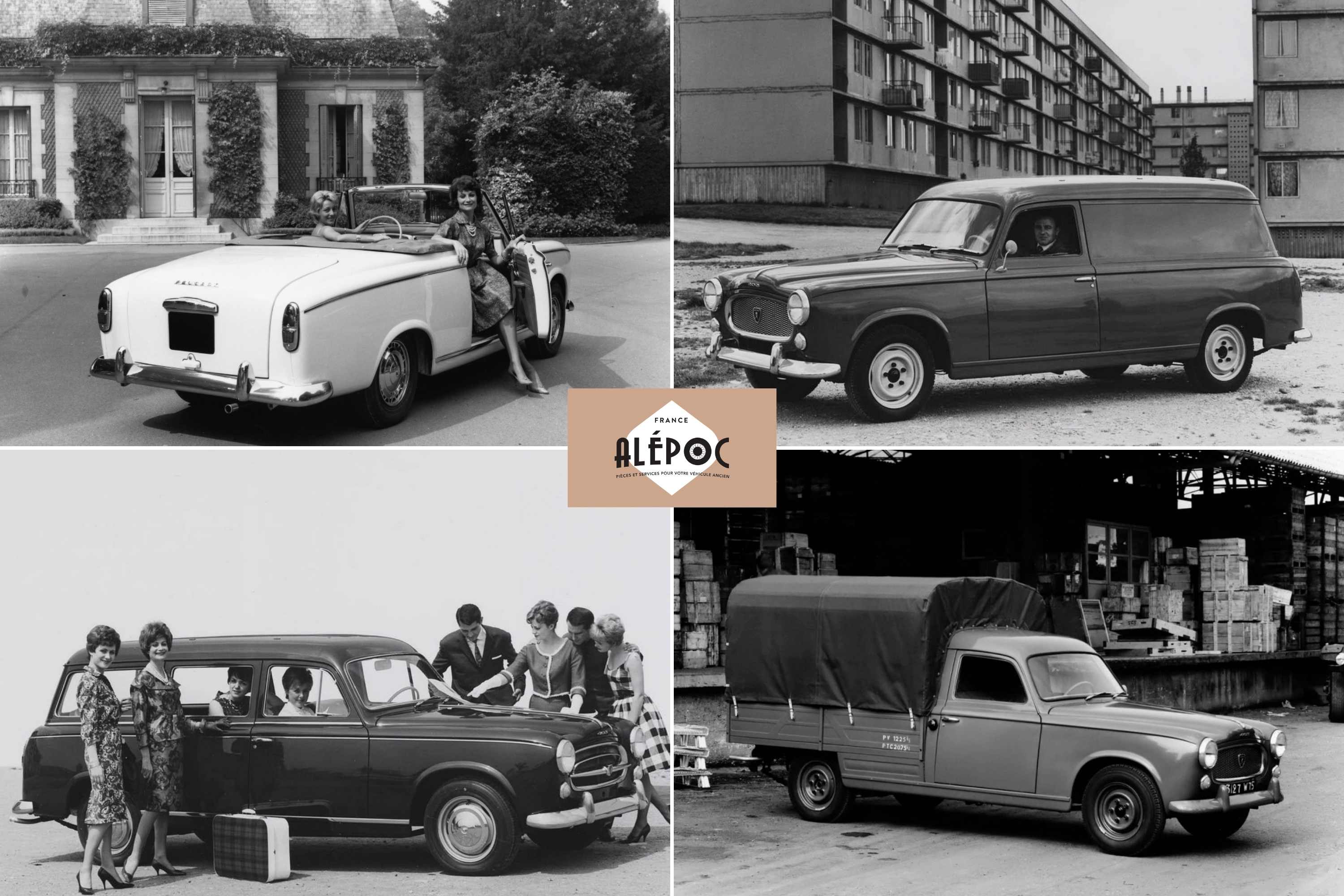
It was the most desirable and most expensive version (40% more than the sedan) that made its debut first, in September 1956: the convertible, which is aimed at customers who want to stand out without opting for a sports car. Its sleek lines, vibrant colors, leather seats, and standard fog lights make it love at first sight.
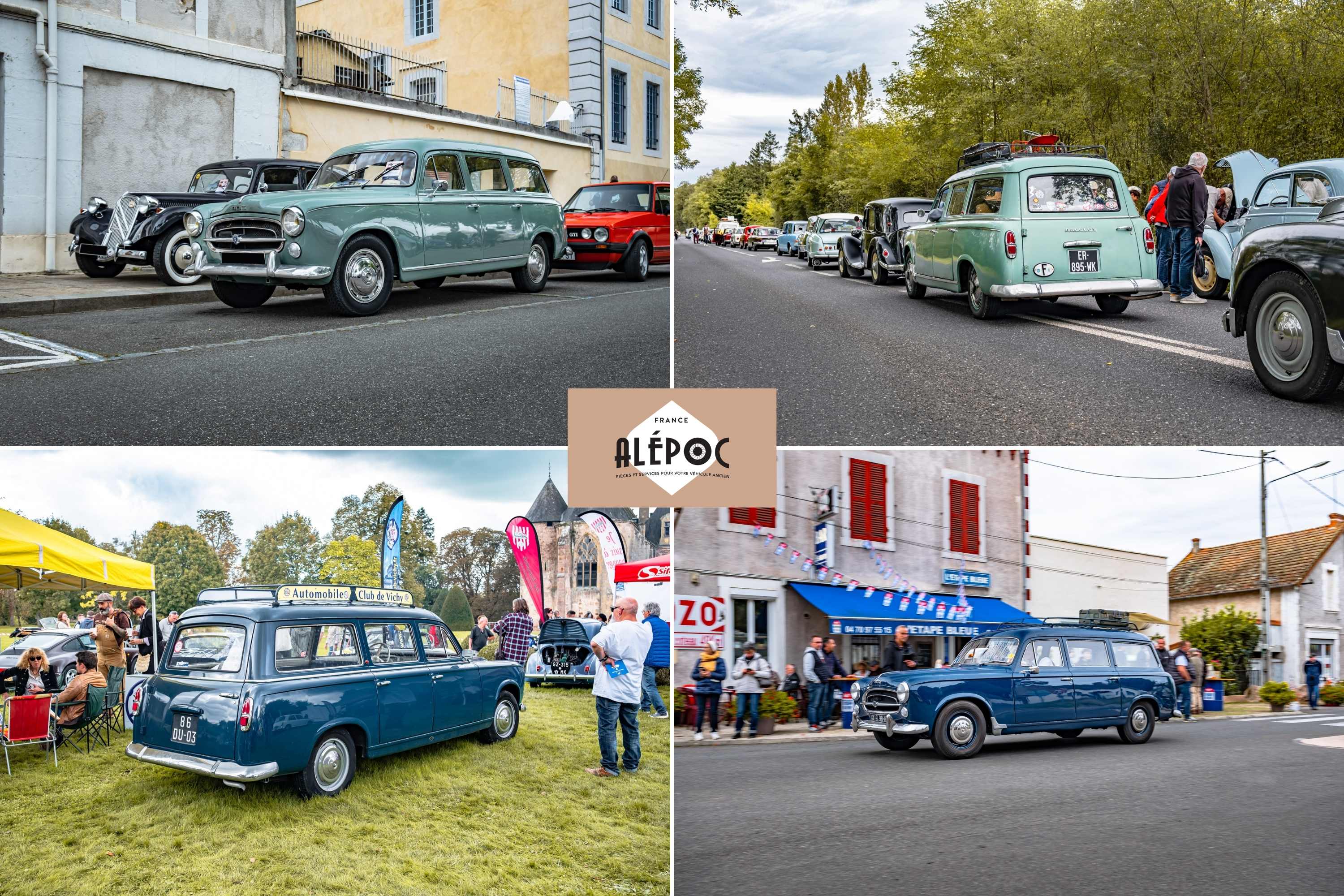
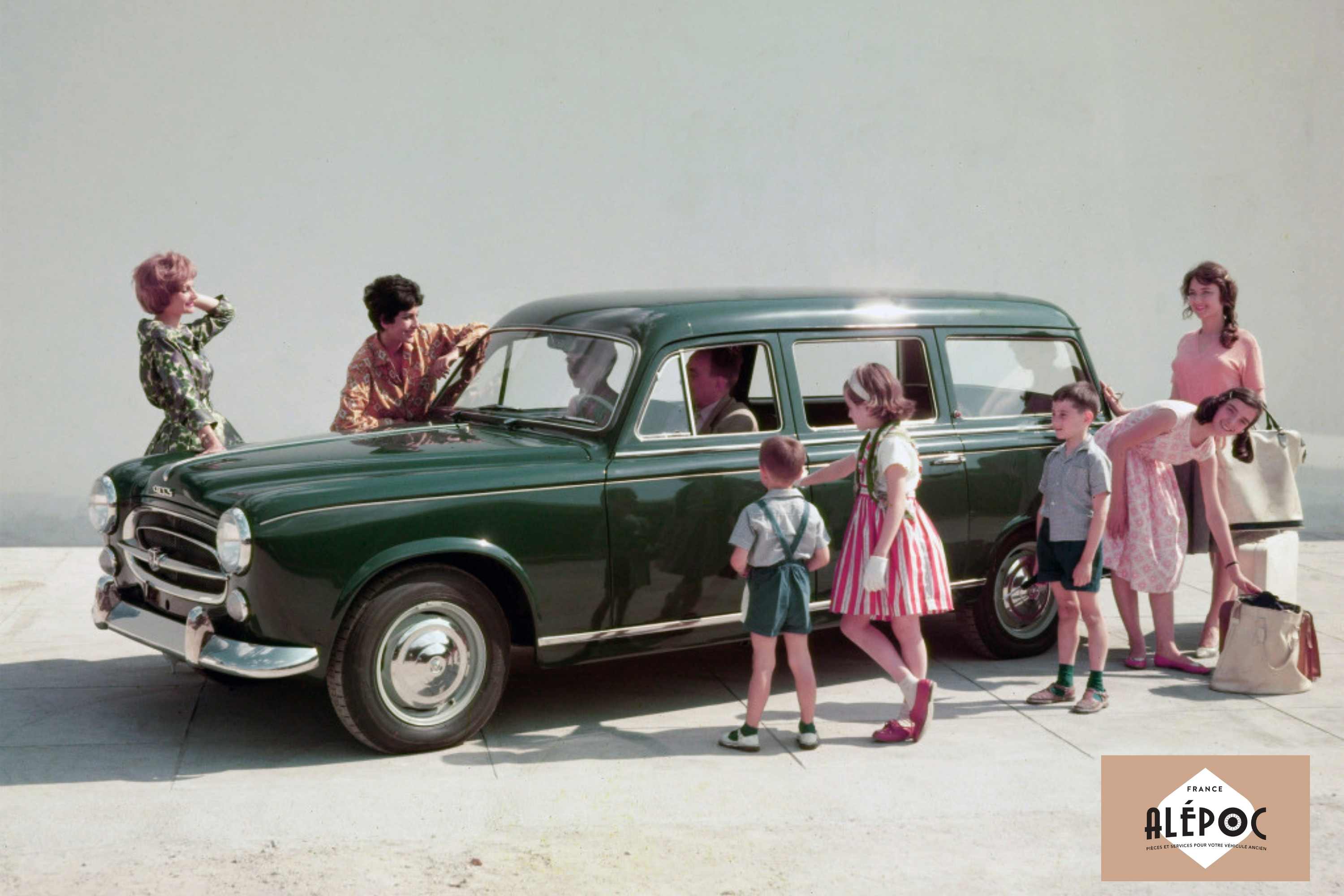
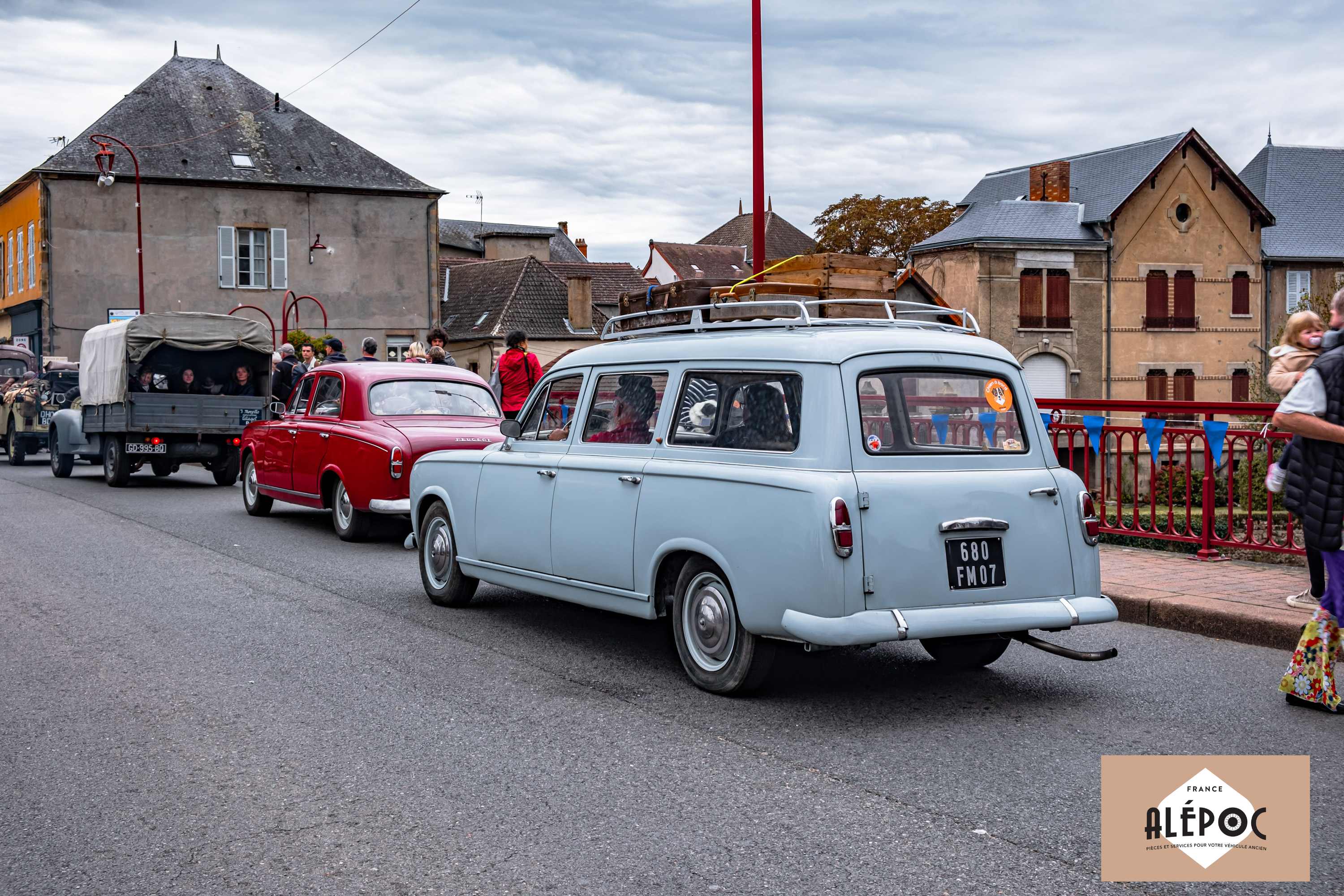
On the other hand, the 7/8-passenger minivan also makes its debut with its elongated body, three rows of seats, and a very practical fifth door. It’s the ideal car for large families from the baby boom generation. It’s also available in commercial version, stripped down, with only two rows to accommodate the artisans and merchants. (Discover the history of station wagons Peugeot)
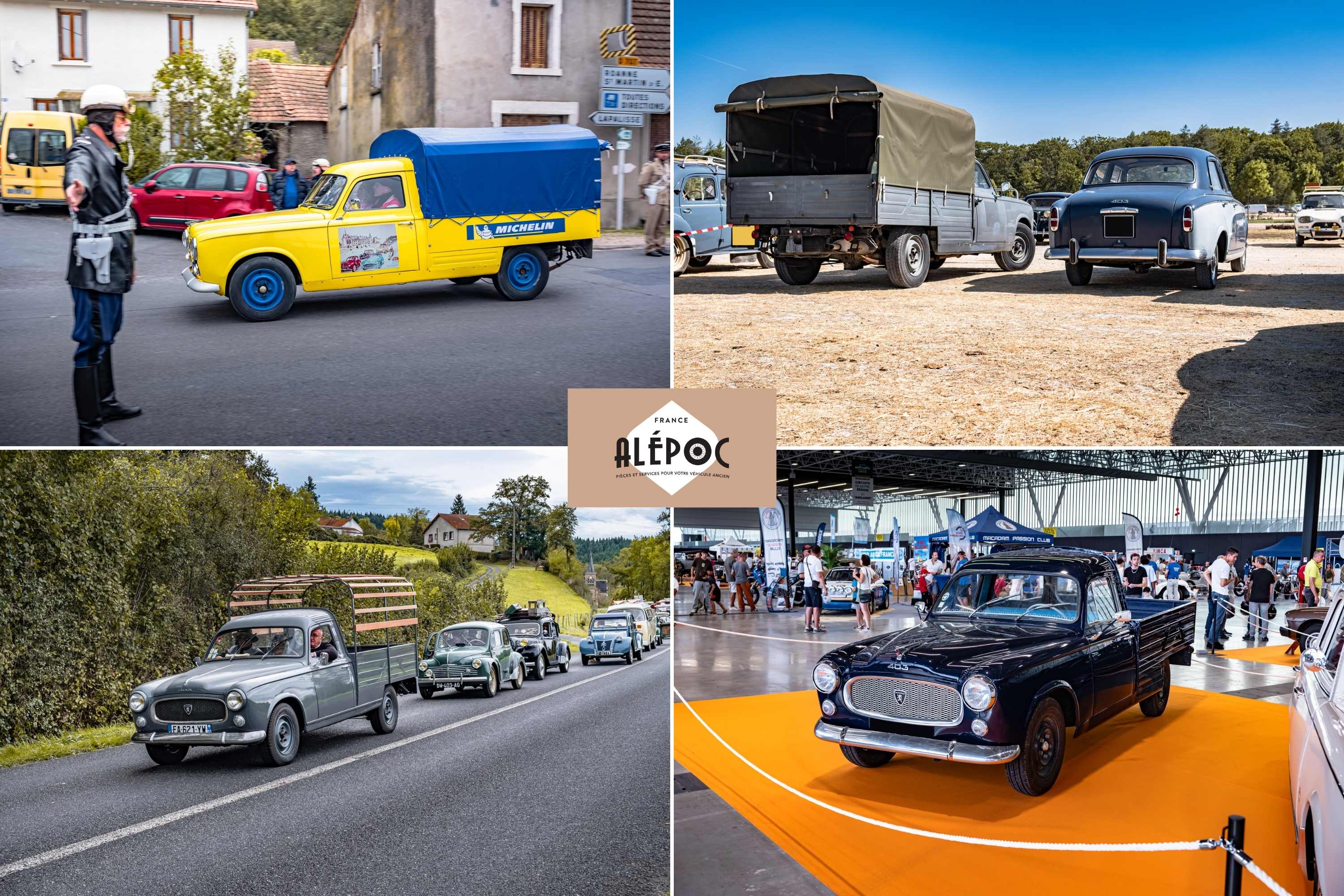
In October, it's the Peugeot 403 flatbed and covered flatbed with side panels, which is sure to be a hit with construction companies, is now available.
Along with the introduction of this new line, turn signals have replaced the turn indicators, and a chrome trim strip accentuates the side panel crease.
The range Peugeot The 403 kicked off 1957 with a wide range of options that would remain largely unchanged throughout its production run. Its design was so successful that it didn’t need to change.
Gradual changes
For the 1957 model year, the transmission features revised gear ratios, the windshield wipers sweep in a parallel motion, and the Jaeger electromagnetic coupler option, which eliminates the clutch pedal, was offered on the sedan and convertible. With an additional cost of 40,000 francs, this option was not well received and was discontinued in 1960.
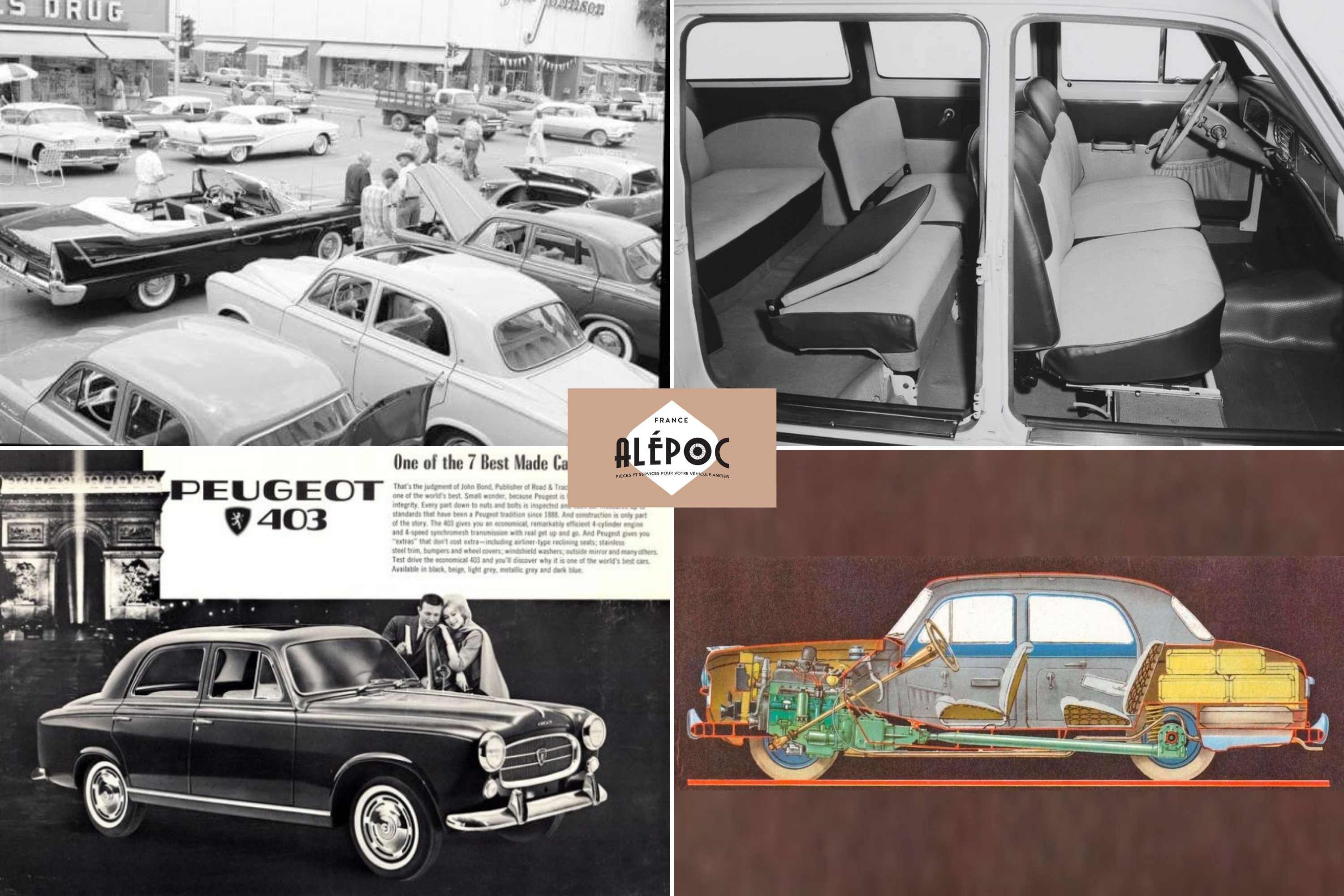
Starting in 1958, the Peugeot 403 is expanding into the United States. It can be recognized by its white sides and its side mirror. Available at one of the 650 locations in the network Renault In the U.S., it met with little success. After selling 11,000 units in 1959, sales fell below 10,000 the following year.
That same year, the magnificent lion's head that once graced the hood is gone due to a change in the Highway Code, which prohibits any blunt object that could injure vulnerable road users. The headlight housing was replaced with a chrome trim. The beige color option was also introduced in October.
In 1959, the design underwent a slight update with a notched handbrake and an extended accelerator pedal. A disengageable fan was introduced, allowing for increased power when deactivated.
In September 1959, new, more modern telescopic shock absorbers were introduced. (Explore our shock absorber parts)
The following month saw a minor revolution with the introduction of the diesel version, powered by a 4-cylinder, 1,816 cc Indénor, 48 hp. It is the first French production diesel car. A significant event, given the role diesel would come to play a few decades later.
The decline: make way for the Peugeot 404
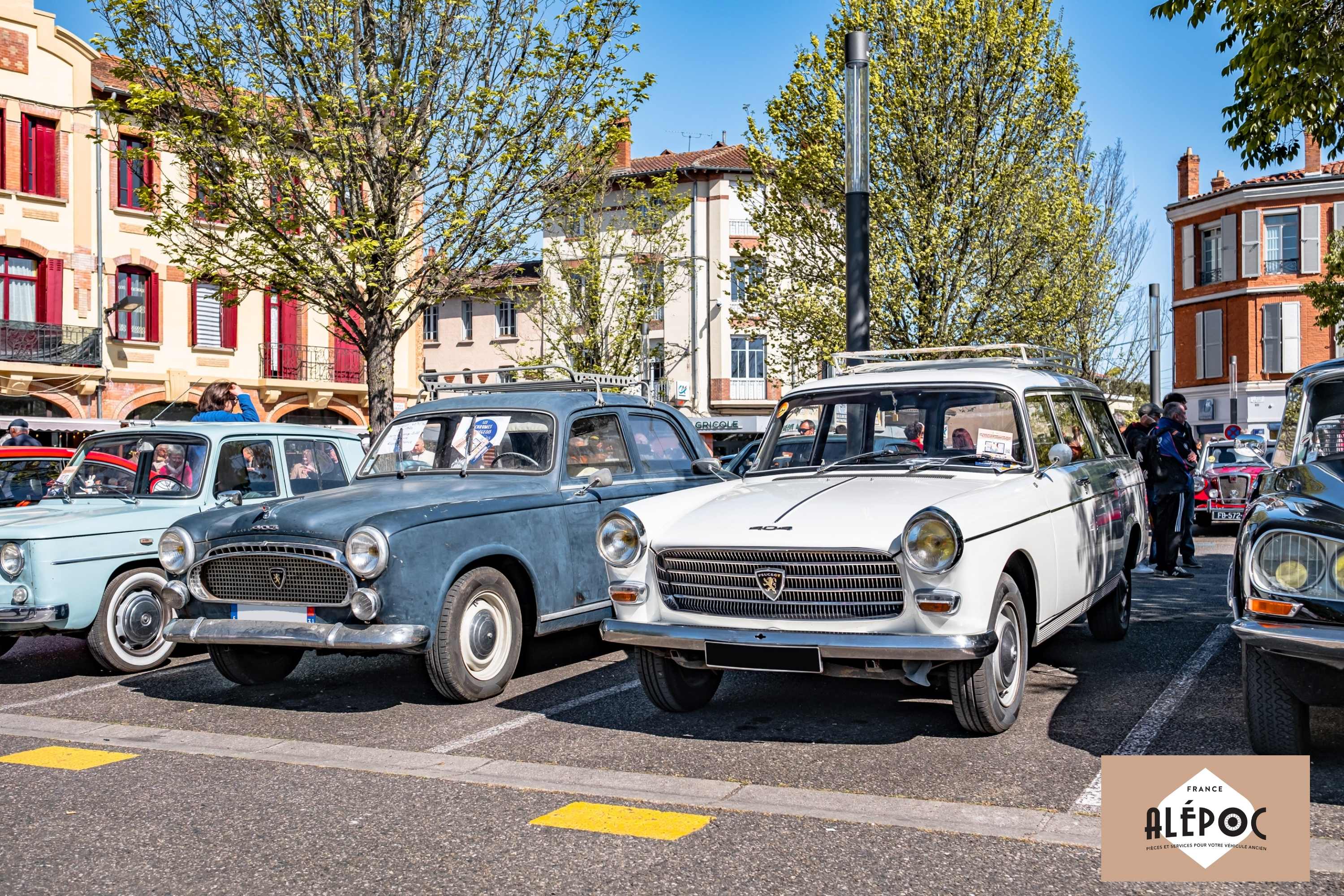
In 1960, the lineup was about to take a new direction with the suspension of the Peugeot 203 and the presentation of the Peugeot 404. The manufacturer is therefore reorganizing its product lineup with a new version 7 CV which features the 1290 cc engine from the 203, paired with a 403 cylinder head to deliver 54 hp. It can be recognized by its simplified mesh grille.
The 8 CV version now delivers 65 hp, and a new transmission is available.
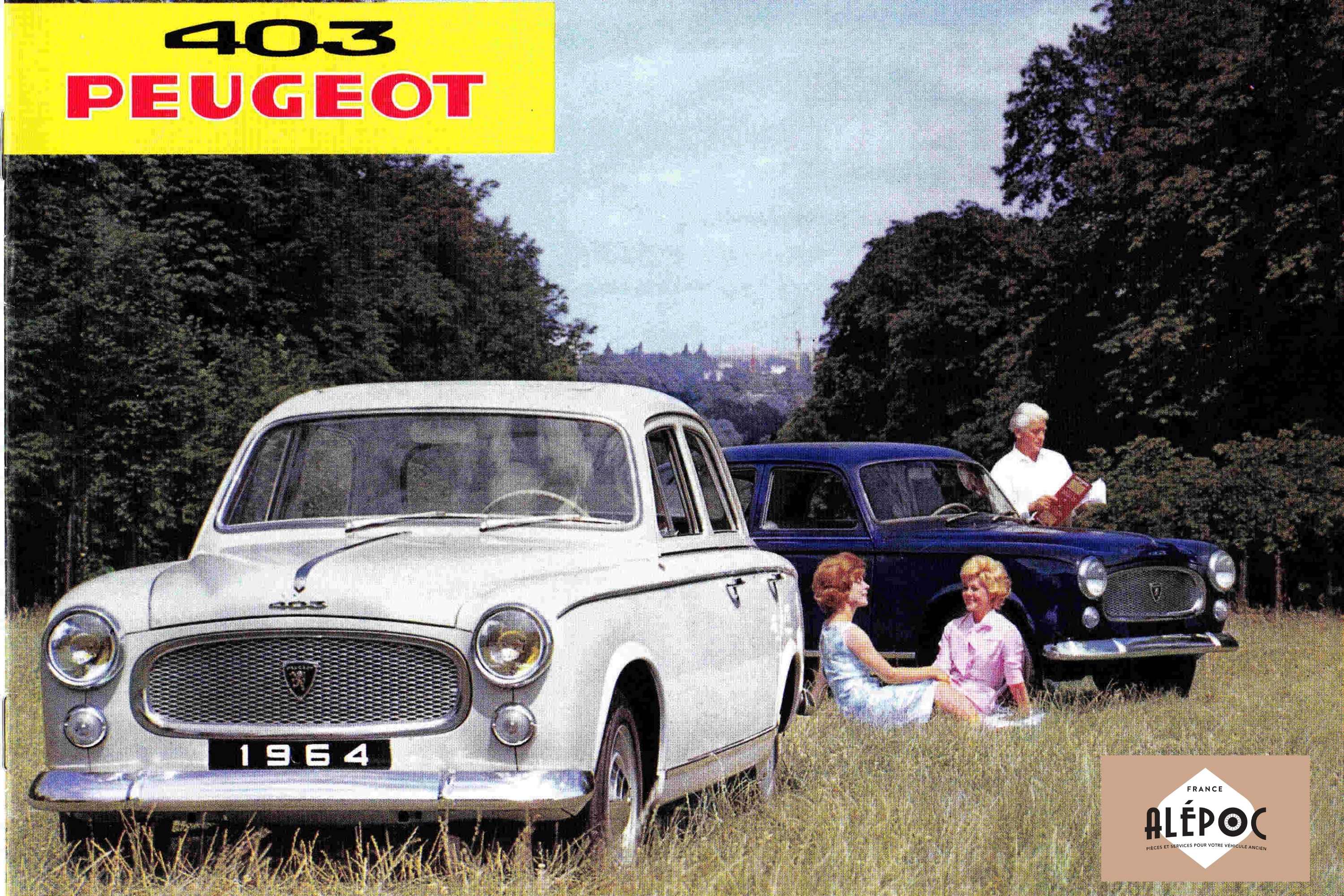
In September 1962, the shock absorbers on the Peugeot 404 have been adopted. Next, This is the beginning of the end for the Peugeot 403, which tweaked a few finishing touches here and there. The 1963 models feature a new grille with vertical bars, the 1964 models have checkered fabric upholstery, and the dashboard is painted black instead of the usual gray.
In the meantime, the range has shrunk to make way for the new versions of the Peugeot 404. The convertible was discontinued in July 1961 after failing to sell well: only 2,050 copies will be produced.
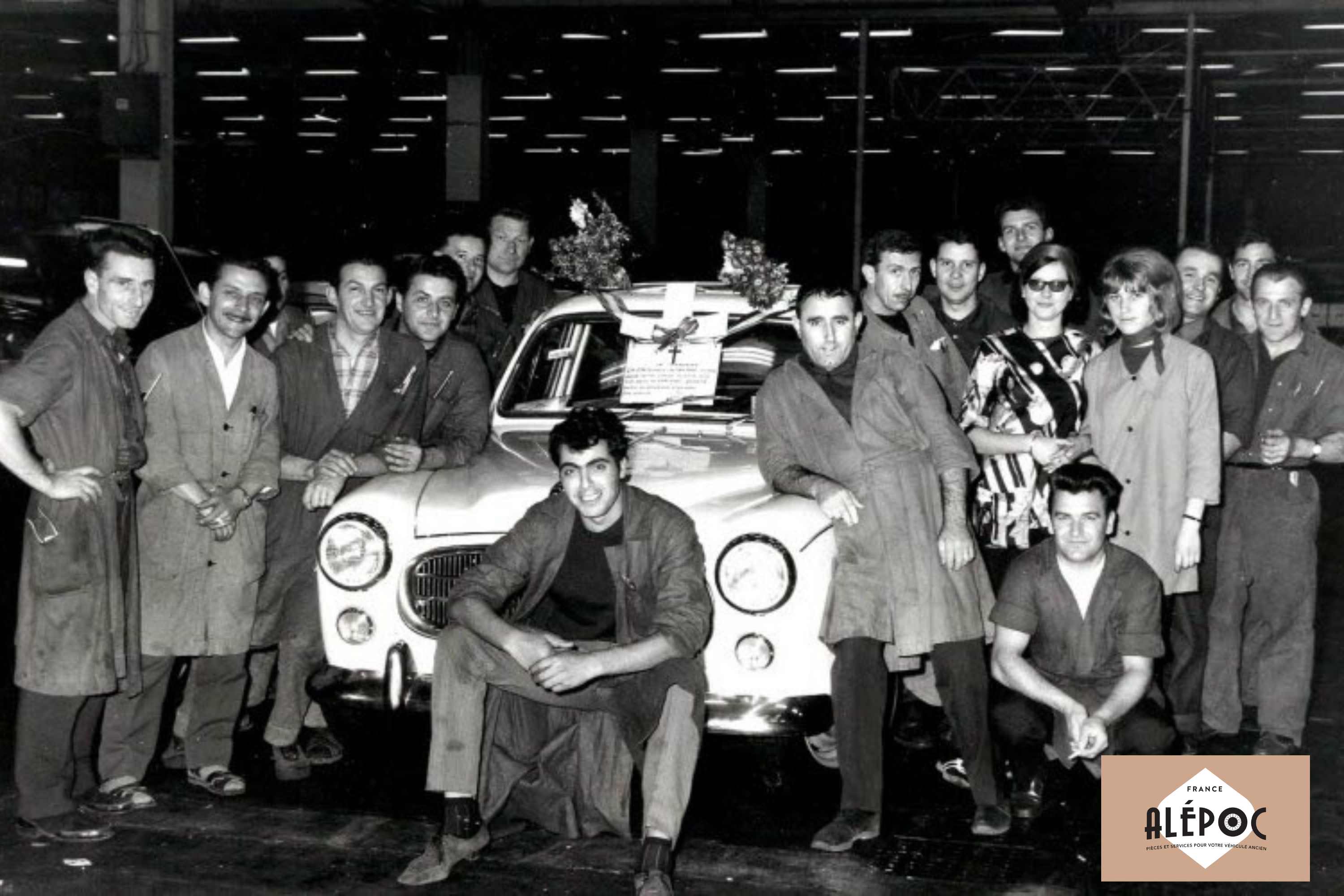
Production of the station wagon models ceased in September 1962, and that of the sedan in July 1965 for private customers in France. It continued to be produced for export and government agencies until the end of 1966.
Only the flatbed and pickup truck versions remained in the lineup until April 1967.
In popular culture: an athlete and TV star against her will
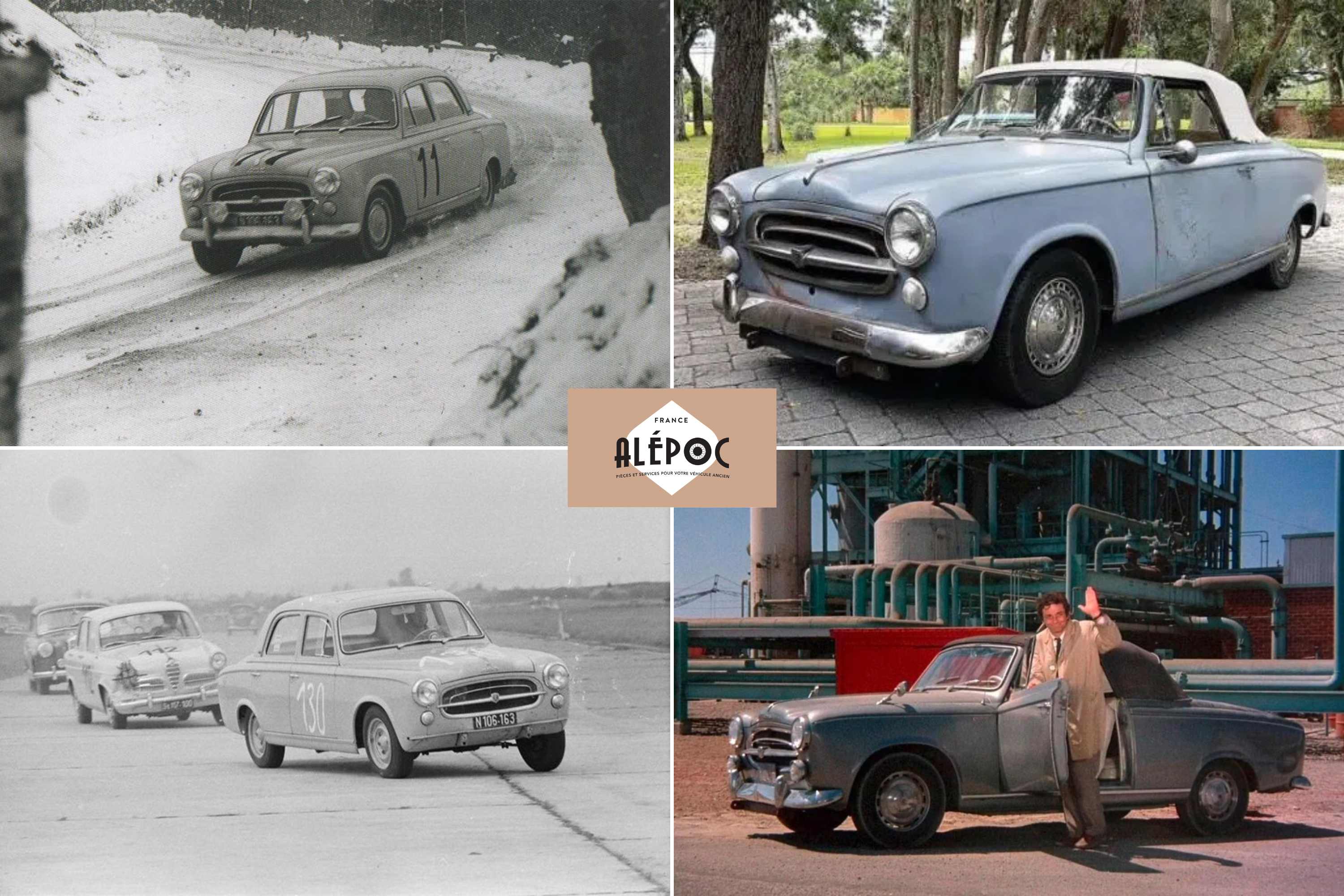
While it excels as a reliable, practical midsize sedan, it has never really made a name for itself in the sports car arena. She still manages to win a few regional rallies, such as that of Finland in 1955 with Eino Ela. That same year, she made a name for herself at the Morocco Rally with Jean Deschazeaux, at the Fall Rally with Baillou and Triou.
She finishes the inaugural Tour of Australia in 1956, and then settles for a few top finishes in his category at the Pure Snow Rally in 1957, 1958, and 1959, as well as at the East African Safari Rally in 1957.
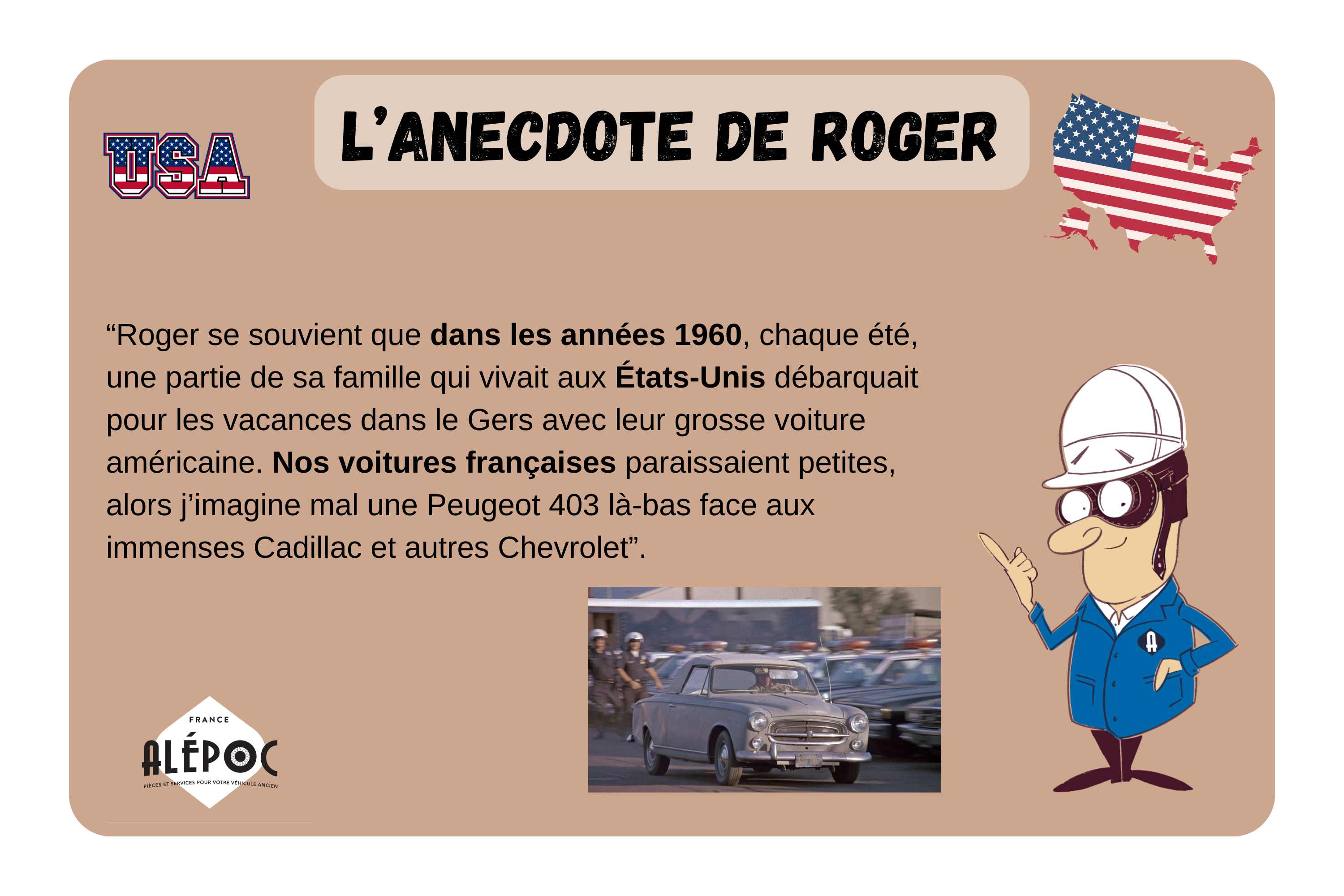
She finds herself playing an important role on TV by becoming the Inspector Columbo’s primary car starting in 1971. The Peugeot The 403 Cabriolet driven by Peter Falk is a curiosity across the Atlantic, and a mystery surrounds the reasons for its appearance in the TV series. A personal choice? A coincidence? Even the automaker doesn’t know, except that it had refused to send other models that were going to be damaged for the show.
Conclusion: the Peugeot 403 establishes the brand's core values
If the revolutionary Citroën The DS could have jeopardized its success, but that was not the case. Its traditional styling and ruggedness made it a wise choice for many French people, as well as for taxi companies and government agencies, which adopted it for use by government departments, the Gendarmerie, and the army.
With its sleek lines and powerful engines, it will lay the groundwork for Peugeot in the second half of the 20th centuryᵉ century.
The 1,196,959 copies make it a real success, and it becomes the first Peugeot to exceed one million. A car that symbolizes an entire era and is highly sought-after by collectors. Its simple, reliable, and user-friendly mechanics make for a stress-free driving experience, especially that spare parts are easy to find for Peugeot 403.
Happy birthday.
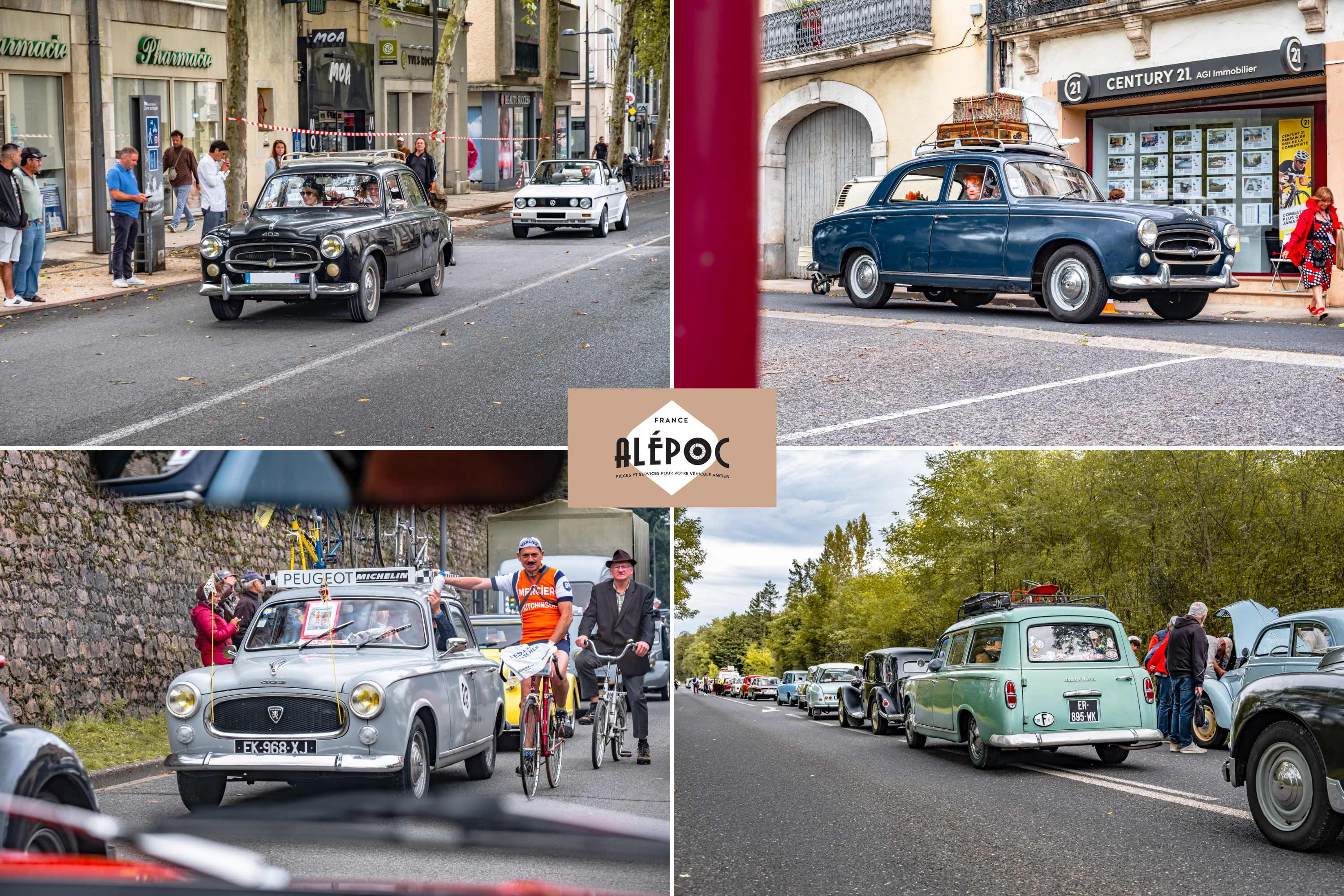
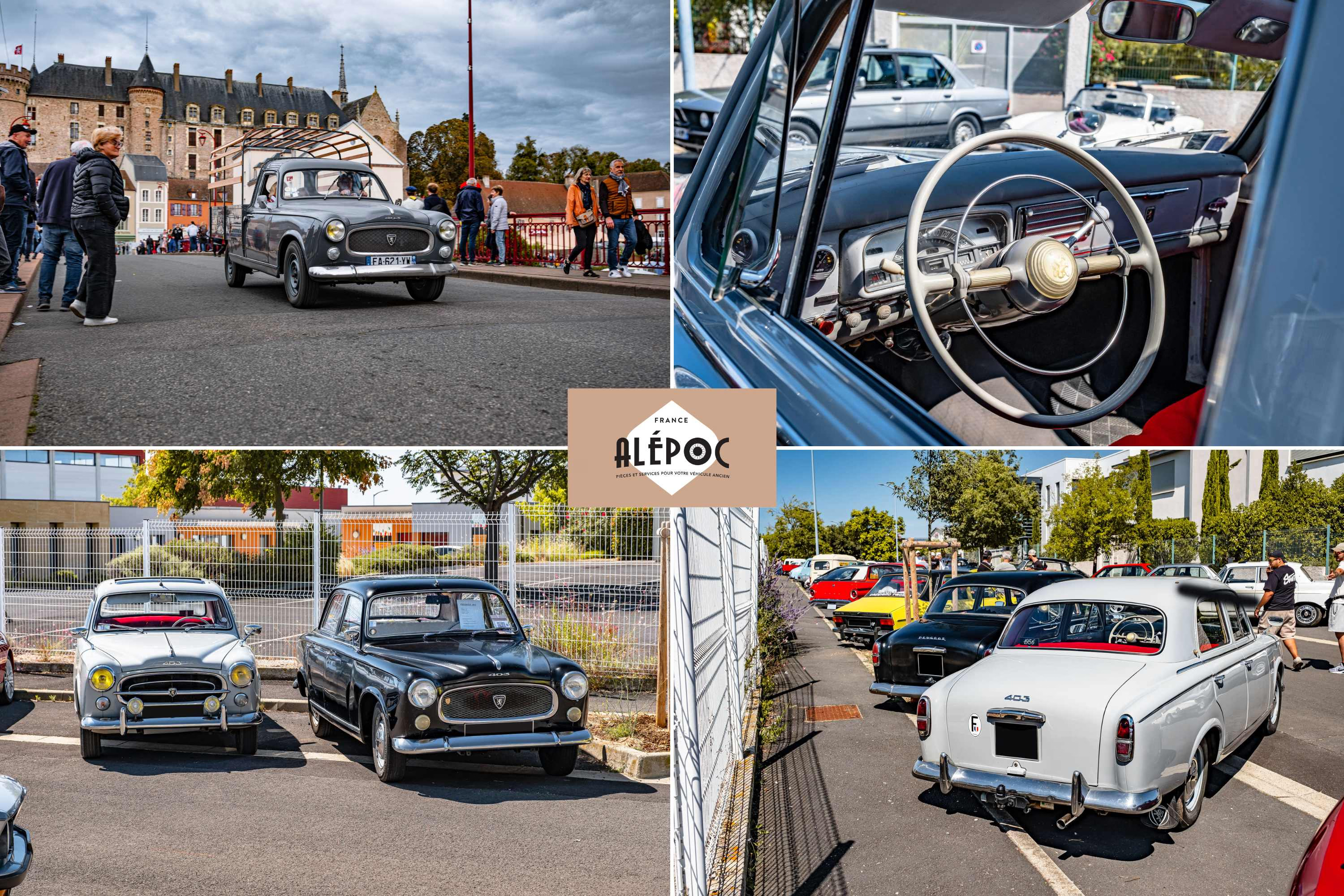
Check out our other birthday items at Peugeot
- 60th anniversary of the Peugeot 204: The Little Revolutionary Lioness
- 50th anniversary of the Peugeot 104: The Little Lioness Shows Her Teeth
- 40th anniversary of the Peugeot 205: The Beginning
- History of the Peugeot 504: A Revolutionary Sedan ?
FAQ Peugeot 403
What type of oil should I use when changing the oil in a Peugeot 403 ?
For the vintage engines in the 403, it is recommended to use a 20W50 mineral oil, which provides better protection for older seals and mechanical components.
Which wear-and-tear parts should be checked first on a Peugeot 403 ?
The braking system (leaks in the wheel cylinders), the condition of the coolant hoses, and play in the front suspension are essential checkpoints for safe driving.
Browse our specialized catalog of replacement parts for Peugeot 403—find all the essential engine, brake, and ignition parts you need for routine maintenance or a complete restoration of your classic sedan, convertible, or station wagon.
A selection of essential new parts for Peugeot 403: Discover our most popular products among collectors to ensure reliable fuel delivery, braking, and engine sealing Peugeot vintage.
Published on
10-12-2025